What Is Steel and Pipe A Guide for Global Buyers?
Steel and pipe are the hidden framework of modern infrastructure. They carry water beneath cities, support warehouses, and move oil, gas, and industrial fluids across long distances. Yet global buyers often treat them as simple commodities. That assumption can become expensive.
W. Edwards Deming, a respected authority on industrial quality, said, “Quality comes not from inspection, but from the improvement of the production process.” His principle remains relevant to steel and pipe purchasing. Reliable performance begins with material selection, manufacturing controls, traceability, and careful inspection. A pipe may look flawless under warehouse lights, but its grade, wall thickness, coating, and weld quality determine its behavior in service.
Details matter.
This guide introduces the decisions global buyers face when comparing steel and pipe products. It considers carbon steel, stainless steel, alloy steel, welded pipe, and seamless pipe. It also explains how standards, dimensions, certificates, surface protection, packaging, and delivery terms affect total value. A mill certificate is useful, but it is not a substitute for independent verification when the application is demanding. That point is easy to overlook.
Buyers must also question familiar habits. The lowest quoted price may exclude testing, coating, inland transport, or replacement risks. A trusted supplier may still need closer technical review. Even experienced purchasing teams can miss small inconsistencies between drawings and specifications. Practical judgment, documented evidence, and clear communication therefore matter as much as price. This introduction provides a grounded starting point for evaluating steel and pipe with greater confidence.
Steel Fundamentals: Iron-Carbon Alloys with Up to 2.1% Carbon
What Is Steel and Pipe: A Guide for Global Buyers?
Steel Fundamentals: Iron-Carbon Alloys with Up to 2.1% Carbon
Steel is an iron-carbon alloy containing up to about 2.1% carbon by weight. This boundary separates steel from cast iron in common engineering practice. Small chemistry changes can create major performance differences. Carbon usually increases hardness and strength. It can also reduce ductility and weldability. Too much carbon may make a pipe less forgiving during forming or field welding.
The World Steel Association reported approximately 1.89 billion tonnes of crude steel production in 2023. That scale supports global construction, energy, transport, and manufacturing markets. Yet volume does not guarantee consistent quality. Buyers should examine the grade, carbon equivalent, heat treatment, and manufacturing route. Seamless and welded pipes can share similar dimensions, but their production histories differ. Ask for mill test certificates, chemical analysis, tensile results, impact data, and dimensional inspection records. Standards matter too. Relevant specifications should match pressure, temperature, corrosion, and service conditions.
A practical warning: carbon content alone cannot predict pipe performance. I have seen purchasing decisions focus on yield strength while overlooking weldability and low-temperature toughness. That approach is incomplete. Supplier traceability, independent inspection, and clear acceptance criteria reduce uncertainty. The best specification is not always the most expensive one. It is the one that fits the actual service environment.
What Is Steel? Steel Fundamentals for Global Buyers
Steel is an iron–carbon alloy containing up to approximately 2.1% carbon by mass. Carbon-content ranges are commonly used to distinguish low-, medium-, and high-carbon steels; exact boundaries may vary by standard and application.
How to read the chart: Higher carbon content generally increases hardness and strength but reduces ductility and weldability. Low-carbon steel is widely used for formed products and many pipe applications, while higher-carbon grades are selected when wear resistance and hardness are priorities.
Pipe Categories: Seamless, Welded, and Sizes from 1/2 to 48 Inches
Steel pipe selection often begins with two categories: seamless and welded. Seamless pipe is formed from a solid billet and has no longitudinal weld. It suits high-pressure, high-temperature, and demanding mechanical service. Welded pipe is produced from steel plate or coil, then joined along a seam. Modern welding and inspection methods make it practical for water, structural, energy, and general industrial systems.
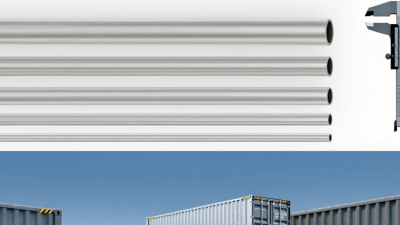
Size labels can mislead new buyers. A pipe listed from 1/2 to 48 inches usually refers to nominal pipe size, not the exact outside diameter. For example, a 1/2-inch pipe has an outside diameter near 0.84 inches. Wall thickness also changes with the schedule. Specify nominal size, outside diameter, wall thickness, length, steel grade, end finish, and applicable standard. Do not guess. A small dimensional error can prevent field assembly.
For reliable purchasing, request heat numbers, test certificates, dimensional reports, and inspection records. Check chemical composition, tensile results, hydrostatic testing, and weld examination when required. In real projects, the cheapest option is not always the safest choice. Seamless pipe may add unnecessary cost in low-pressure service, while welded pipe may be unsuitable for severe cyclic loading. I have seen specifications focus on size while ignoring corrosion allowance. That omission later becomes expensive. Project conditions, joining methods, temperature, pressure, and transport limits should guide the final selection.
Buyer Checks: Strength, Wall Thickness, Coatings, Tolerances, and Delivery
Buying steel pipe internationally requires more than checking grade and price.
Strength should match the service conditions, including pressure, temperature, and corrosion exposure. Ask for mill test reports showing chemical composition, yield strength, tensile strength, and elongation. Independent inspection can verify these values before shipment.
Do not rely on a supplier’s summary alone.
Wall thickness needs careful attention.
Nominal thickness may differ from the actual minimum after manufacturing tolerances. Request dimensional inspection records, pipe length measurements, outside diameter checks, and ovality results.
Measure twice.
A small deviation can affect welding, threading, or field installation. I once underestimated this issue on a project, and fitting work took longer than planned.
Coatings deserve equal scrutiny.
Confirm surface preparation, coating type, dry-film thickness, holiday testing, and repair procedures. The coating must suit seawater, soil, chemicals, or outdoor storage. Tolerances should follow the agreed specification, not informal promises. Delivery checks should cover end protection, marking, packing, moisture control, and transport documents. Ask for production milestones and a realistic loading date.
Fast delivery is useful only when inspection records are complete.
Some buyers also forget storage conditions after arrival. Pipe can rust quickly when damaged bundles sit in wet air. Inspect the cargo before signing receipt.
Keep photographic evidence.