"*" indicates required fields

Choosing a reliable steel and pipe manufacturer is more complex than comparing price lists. Buyers must examine capacity, material traceability, testing systems, and delivery performance. A polished website proves little.
The World Steel Association reported 1,892.2 million tonnes of crude steel production in 2023. That scale creates opportunity, but it also increases supplier risk. The International Energy Agency continues to identify steel as a major industrial emissions source, making production efficiency and decarbonisation increasingly important. Environmental performance now belongs in procurement discussions.
Edwin Basson, Director General of the World Steel Association, has described steel as “essential to modern society.” His observation reflects what buyers see daily: pipes support bridges, refineries, water systems, energy projects, and manufacturing plants. Yet no ranking is flawless. Market conditions change quickly.
This guide presents 10 Best Steel and Pipe Manufacturers for Global Buyers, using practical criteria. These include product range, production capacity, international certifications, inspection procedures, export experience, and after-sales support. Standards such as API 5L, ASTM A106, ASTM A53, and ISO 9001 can help buyers compare suppliers more consistently. They cannot replace independent verification.
A serious buyer should request mill test certificates, heat numbers, dimensional records, and applicable third-party inspection documents. Ask about coating thickness, weld quality, loading methods, and replacement policies. Small details matter. A damaged pipe bundle can delay an entire project.
Some manufacturers may rank highly for scale, while others perform better for customization or regional logistics. That distinction deserves attention. The strongest supplier is not always the largest one; it is the one that matches the project’s technical, commercial, and compliance requirements.
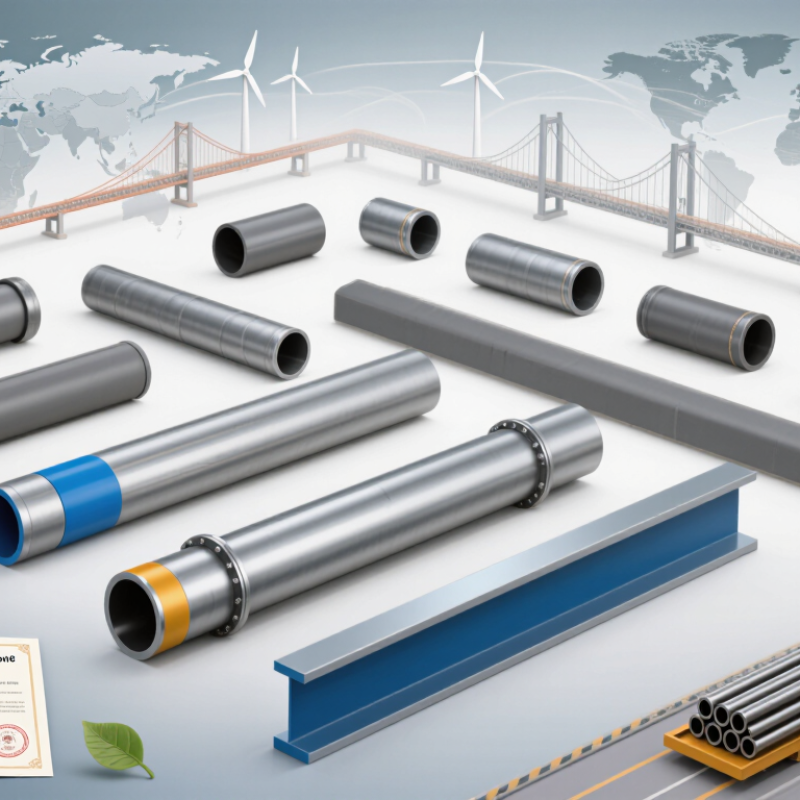
A leading steel and pipe manufacturer earns trust through visible, repeatable performance. In supplier audits, I look beyond polished catalogs and impressive production figures. The real test appears in the factory: clean storage areas, calibrated instruments, controlled heating, and workers who can explain each inspection step. Traceability should follow every bundle from raw material receipt to final shipment. Clear mill certificates, chemical analysis, mechanical results, and dimensional records matter more than attractive promises.
Production control must match the product’s intended use. Steel plates need consistent thickness and stable strength. Pipes require reliable weld quality, accurate diameter, and pressure testing where applicable. Independent laboratory checks can confirm internal results. A capable manufacturer also understands international specifications, packaging requirements, customs documents, and changing delivery conditions. Communication should remain precise when an order changes. Silence is a warning sign.
Experience has taught me that no audit is perfect. A spotless factory visit can hide weak night-shift controls or delayed corrective actions. I once found excellent test reports paired with poor bundle labeling, creating avoidable receiving delays. That detail changed my evaluation. Leading manufacturers investigate such gaps instead of defending them. They maintain trained staff, documented quality systems, responsible environmental practices, and realistic production schedules. Buyers should request recent evidence, ask difficult questions, and compare actual performance with written commitments. Reliability grows through repeated proof.
| Rank | Anonymous Manufacturer Profile | Core Product Coverage | Relevant International Standards | Typical Product Form | Common Size Capability | Quality Certifications | Inspection Options | Global-Buyer Strength |
|---|---|---|---|---|---|---|---|---|
| 01 | Integrated Flat-Steel and Pipe Producer | Hot-rolled coil, plate, welded pipe, structural sections | ASTM A36, ASTM A53, ASTM A572, EN 10025, EN 10219 | Coils, sheets, plates, HFW/ERW pipe | Approx. 21–610 mm outside diameter for common welded pipe | ISO 9001; ISO 14001 commonly available | Mill test certificate, dimensional, chemical and mechanical testing | Broad product range and efficient bulk shipments |
| 02 | Seamless Carbon-Steel Pipe Specialist | Seamless pipe for pressure, process and power applications | ASTM A106, ASTM A53, ASTM A333, API 5L, EN 10216 | Hot-finished and cold-drawn seamless pipe | Approx. 6–660 mm outside diameter, depending on grade and process | ISO 9001; product approvals vary by application | Ultrasonic, eddy-current, hydrostatic and tensile testing | Strong performance in high-temperature and high-pressure service |
| 03 | API Line-Pipe Manufacturer | Line pipe for oil, gas, water and energy infrastructure | API 5L, ISO 3183, ASTM A53, ASTM A671/A672 | ERW, HFW, LSAW and SSAW pipe | Approx. 114–1,422 mm outside diameter for common line-pipe ranges | ISO 9001; API Q1 or equivalent systems may apply | Full-length UT, radiographic testing, hydrostatic testing and weld inspection | Traceability and project documentation for pipeline contracts |
| 04 | Stainless-Steel Pipe Manufacturer | Austenitic, ferritic and duplex stainless-steel pipe and tube | ASTM A312, ASTM A269, ASTM A789, EN 10217-7 | Seamless and welded pipe; precision tube | Approx. 6–1,219 mm outside diameter, depending on product type | ISO 9001; ISO 14001 often available | PMI, intergranular corrosion, hydrostatic and non-destructive testing | Corrosion resistance for chemical, food and marine environments |
| 05 | Structural-Hollow-Section Producer | Square, rectangular and circular hollow sections | EN 10210, EN 10219, ASTM A500, ASTM A1085 | Cold-formed and hot-finished sections | Approx. 20–1,000 mm outside dimension for common sections | ISO 9001; CE marking where applicable | Yield, tensile, impact, weld and dimensional testing | Reliable supply for construction and engineered structures |
| 06 | Large-Diameter Spiral-Welded Pipe Producer | Large-diameter water, piling and low-to-medium-pressure line pipe | ASTM A252, API 5L, AWWA C200, EN 10217-1 | Spiral submerged-arc-welded pipe | Approx. 406–3,200 mm outside diameter, subject to mill equipment | ISO 9001; project-specific approvals may apply | Weld UT, radiography, hydrostatic and coating inspection | Cost-effective solution for large diameters and infrastructure projects |
| 07 | Oil-Country Tubular-Goods Manufacturer | Casing, tubing, pup joints and related OCTG products | API 5CT, ISO 11960, API 5B | Seamless OCTG with threaded and coupled ends | Common nominal sizes from approximately 2⅜ to 20 inches | API-compliant quality systems; ISO 9001 commonly used | Thread inspection, drift testing, hardness and dimensional checks | Specialized connection control and downhole traceability |
| 08 | Boiler and Heat-Exchanger Tube Producer | Carbon, alloy and stainless tubes for thermal equipment | ASTM A179, ASTM A192, ASTM A213, ASTM A249, EN 10305 | Seamless and welded precision tube | Common outside diameters from approximately 6–219 mm | ISO 9001; pressure-equipment documentation where required | Eddy-current, hydrostatic, flattening, flaring and hardness testing | Tight dimensional control and heat-treatment records |
| 09 | Coated and Lined Pipe Manufacturer | Bare pipe with external anti-corrosion and internal lining systems | ISO 21809, ISO 12944, AWWA C213, AWWA C210 | FBE, 3LPE, 3LPP, epoxy-lined and cement-mortar-lined pipe | Coating systems commonly applied from small diameters to 1,500 mm or more | ISO 9001; coating approval depends on system and project | Holiday detection, adhesion, thickness and cathodic-disbondment testing | Longer service life in buried, marine and corrosive environments |
| 10 | Value-Added Fabrication and Export Supplier | Cut-to-length pipe, beveling, threading, fittings and fabricated assemblies | ASME B16.9, ASME B16.11, ASTM A234, ASTM A105, ASTM A106 | Processed pipe, butt-weld fittings and forged fittings | Common fitting sizes from DN15 to DN600; larger sizes available by project | ISO 9001; inspection plans are usually project-specific | Positive material identification, visual, dimensional and pressure testing | One-stop procurement, consolidation and export documentation |
Note: The entries are anonymized capability profiles. Size ranges and certification availability are industry benchmarks and must be confirmed against the selected supplier’s current technical data, applicable standard edition and project specification.

"*" indicates required fields