"*" indicates required fields

Buying metal pipe across borders is not a simple price exercise. A low quotation can hide differences in wall thickness, steel grade, coating, or usable length. This guide presents seven practical checks for buyers comparing mills, stockists, and export offers. It draws on common procurement experience, including drawing reviews, heat-number checks, and inspections during seaworthy loading. Details matter. A six-meter pipe with extra length can affect container planning and cutting waste. A missing test certificate may delay customs clearance or site acceptance. Buyers should confirm the standard, dimensions, tolerances, pressure rating, end finish, and application before requesting offers. ASTM, EN, ISO, and local requirements may not be interchangeable. Verify them with a qualified engineer or inspector.
The recommendations also examine supplier credibility, traceability, inspection, packaging, shipping terms, and total landed cost. Ask for dated mill certificates, sample photographs, production records, and references from similar export orders. If possible, arrange independent inspection before dispatch. A simple caliper check, coating-gauge reading, and bundle count can reveal problems early. Keep records linked to heat numbers and purchase-order lines. This sounds routine. It is not always done. No checklist is flawless, and experienced buyers can still overlook moisture damage, unclear Incoterms, or currency exposure. A careful decision leaves room for questions and corrective action. Compare like with like, document every assumption, and treat unusually cheap metal pipe as a prompt for investigation, not an automatic bargain. Reliable sourcing depends on evidence, clear communication, and compliance with the destination market. The goal is not merely to buy pipe; it is to receive material that performs safely and arrives as specified.
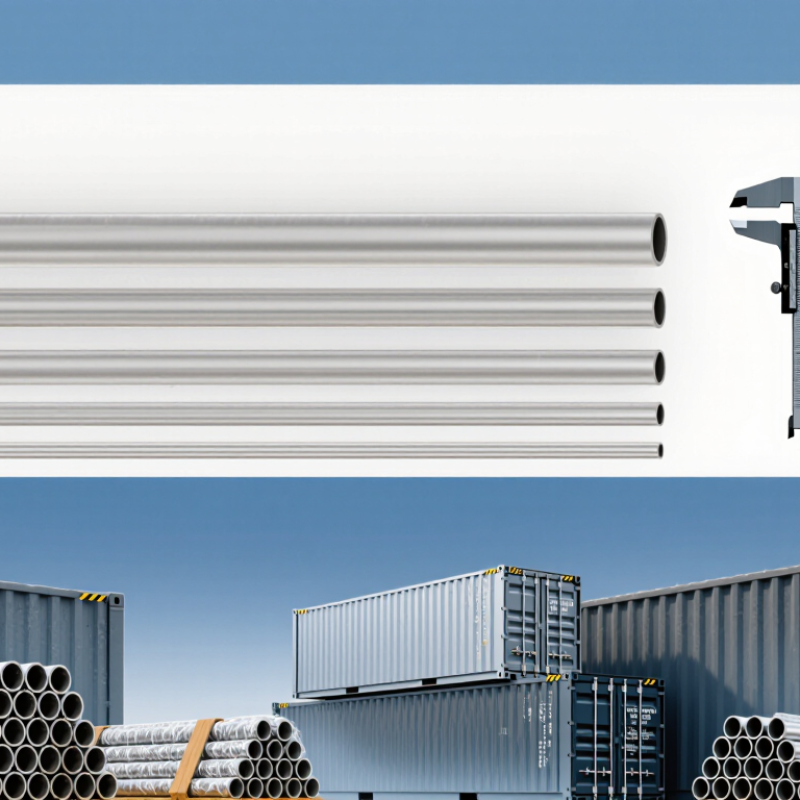
Before requesting quotes, define the pipe precisely. “Carbon steel pipe” is not a complete specification. State the outside diameter, wall thickness, length, grade, end finish, and quantity. Include the service medium, design pressure, operating temperature, and corrosion conditions. These details prevent suppliers from comparing different products under one price.
Choose a recognized standard, such as ASTM A106, API 5L, ISO 3183, or EN 10216, when technically appropriate. Check whether the standard covers seamless or welded production. Specify heat treatment, hydrostatic testing, ultrasonic examination, dimensional tolerances, and required inspection documents. ASME B36.10M can support dimensional selection for many steel pipe applications. One detail is easy to miss: define whether the quoted weight is theoretical or actual.
The global steel market is enormous. World Steel Association data reported about 1.89 billion tonnes of crude steel production in 2023. That scale creates many sourcing options, but also increases specification risk. In practical purchasing work, I have seen a low quote become expensive after coating, testing, or special packing was added. Ask for a line-by-line quotation. Request mill certificates, test reports, production lead time, packaging photos, and delivery terms. Include acceptance criteria for visual defects and marking. I would also review the draft specification once more; small wording gaps can change the final shipment.
| No. | Buying Tip | Requirement to Define | Recommended Data to Provide | Why It Matters | Typical Reference |
|---|---|---|---|---|---|
| 1 | Specify the Pipe Material | Material grade, chemical composition, corrosion environment, and service temperature. | State whether the pipe is carbon steel, stainless steel, alloy steel, ductile iron, or another metal. Include the applicable grade and any required corrosion allowance. | Different grades have different strength, weldability, corrosion resistance, density, and procurement costs. A material name alone may not define the required performance. | Common examples include carbon steel, stainless steel 304/316 families, and aluminum alloys. Final selection should follow the application standard and engineering specification. |
| 2 | Define Outside Diameter and Wall Thickness | Outside diameter (OD), inside diameter (ID), wall thickness, and dimensional tolerance. | Provide the nominal pipe size or exact OD, required wall thickness, tolerance limits, and whether dimensions are metric or imperial. | Diameter affects flow capacity and connection compatibility, while wall thickness affects pressure resistance, weight, and material cost. | For a fixed OD, a thicker wall reduces the ID. Nominal pipe size is not always equal to the measured OD, so the governing dimensional standard should be named. |
| 3 | Choose the Correct Manufacturing Type | Seamless, longitudinally welded, spiral welded, cold-drawn, hot-finished, or fabricated pipe. | Identify the manufacturing process, weld condition, heat treatment, surface condition, and any restrictions on welded or seamless construction. | Manufacturing route influences available sizes, weld inspection requirements, dimensional consistency, pressure performance, lead time, and price. | Seamless pipe has no longitudinal weld; welded pipe is produced from plate or strip with a welded seam. The appropriate type depends on design requirements, not simply on price. |
| 4 | State the Applicable Standard | Product standard, dimensional standard, pressure class, and acceptance criteria. | List the exact standard designation and edition when relevant, together with grade, schedule, class, or category. | Standards define chemical limits, mechanical properties, dimensions, tolerances, testing, marking, and documentation. Vague standard references create quotation and inspection disputes. | Examples include ASTM, ASME, EN, ISO, API, and national standards. The selected standard must be accepted in the destination market and project documentation. |
| 5 | Confirm End Connections and Surface Finish | Pipe ends, beveling, threading, grooving, flanges, coating, pickling, polishing, or other finishing requirements. | Specify plain ends, beveled ends, threaded ends, grooved ends, flange details, coating type, coating thickness, and finish grade where applicable. | Connection and finish requirements determine installation compatibility, corrosion protection, fabrication work, packaging, and total delivered cost. | A commonly used butt-weld preparation is a beveled end, but the bevel angle, root face, and tolerance must follow the project specification or applicable standard. |
| 6 | Define Inspection and Test Requirements | Mechanical tests, chemical analysis, hydrostatic or nondestructive testing, visual inspection, and certification. | Request the required inspection plan, test frequency, test pressure where applicable, NDT method, acceptance level, and material test certificate type. | Testing verifies that the supplied pipe meets the specified material, dimensional, and integrity requirements. Additional testing can affect cost and production time. | Common controls include tensile testing, yield strength, elongation, hardness, chemical analysis, hydrostatic testing, ultrasonic testing, radiographic testing, and dimensional inspection. |
| 7 | Clarify Quantity, Delivery, and Trade Terms | Order quantity, pipe length, packing, shipment port, delivery destination, lead time, currency, and Incoterms. | Provide total quantity, preferred length, allowable length variation, bundling requirements, marking, required delivery date, and the agreed Incoterms rule and named place. | Logistics conditions influence freight, loading efficiency, customs documents, insurance responsibility, landed cost, and the supplier’s production schedule. | Common commercial terms include EXW, FOB, CIF, and DAP. Incoterms allocate key costs and risks, but they do not replace the sales contract or product specification. |
Quote-request checklist: Material grade • OD and wall thickness • Manufacturing type • Applicable standard • End and surface requirements • Inspection documents • Quantity and delivery terms

"*" indicates required fields