"*" indicates required fields

Choosing the right steel and pipe supplier in 2026 takes more than comparing prices. A low quote can hide long lead times, limited stock, or costly processing. The best fit depends on your project’s dimensions, grade, volume, delivery window, and documentation needs. A supplier should answer specific questions clearly. Can it provide traceable material records? Can it explain how it handles shortages? Small details matter.
Andrew Carnegie, the steel industrialist, is often credited with this advice: “I just watch what they do.” For buyers, that means checking performance, not promises. Ask for recent delivery examples, inspect sample mill certificates, and confirm how cut lengths and bundled pipe will arrive. A yard visit can reveal storage and labeling practices. So can a candid call with a past customer. No scorecard catches every surprise.
This guide explores practical ways to assess product range, quality controls, inventory, pricing, logistics, and communication. It also considers how to compare suppliers fairly when one offers stocked material and another promises a mill-direct order. Requirements differ by application, so verify specifications with your engineering or procurement team. I would not treat a polished website as proof of reliability. A missed detail can still disrupt a schedule. The goal is a dependable steel and pipe partner whose capabilities match the work—and whose limits are clear before the order is placed.
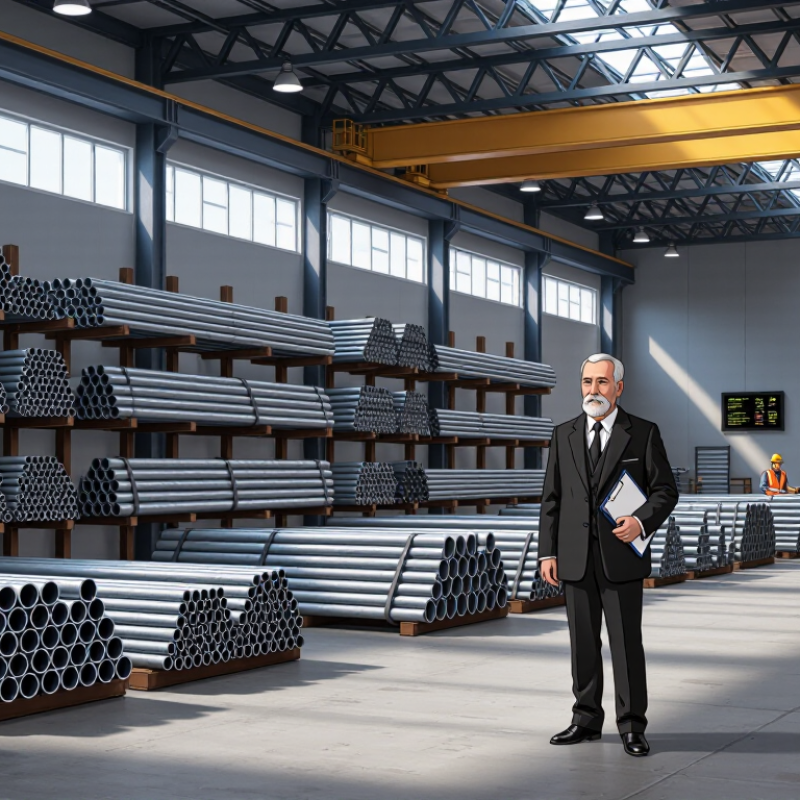
In 2026, choosing a steel and pipe supplier should begin with a precise material specification. A vague request for “carbon steel pipe” invites substitutions, delays, and difficult inspections. Write the service, outside diameter, wall thickness, grade, quantity, and delivery condition. Then identify the governing standard. ASTM grades commonly define chemistry, mechanical properties, and testing for pipes, plates, and fittings. API requirements may control line pipe performance, including PSL level, toughness, testing, and traceability. EN grades require careful attention to designation, delivery condition, tolerances, and inspection documents. Keep it exact.
Ask suppliers to quote the current standard edition and state every deviation clearly. A certificate showing only a similar grade is not enough. Check heat numbers against the material test certificate, packing list, and pipe markings. Request EN 10204 3.1 documentation when project control requires certified inspection results. For welded applications, review carbon equivalent, welding procedure compatibility, and impact-test temperature. For pressure service, confirm hydrostatic testing, dimensional tolerances, and non-destructive examination. Small omissions can become expensive field problems.
Supplier evaluation should include more than price and delivery promises. Request sample documents, production records, and evidence of traceability before placing a large order. Confirm whether testing is performed internally or by an independent laboratory. Review the supplier’s response to rejected material, damaged coatings, and specification changes. One imperfect habit deserves reflection: buyers sometimes accept “equivalent” grades to save time. That shortcut may weaken compliance, weldability, or service life. A reliable supplier asks questions before quoting, not after the shipment arrives. Documents matter.
| Material / Grade | Applicable Standard | Product Form | Minimum Yield Strength | Minimum Tensile Strength | Typical Thickness Basis | Common Applications | Key Supplier Documents or Checks |
|---|---|---|---|---|---|---|---|
| A36 | ASTM A36/A36M | Structural plate, bar, angle, channel, and other hot-rolled shapes | 250 MPa (36 ksi) | 400–550 MPa (58–80 ksi) | Yield value commonly specified for products up to 200 mm; requirements vary by product form and thickness | General structural frames, base plates, brackets, platforms, and supports | Material test certificate, heat number traceability, chemical analysis, tensile test, and dimensional inspection |
| A572 Grade 50 | ASTM A572/A572M | High-strength low-alloy structural plate, sheet, and shapes | 345 MPa (50 ksi) | 450 MPa (65 ksi) | Minimum values depend on product thickness and form | Bridges, heavy structures, crane components, towers, and transportation infrastructure | Grade confirmation, chemical limits, tensile and yield results, impact testing where specified, and weldability review |
| A500 Grade B | ASTM A500/A500M | Cold-formed welded or seamless carbon structural tubing | 315 MPa (46 ksi) | 400 MPa (58 ksi) | Requirements apply to round, square, rectangular, and special-shape tubing | Structural columns, trusses, handrails, frames, and mechanical supports | Tubing dimensions, wall thickness, outside diameter, corner radius, weld quality, flattening test, and material certificate |
| A53 Grade B | ASTM A53/A53M | Seamless or welded black and hot-dipped galvanized steel pipe | 240 MPa (35 ksi) | 415 MPa (60 ksi) | Schedule, nominal pipe size, manufacturing type, and end finish must be defined | Steam, water, air, low-pressure process piping, and general mechanical services | Pipe type, hydrostatic or nondestructive testing, chemical composition, tensile test, wall thickness, and end condition |
| X42 | API Specification 5L | Seamless or welded line pipe | 290 MPa (42.1 ksi) | 415 MPa (60.2 ksi) | Pipe diameter, wall thickness, PSL level, delivery condition, and manufacturing process must be specified | Onshore and offshore transmission of oil, gas, and other pressurized fluids | PSL1 or PSL2, hydrostatic test, chemical and tensile results, weld inspection, heat traceability, and dimensional records |
| X52 | API Specification 5L | Seamless or welded line pipe | 360 MPa (52.2 ksi) | 460 MPa (66.7 ksi) | Requirements vary with PSL, pipe size, wall thickness, and delivery condition | Transmission pipelines requiring higher strength than X42 | PSL designation, hydrostatic test, full chemical analysis, tensile test, weld NDE, impact testing when required, and traceability |
| X65 | API Specification 5L | Seamless or welded line pipe | 450 MPa (65.3 ksi) | 535 MPa (77.6 ksi) | Pipe size, wall thickness, PSL2 requirements, toughness, and sour-service conditions must be defined | High-pressure oil and gas transmission pipelines | PSL2 compliance, impact toughness, hardness limits, weld procedure compatibility, sour-service requirements where applicable, and complete MTRs |
| S275JR | EN 10025-2 | Hot-rolled structural steel plate, sections, and bars | 275 MPa for thickness up to 16 mm; lower values may apply at greater thicknesses | 410–560 MPa, depending on thickness | Strength values are thickness-dependent and must be checked against the ordered product form | General structural steelwork, platforms, frames, and building components | Inspection certificate to EN 10204, chemical composition, yield and tensile results, impact designation JR, and dimensional tolerances |
| S355JR | EN 10025-2 | Hot-rolled structural steel plate, sections, and bars | 355 MPa for thickness up to 16 mm; lower values may apply at greater thicknesses | 470–630 MPa, depending on thickness | Strength and elongation requirements vary with thickness and product type | Heavy structural frames, bridges, machinery supports, towers, and industrial facilities | EN 10204 inspection certificate, heat traceability, chemical analysis, tensile results, JR impact test at 27 J and +20°C, and dimensional inspection |
Specification note: Confirm the latest edition of the applicable standard, product form, nominal size, wall thickness, delivery condition, testing level, impact requirements, corrosion or sour-service conditions, tolerances, coating system, and EN 10204 certification level before placing an order. Mechanical properties can vary by thickness, manufacturing route, product form, and specified supplementary requirements.

"*" indicates required fields