"*" indicates required fields

Global buyers often judge an aluminum strut by its price and dimensions. That is not enough. Alloy, temper, profile tolerances, finish, and packaging can affect fit, service life, and landed cost. A rail that looks correct in a catalog may arrive with a slot that does not match your brackets. Small details matter.
For transparency, the following is an illustrative quote from a composite expert, not a verified statement by a named industry professional: “Choose the aluminum strut around the load, environment, and connection system—not the catalog photo.” It captures a practical sourcing principle. Buyers should request a current drawing, material specification, and inspection details before approving production. Ask how the supplier controls straightness and surface quality. Check whether the finish suits indoor use, outdoor exposure, or a corrosive setting. Confirm packaging protects long lengths from scratches and bending during transit.
Then compare suppliers on more than unit price. Review sample consistency, production capacity, communication, and support for nonstandard cuts or drilling. Clarify minimum order quantities and delivery assumptions in writing. Trade-offs remain. A thicker profile may add weight and cost, while a lower-cost option may require closer inspection. There is no universal best choice. The right one depends on your project, and buyers can still miss details when specifications are vague. The ten tips ahead offer a structured way to evaluate options, ask sharper questions, and reduce avoidable surprises before placing a global order.
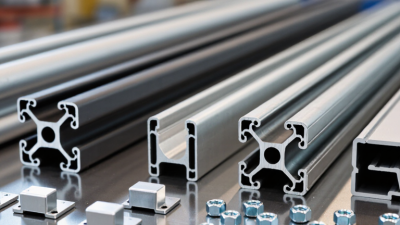
Aluminum strut is an extruded channel used to build adjustable support frames for pipes, cable trays, equipment, and solar components. Its continuous slot accepts channel nuts, which can be positioned along the rail before tightening. That saves drilling. A basic system combines strut, connectors, fasteners, and sometimes end caps or brackets. Together, these parts form a modular framework that can be reconfigured when equipment locations change.
The details matter. Channel depth, wall thickness, alloy, and temper affect stiffness and load capacity. A light rail may suit a small instrument rack, but it may flex under a long, unsupported span. Check manufacturer load tables for the exact profile and span, and consider deflection as well as ultimate load. Connections matter too: poorly matched nuts or loose bolts can weaken an otherwise suitable frame. In humid or corrosive settings, verify the finish and compatibility of adjacent metals to reduce corrosion risk. Not always obvious. During a site check, measure the actual spacing, note overhead clearance, and inspect how the structure will be anchored. Published ratings help, but installation conditions can differ from test conditions. I would not assume every aluminum strut system is interchangeable; that assumption is easy to make, and worth questioning.
| No. | Buying Topic | What to Know | Buyer Check |
|---|---|---|---|
| 1 | Understand the system | Aluminum strut is an extruded support channel with a continuous slot. A system commonly combines channels, brackets, channel nuts, bolts, and accessories to form adjustable frames and supports. | Confirm which components are included and whether the channel, fittings, and fasteners are designed to work together. |
| 2 | Check how connections work | A channel nut is inserted into or positioned within the channel slot and tightened against the channel lips by a compatible bolt. Brackets connect channels at corners, intersections, or mounting points. | Match nut type, bolt thread, slot opening, and channel profile. Do not assume components with similar dimensions are interchangeable. |
| 3 | Select the profile | Profiles vary in width, height, wall thickness, slot geometry, and number of open sides. A 41 × 41 mm channel is one commonly available nominal profile; dimensions and series vary by supplier and market. | Request a dimensioned drawing showing outside dimensions, slot width, wall thickness, and dimensional tolerances. |
| 4 | Verify the alloy and temper | Aluminum strut is made in different alloys and tempers. 6063 and 6061 are examples used for extruded aluminum products, but their properties and suitability are not identical. | Specify the required alloy and temper in the purchase documents, and request a material test certificate when traceability is required. |
| 5 | Review load information | Capacity depends on the profile, span, load direction, support conditions, connection details, and installation. A channel-only rating may not represent the capacity of the assembled system. | Ask for load tables or engineering calculations for the exact configuration. Do not use a generic capacity figure for a safety-critical design. |
| 6 | Choose the surface finish | Common options include mill finish and anodized finishes. Finish choice affects appearance and surface characteristics; environmental exposure and contact with other materials also matter. | State the finish, color if applicable, and any relevant exposure conditions. Check compatibility where dissimilar metals or corrosive environments are present. |
| 7 | Confirm length and cutting | Stock lengths and cut-to-length services differ by supplier. Cutting can affect shipping, material utilization, assembly time, and the amount of on-site machining required. | Confirm available lengths, cut tolerances, end condition, labeling, and whether protective packaging is supplied for finished surfaces. |
| 8 | Check compatibility and standards | Channel dimensions and accessory designs are not universally standardized across all product families. Project requirements may also call for specific material, quality, or test documentation. | Compare drawings and samples before ordering, and list required standards, inspection documents, and acceptance criteria in the specification. |
| 9 | Plan international shipping | Long extrusions need suitable handling and packaging to limit bending, abrasion, and transit damage. Freight cost and import requirements depend on destination, shipment size, and trade terms. | Confirm packed dimensions, gross weight, package protection, delivery terms, country-of-origin documents, and the import classification with the relevant customs adviser. |
| 10 | Evaluate total project cost | The purchase price is only one part of total cost. Accessories, cutting, packaging, freight, duties, inspection, and assembly labor can affect the delivered project cost. | Compare quotations using the same profile, alloy, finish, quantities, accessories, delivery terms, and documentation requirements. |
Note: Profile availability, dimensions, mechanical properties, load ratings, finishes, and documentation vary by product and supplier. Verify project-specific requirements before purchase and installation.



"*" indicates required fields