2026 Best Aluminum Strut Channel Types for Global Buyers?

Choosing the right aluminum strut channel in 2026 requires more than comparing prices and dimensions. Global buyers must examine alloy grades, wall thickness, slot patterns, finishes, load ratings, and connection methods. Small differences can affect installation speed, corrosion resistance, and long-term safety.

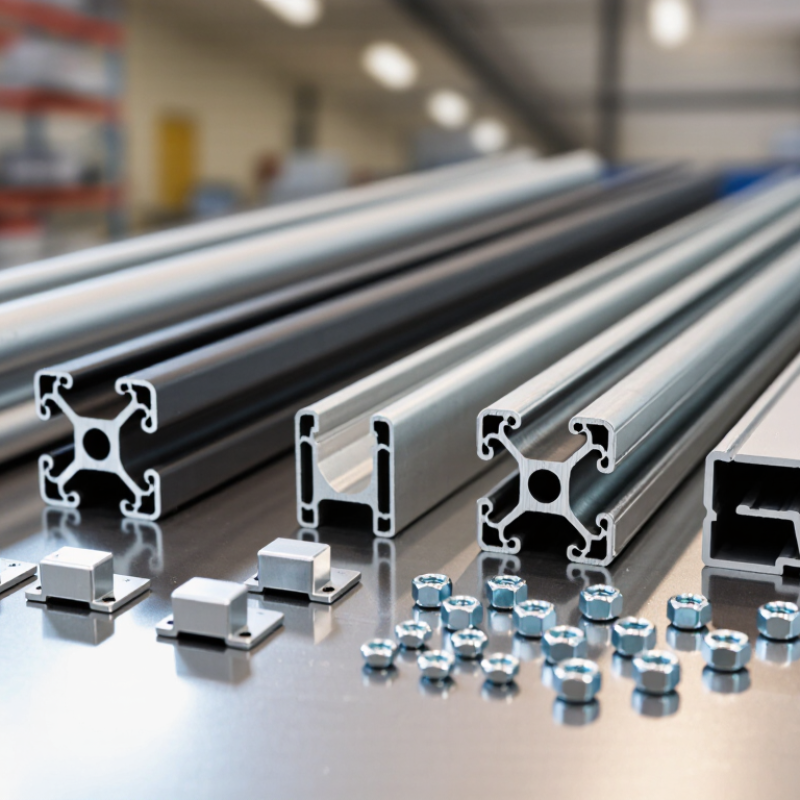
This guide introduces common aluminum strut types for industrial, commercial, solar, HVAC, and electrical applications. It considers slotted channels, solid channels, shallow profiles, deep profiles, and lightweight framing options. Each type serves a different purpose. A deep channel may support heavier cable trays, while a compact profile can fit limited ceiling spaces. Surface treatment also matters, especially near coastal facilities where salt exposure can weaken poor finishes.

Real projects rarely match product catalog examples. That is worth remembering. A channel suitable for an indoor warehouse may fail expectations in a humid processing plant. Buyers should verify supplier test data, dimensional tolerances, alloy information, and compatibility with nuts, brackets, and fasteners. Regional standards and engineering requirements also need careful review before purchase.

Practical experience shows that the cheapest option is not always economical. Installation delays, damaged threads, or mismatched accessories can increase total cost. Reliable suppliers explain these risks clearly and provide traceable documentation. This overview helps purchasing teams compare aluminum strut solutions with greater confidence, while recognizing that project conditions must guide the final selection.
2026 Best Aluminum Strut Channel Types for Global Buyers?

Aluminum Strut Channel Basics: 6063-T5 Profiles, Sizes, and Standards

For global buyers in 2026, aluminum strut channel often means a 6063-T5 extrusion. This alloy offers good corrosion resistance, moderate strength, and a clean surface for indoor or outdoor systems. T5 temper means the profile is artificially aged after extrusion. It is not the strongest aluminum temper. That distinction matters.

Common channel sizes include 41 x 41 mm, 41 x 21 mm, and 41 x 62 mm. Wall thickness may range from about 1.5 to 3.0 mm, depending on the load design. Slotted channels speed up installation, while solid channels can provide better continuous support. Buyers should check allowable loads, span length, slot dimensions, and deflection data. A thicker profile is not automatically the safer choice.

Tips: Request the alloy and temper certificate, dimensional inspection report, and coating details. Compare ASTM B221 with applicable EN 755 or EN 12020 requirements. These standards address extrusion quality, but they do not replace structural calculations. Inspect straightness, burrs, slot alignment, and surface damage before installation. I have seen attractive profiles fail because the connection hardware was undersized. A clean specification can still miss real site conditions. Consider stainless or coated fasteners where moisture and dissimilar-metal contact may cause problems.

6063-T5 vs 6061-T6: Comparing Approximate 110 and 240 MPa Yield Strength

For global buyers, aluminum strut channel selection often begins with yield strength. The Aluminum Association’s Aluminum Standards and Data lists 6063-T5 extrusion values near 110 MPa, while 6061-T6 commonly reaches about 240 MPa. These are approximate reference figures. Actual results depend on section thickness, testing direction, and production control.

ASTM B221/B221M covers aluminum alloy extruded bars, rods, profiles, and tubes. Its requirements show why temper designation matters. A 6063-T5 channel offers good corrosion resistance, surface quality, and easy extrusion. It suits light cable supports, partition frames, and indoor service installations. A 6061-T6 channel provides much higher resistance to permanent bending. It is more suitable for heavily loaded supports, equipment frames, and longer spans.

Strength is not the whole buying decision. A channel’s shape, wall thickness, fastener spacing, and unsupported length can change performance sharply. One practical mistake is comparing 110 MPa and 240 MPa without checking the same test standard. That comparison is useful, but imperfect. Buyers should request mill certificates, temper confirmation, dimensional tolerances, and tensile-test results. EN 755-2 and ASTM B221/B221M can support cross-market verification. A higher yield value may also bring harder machining and higher material cost. The strongest option is not always the most efficient one.

2026 Best Aluminum Strut Channel Types for Global Buyers

Approximate minimum yield strength comparison: 6063-T5 is commonly selected for lightweight architectural and general-purpose channels, while 6061-T6 provides substantially higher strength for demanding structural applications.

Indicative values: approximately 110 MPa for 6063-T5 and 240 MPa for 6061-T6. Actual mechanical properties may vary by product specification, section thickness, processing, and applicable standard.

Channel Designs Compared: Solid, Slotted, Back-to-Back, and Deep-Series Types

2026 Best Aluminum Strut Channel Types for Global Buyers?

Channel design affects installation speed, load capacity, and long-term reliability. Solid aluminum strut channels offer clean surfaces and strong resistance to moisture. They suit exposed frames, equipment supports, and projects needing fewer entry points. However, installers must drill accurately. A misplaced hole can weaken the assembly and waste material.

Slotted channels provide adjustable connections with less site drilling. Their factory-made slots help align brackets, clamps, and threaded hardware quickly. Slot spacing matters, especially when imported fittings must match the channel. Back-to-back channels create a deeper structural section and support heavier cable trays, pipe racks, or suspended systems. They also improve stiffness, but they add weight and may require wider joining hardware. The easy choice can be wrong.

Deep-series channels use taller profiles for greater section depth and improved load performance. They can reduce deflection across longer spans, yet their dimensions may complicate transport and enclosure fitting. I have seen buyers focus on alloy price while overlooking wall thickness and connection strength. That mistake is expensive. Compare alloy, temper, slot geometry, profile dimensions, load tables, surface treatment, and test documents before ordering. Check compatibility with local fasteners and installation practices. Ask for sample sections when tolerances appear uncertain. Aluminum is light, not automatically strong. A qualified engineer should review unusual loads, vibration, or long unsupported spans.

2026 Best Aluminum Strut Channel Types for Global Buyers? - Channel Designs Compared: Solid, Slotted, Back-to-Back, and Deep-Series Types

Channel Type Typical Cross-Section Typical Depth Range Slot / Hole Pattern Relative Load Capacity Installation Speed Typical Applications Main Advantages Important Limitations
Solid Channel Single U-shaped profile with continuous flanges and no factory slots Commonly about 13/16–2 7/16 in (21–62 mm) No pre-punched slots; holes must be drilled or cut on site when required Medium to high, depending on section depth, wall thickness, span, and connection method Moderate; field drilling can increase labor time Custom frames, equipment supports, machine guarding, and applications requiring precise hole placement Continuous metal provides a clean surface and flexible custom fabrication Requires more fabrication work; drilling may reduce corrosion protection around cut areas
Slotted Channel Single U-shaped profile with elongated slots in one or both flanges Commonly about 13/16–2 7/16 in (21–62 mm) Factory-punched longitudinal slots; slot size and pitch vary by section and region Medium; slot geometry can reduce net section strength compared with an equivalent solid profile Fast; adjustable nuts and bolts can be positioned without drilling most connection holes Cable tray supports, pipe racks, solar mounting subframes, HVAC supports, and general modular framing Quick alignment, adjustable connections, and reduced site fabrication Slots require compatible hardware; allowable loads must be checked against the manufacturer’s tables
Back-to-Back Channel Two single channels joined along their backs to form a symmetrical double profile Often based on 1 5/8 in (41 mm) or deeper single-channel sections Usually slotted on both outward-facing sides; exact patterns vary by system High relative to a single channel of similar material, particularly for beams and columns Fast after fabrication; heavier assemblies may require additional handling Longer spans, portal frames, equipment stands, vertical supports, and heavier service racks Improved stiffness, two usable mounting faces, and better resistance to twisting than a single channel Higher material cost and weight; joining bolts or connectors must be designed for the applied load
Deep-Series Channel Single, deeper U-shaped profile designed for increased section depth and stiffness Commonly about 2 7/16–3 1/4 in (62–83 mm), with larger sizes also available Available in solid and slotted versions; slot pitch and opening dimensions are system-specific High; greater depth generally improves bending stiffness for the same alloy and wall thickness Fast to moderate, depending on whether the selected version is slotted or solid Long-span supports, rooftop equipment frames, industrial platforms, heavy cable routes, and structural subframes Higher stiffness and improved span capability without combining two separate channels Larger envelope, higher unit cost, and greater sensitivity to connection design and transport dimensions
Selection note: Dimensions and performance ranges shown are typical market configurations, not universal standards. Actual allowable load depends on aluminum alloy and temper, wall thickness, section properties, span, support spacing, fasteners, eccentric loading, deflection limits, temperature, and applicable regional codes. Confirm the engineering data for the exact profile before specifying or purchasing.

Load Selection Guide: Span, Deflection, Safety Factors, and 2.70 g/cm³ Density

2026 Best Aluminum Strut Channel Types for Global Buyers?

Load selection begins with span, not channel size. Aluminum density is approximately 2.70 g/cm³, according to the Aluminum Association’s Aluminum Design Manual. This makes aluminum lighter than steel, but its lower elastic modulus increases deflection. For a simply supported channel, calculate bending stress and vertical displacement separately. Common project limits include L/240 for general service and L/360 for sensitive installations. These limits are not universal. Local codes may require stricter values.

Use the Aluminum Design Manual and EN 1999-1-1 for alloy properties, section resistance, and stability checks. ASCE/SEI 7-22 can guide the treatment of dead, live, wind, and seismic loads. Select the channel after confirming span, support spacing, connection strength, and load direction. A deeper section often controls deflection better than a thicker lip. Still, this choice can increase connection demands. Engineers sometimes check strength first and overlook vibration. That is a costly blind spot.

Tips: Measure the real span, including support gaps. Apply safety factors required by the governing code, rather than copying a catalog value. Check concentrated loads near fittings. Ask suppliers for certified alloy, temper, dimensions, and test records. In practice, a light channel may pass the strength check but fail the deflection check. Recalculate when temperature, corrosion exposure, or uneven loading changes. Mistakes happen, especially when “safe load” tables hide their assumptions.

Global Buying Standards: ASTM B221, EN 755, ISO 9001, and 2026 Supply Factors

2026 Best Aluminum Strut Channel Types for Global Buyers?

Global buyers should match strut channels with documented standards, not appearance alone.

ASTM B221 commonly covers extruded aluminum profiles, including alloy, temper, and mechanical requirements. EN 755 provides European guidance for extrusion dimensions, mechanical properties, and tolerances. Ask for the exact alloy and temper. A vague “aluminum channel” description is not enough. Check wall thickness, slot geometry, straightness, and load data against the drawing.

ISO 9001 confirms a supplier’s quality management system, but it does not prove every channel meets ASTM B221 or EN 755. Request mill certificates, inspection records, and traceability from billet to packed profile.

Sample testing should include dimensions, hardness, tensile performance, and surface condition. Small deviations matter. A channel that fits one bracket may fail across a long installation.

2026 purchasing decisions should also consider aluminum billet prices, energy costs, freight capacity, currency changes, and regional lead times. Ask whether the supplier can maintain consistent extrusion tooling and packaging during demand spikes. Confirm corrosion protection, cut-length tolerance, minimum order quantities, and replacement policy.

Recycled content may reduce environmental impact, but it can complicate alloy consistency if controls are weak. This point deserves closer review. A lower quotation may hide slower delivery, mixed batches, or incomplete testing. Reliable sourcing needs evidence, not confident wording.

"*" indicates required fields