"*" indicates required fields
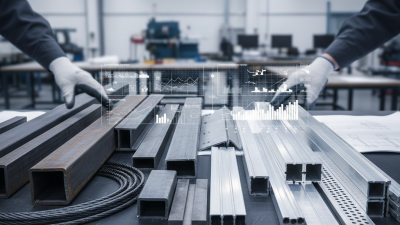
China remains a major source of metal products for global buyers, from steel coils and aluminum profiles to copper parts and stainless-steel fittings. Its manufacturing clusters connect raw materials, precision equipment, skilled workers, and export logistics. This combination helps suppliers serve construction, automotive, machinery, energy, and consumer-goods industries.
Edwin Basson, Director General of the World Steel Association, has emphasized that steel is “one of the most important materials in the world.” His observation explains why buyers examine Chinese steel products so closely. They are not simply purchasing metal. They are selecting strength, consistency, surface quality, processing options, and delivery reliability.
The most traded categories include carbon steel, galvanized steel, stainless steel, aluminum, copper, and fabricated components. Each category serves a different practical need. Galvanized sheets protect roofing and structural parts from corrosion. Aluminum profiles support lightweight frames, doors, solar systems, and industrial equipment. Copper products carry electrical current through cables, connectors, and heat exchangers. Stainless steel appears in kitchens, medical facilities, food plants, and chemical environments.
Quality varies between suppliers. That matters.
A competitive price may hide inconsistent thickness, weak packaging, unclear tolerances, or incomplete inspection records. Experienced buyers usually review mill certificates, production samples, surface treatment, dimensional reports, and third-party inspection arrangements. They also confirm packaging details, loading photos, labeling, and replacement policies before shipment.
This guide explores China’s leading metal products and the reasons global buyers consider them. It also examines practical limitations, because no supplier or material fits every project. Product standards, corrosion exposure, machining requirements, budget, and delivery schedules should shape the final decision. The strongest purchase is not always the cheapest one. It is the one that performs reliably after installation.
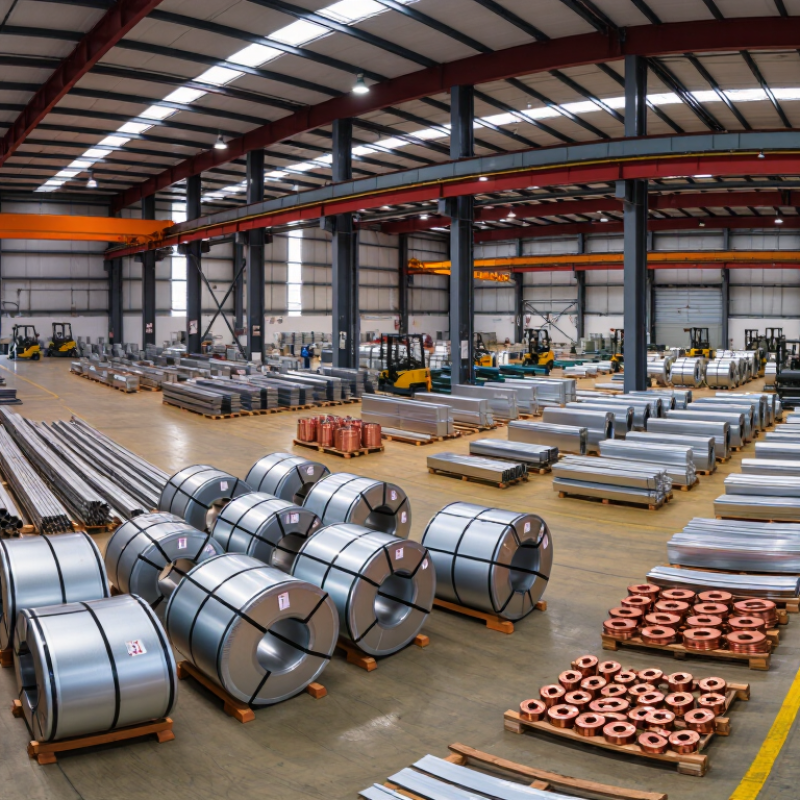
China plays a major role in the global metal products market. Its factories supply steel coils, aluminum profiles, stainless steel fittings, copper components, fasteners, and precision castings. These products support construction, machinery, transportation, energy, and everyday manufacturing. Large production networks often reduce lead times and offer flexible order volumes. Buyers can also request cutting, stamping, welding, surface treatment, and custom packaging.
Quality is not automatic. Experienced buyers usually review material grades, dimensional tolerances, coating thickness, and inspection records. Independent testing can confirm chemical composition and mechanical strength. Clear drawings matter, especially for machined parts with tight tolerances. In my experience, small communication gaps can create expensive problems. A metric thread, surface finish, or packing detail may be understood differently. China’s export strength is real, but supplier selection still requires patience and technical judgment.
Tips: Ask for samples before mass production. Confirm standards in writing. Request photos of finished goods and packaging. Compare test reports with the purchase specification. Leave time for corrective work, because production rarely follows the first plan perfectly. Also examine the supplier’s experience with your destination market. A low price may hide weaker inspection, inconsistent material, or higher transport risk. Good results usually come from detailed communication, staged quality checks, and realistic expectations.
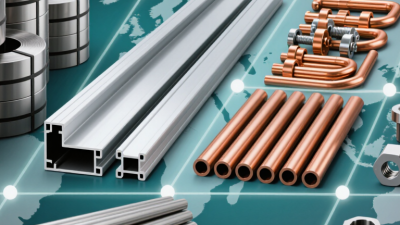
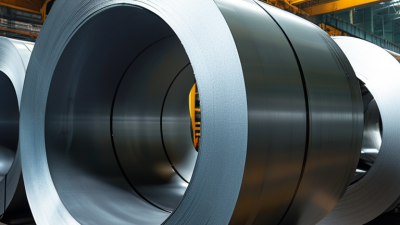
China’s metal supply covers several practical categories for global buyers. Carbon-steel coils and sheets serve construction, machinery, and vehicle components. Stainless-steel sheets support food equipment, architectural panels, and chemical processing. Pipes and tubes range from precision tubing to large welded sections. Structural beams, channels, and angles remain common in warehouses, bridges, and factory frames.
The World Steel Association’s World Steel in Figures 2025 reports that China produced 1,005.1 million tonnes of crude steel in 2024. That represented about 53.3% of global output. This scale supports broad availability, but volume alone does not prove suitability. Buyers should verify grade certificates, dimensional tolerances, surface treatment, and heat numbers. Small paperwork gaps can create expensive delays.
Non-ferrous categories also matter. Aluminum profiles, plates, and foils offer lighter solutions for transport, façades, and electrical enclosures. Copper sheets, bars, tubes, and wires support power equipment and heat-transfer systems. In my sourcing experience, aluminum extrusion quality can vary sharply between suppliers. Die design, alloy control, and straightness need direct inspection. Some specifications look clear but remain incomplete. Define temper, coating thickness, packing method, and testing standards before requesting quotations. Independent inspections and laboratory checks add cost, yet they improve traceability and reduce avoidable disputes.
What Are China Top Metal Products for Global Buyers?
Materials, Specifications, and Common Industrial Uses
China supplies a broad range of metal products for construction, machinery, energy, and fabrication. Carbon steel plates are widely used for frames, tanks, bridges, and heavy equipment. Stainless steel sheets resist corrosion in food-processing lines, medical facilities, and coastal projects. Aluminum profiles offer low weight and clean surfaces for windows, transport systems, and machine guards. Copper tubes and bars support electrical, refrigeration, and heat-transfer applications.
Material selection depends on chemistry, strength, hardness, surface finish, and temperature performance. Common specifications include thickness, width, diameter, tolerance, temper, and heat-treatment condition. Buyers should request mill test certificates, dimensional inspection records, and samples before placing large orders. Applicable standards may include ASTM, EN, JIS, or ISO requirements, depending on the destination market. A clear drawing prevents costly interpretation errors.
Real projects often reveal the difficult details. A polished surface may still hide flatness problems. A high-strength alloy may become harder to weld. Packaging also matters, especially for long profiles exposed to moisture during sea transport. I have seen specifications that looked complete but omitted edge condition and packing method. That gap can delay production. Buyers should compare test data with actual operating conditions, not only the lowest quotation. Supplier audits, third-party inspections, and small trial orders add practical confidence. Yet no inspection replaces careful engineering review.
China’s leading metal products include steel coils, pipes, fasteners, aluminum profiles, castings, and machined parts. The World Steel Association’s World Steel in Figures 2024 reports that China produced about 1.005 billion tonnes of crude steel in 2023. That represented roughly 53% of global output. Scale helps control costs, but volume does not guarantee consistency.
Manufacturing usually begins with chemical analysis of iron, scrap, or aluminum billet. Steel may pass through blast furnaces, basic oxygen furnaces, continuous casting, and hot or cold rolling. Aluminum products often use billet casting, homogenizing, extrusion, and artificial aging. At the factory, buyers should check heat numbers, furnace records, and rolling temperatures. Process records matter as much as shiny surfaces.
Quality control combines laboratory testing with physical inspection. Spectrometers verify alloy chemistry, while ultrasonic testing can reveal internal cracks. Tensile, hardness, bend, and impact tests measure performance under stress. Calibrated gauges check thickness, diameter, flatness, and hole positions. The ISO Survey 2023 recorded more than 1.5 million ISO 9001 certificates worldwide. Certification shows a management system, not perfect parts. Practical audits should still compare samples with mill certificates and drawings. Sampling can miss defects. That weakness deserves attention.
| Metal Product | Common Grades or Specifications | Typical Product Forms | Typical Manufacturing Route | Common Size Range | Key Quality-Control Checks | Typical International Applications |
|---|---|---|---|---|---|---|
| Carbon Steel Plate | ASTM A36, ASTM A572 Grade 50, EN 10025 S355 | Hot-rolled plates, cut-to-length sheets | Electric-arc or basic-oxygen steelmaking, continuous casting, hot rolling, leveling, cutting and surface treatment | Approximately 6–150 mm thickness; widths commonly up to about 3,000 mm, subject to mill capability | Chemical composition, tensile and yield strength, elongation, impact testing when specified, thickness and flatness, ultrasonic testing for critical orders | Structural frames, bridges, machinery bases, pressure-free tanks and general fabrication |
| Hot-Rolled Carbon Steel Coil | ASTM A36, ASTM A1011, EN 10025 grades | Hot-rolled coils, pickled and oiled coils, slit coils | Slab reheating, roughing and finishing stands, controlled cooling, coiling, pickling and slitting | Approximately 1.2–25 mm thickness; coil widths commonly 900–2,000 mm | Coil thickness and width, surface condition, yield and tensile strength, chemical analysis, crown and flatness, weldability indicators | Automotive parts, construction components, agricultural equipment and industrial fabrication |
| Galvanized Steel Coil and Sheet | EN 10346 DX51D+Z, ASTM A653 CS Type B; common coating classes include Z275 | Hot-dip galvanized coils, sheets, slit strips | Cold-rolled steel cleaning, annealing, molten-zinc bath coating, air-knife control, skin-pass rolling and cutting | Approximately 0.30–3.00 mm thickness; common coating masses range from about 60–600 g/m² total on both sides | Zinc coating mass, coating adhesion, coating appearance, base-metal thickness, tensile properties, bend testing and dimensional tolerances | Roofing, wall panels, ductwork, appliances, HVAC components and light structural products |
| Stainless Steel Sheet and Coil | 304/304L, 316/316L, 430; ASTM A240 and EN 10088 specifications | Cold-rolled or hot-rolled sheets, coils, strips | Melting and refining, continuous casting, hot rolling, annealing, pickling, cold rolling and final surface finishing | Approximately 0.20–12 mm thickness; finishes may include 2B, BA, No. 4 and hot-rolled pickled surfaces | Chemical composition, corrosion-related grade verification, tensile properties, hardness, thickness, surface finish, intergranular corrosion testing when required | Food-processing equipment, chemical equipment, architectural panels, kitchen equipment and medical environments |
| Aluminum Sheet and Coil | AA 1050, 3003, 5052, 6061; ASTM B209 and EN 485 specifications | Mill-finish sheets, coils, checker plates, coated sheets | Direct chill casting, homogenizing, hot rolling, cold rolling, annealing, leveling and slitting | Approximately 0.20–6 mm thickness; widths commonly up to about 2,000 mm | Alloy verification, temper, tensile strength, elongation, thickness, flatness, surface defects and dimensional tolerances | Transportation, roofing, cladding, heat exchangers, electrical enclosures and general fabrication |
| Aluminum Extrusion Profiles | 6063-T5/T6, 6061-T6; ASTM B221 and EN 755 specifications | Standard profiles, custom hollow sections, channels and structural shapes | Billet heating, die extrusion, stretching, aging or heat treatment, cutting and optional anodizing or powder coating | Profile dimensions commonly range from small sections to approximately 300 mm across, depending on geometry and press capacity | Alloy and temper, dimensional tolerances, straightness, surface quality, tensile properties, coating thickness and color uniformity when finished | Windows, doors, solar mounting systems, machinery frames, transport components and heat sinks |
| Copper Tube and Pipe | ASTM B88 Types K, L and M; EN 1057 copper tube grades | Straight lengths, coils, annealed or hard-drawn tubes | Billet casting, extrusion or piercing, tube drawing, annealing, sizing, cleaning and cutting | Common outside diameters range from approximately 6–108 mm; wall thickness depends on type and size | Chemical composition, outside diameter, wall thickness, tensile properties, eddy-current or hydrostatic testing, cleanliness and leak tightness | Plumbing, refrigeration, air conditioning, heat exchangers and industrial fluid systems |
| Seamless and Welded Steel Pipe | ASTM A106, ASTM A53, API 5L; EN 10216 and EN 10217 families | Seamless pipe, ERW pipe, longitudinally welded pipe, spiral-welded pipe | Seamless piercing and hot rolling or strip forming and welding, followed by sizing, heat treatment, hydrostatic testing and end finishing | Typical outside diameters range from about 21 mm to more than 1,200 mm; wall thickness varies by schedule and specification | Chemical composition, tensile and yield strength, hydrostatic or electromagnetic testing, weld inspection, dimensional checks and end preparation | Water supply, construction, energy infrastructure, process piping and structural piling |
| Steel Wire Rod | Low-carbon, medium-carbon and alloy grades; ASTM A510/A510M and EN 10016 families | Hot-rolled coils, high-carbon wire rod, welding wire feedstock | Billet reheating, high-speed hot rolling, controlled cooling, coiling and descaling or surface preparation | Common diameters range from approximately 5.5–25 mm | Chemical composition, tensile properties, surface defects, diameter, ovality, decarburization and coil weight | Fasteners, welding consumables, tire cord, wire rope, mesh and spring manufacturing |
| Steel Fasteners | ISO 898-1 property classes 8.8, 10.9 and 12.9; ASTM A307 and ASTM F3125 where specified | Bolts, screws, nuts, washers and threaded rods | Cold heading or hot forging, thread rolling or cutting, heat treatment, surface coating and sorting | Common metric sizes range from M3 to M30 for general industrial use, with larger sizes available for engineered applications | Dimensions and thread gauges, tensile and proof-load testing, hardness, coating thickness, torque or clamp-force testing and batch traceability | Construction, machinery, automotive assemblies, steel structures and maintenance projects |
| Ductile Iron Castings | EN-GJS grades under EN 1563; ASTM A536 grades | Pipe fittings, housings, brackets, valve bodies and machine components | Induction melting, spheroidizing treatment, sand or investment molding, pouring, shakeout, fettling and machining | Small components below 1 kg to castings exceeding 100 kg, depending on design and foundry capability | Chemical composition, nodularity and graphite structure, tensile strength, hardness, dimensional inspection, visual inspection and radiographic testing when required | Municipal infrastructure, pumps, valves, agricultural machinery and industrial equipment |
Global buyers sourcing metal products should evaluate suppliers beyond price. The World Steel Association reported 1,888.2 million tonnes of crude steel production in 2023. This scale creates many options, but also increases quality variation. Request mill certificates, chemical composition, mechanical test results, and batch traceability. A supplier should explain where the material was produced and how it was inspected.
Quality comes first.
Production capacity must match your order pattern. Ask for realistic lead times, minimum order quantities, packaging details, and replacement procedures. The OECD’s 2024 steel capacity analysis highlights continued global capacity pressure, making delivery promises worth testing carefully. Request recent on-time delivery records instead of accepting attractive claims. One delayed shipment can interrupt fabrication, inventory planning, and customer commitments.
Environmental data also deserves attention. The International Energy Agency estimates that iron and steel production creates around 7% to 9% of global energy-related carbon dioxide emissions. Buyers can request emissions data, recycled-content figures, energy sources, and applicable environmental certificates. Compliance should cover product safety, labor practices, customs documents, and destination-market requirements. A polished brochure is not proof. Sometimes, even a detailed audit misses weak subcontractor control, so independent inspections and small trial orders remain sensible. Cost matters, but total cost includes defects, rework, freight, delays, and disposal.
Global buyers commonly source steel, aluminum, copper, zinc and lead products from China. The chart compares approximate 2023 worldwide production benchmarks to indicate the relative scale of each metal supply chain.
Data sources: World Steel Association for crude steel production and U.S. Geological Survey Mineral Commodity Summaries 2024 for primary aluminum, mined copper, mined zinc and mined lead. Production stages differ by metal, so the figures are supply-scale benchmarks rather than direct trade-volume comparisons.
"*" indicates required fields