"*" indicates required fields
Choosing the right aluminum tube steel requires more than comparing prices and polished product photos. The phrase itself can confuse buyers, because aluminum and steel are different materials with different performance characteristics. In this guide, “aluminum tube steel” refers to aluminum tubing often listed beside steel products or searched under this mixed term. Clear specifications matter.
Real fabrication experience shows that small details can change the final result. A 6061-T6 tube may suit a lightweight frame, while 6063 tubing may provide a cleaner surface for visible architectural work. Wall thickness affects strength, weight, bending, and drilling behavior. Tube dimensions must also match the drawing, not merely the supplier’s general description.
These seven tips focus on alloy, temper, dimensions, tolerance, corrosion resistance, joining methods, and supplier reliability. Check mill certificates, test reports, and applicable industry standards before placing an order. A trustworthy supplier should explain material grades, heat treatment, surface finish, and inspection procedures clearly. Ask how each tube was tested. Photos alone prove very little.
Some buyers choose the lowest quotation too quickly. That decision can create poor welds, distorted corners, or unexpected replacement costs later. Even careful professionals occasionally overlook tolerance requirements. I have seen a tube appear correct until calipers revealed an undersized wall. That mistake is easy to avoid, but only with disciplined checking. No checklist replaces engineering judgment. Still, a practical selection process makes errors less likely and helps you choose tubing that performs reliably in its actual environment.
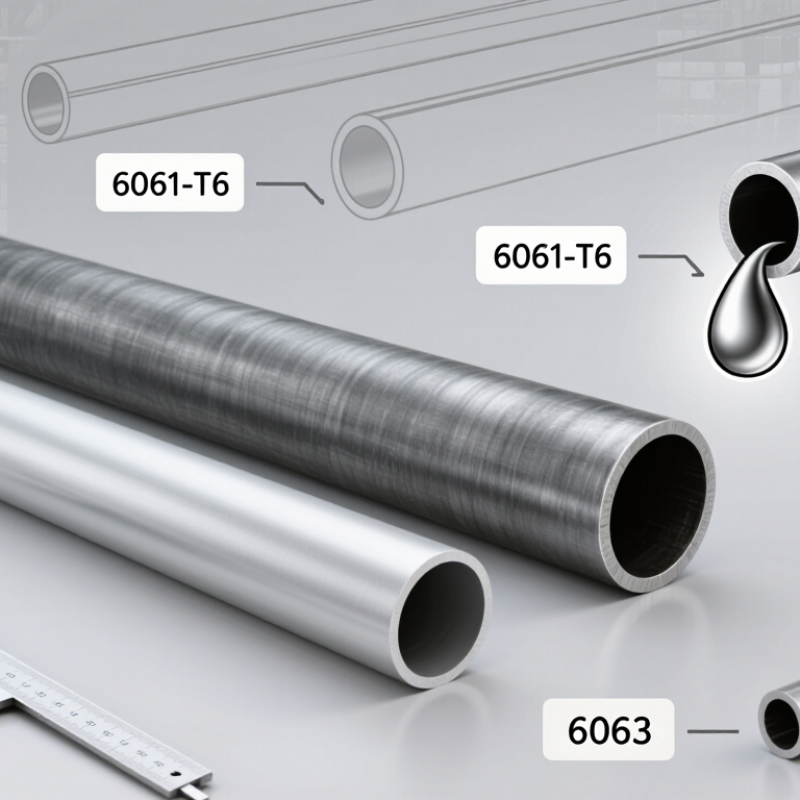
Aluminum tubes and steel tubes are not interchangeable. Aluminum has a density near 2.7 g/cm³, while carbon steel measures about 7.85 g/cm³. This difference can reduce frame weight significantly. The International Aluminium Institute reports that recycled aluminum requires roughly 5% of the energy used for primary production. That matters when lifecycle impact is part of the specification. Steel, however, generally offers higher stiffness and stronger resistance to concentrated loads. It can feel more stable under heavy machinery.
The World Steel Association’s Steel Statistical Yearbook shows steel remains a major structural material worldwide, supported by mature fabrication practices. Aluminum usually costs more per kilogram, yet its lower weight can reduce handling and transport demands. Ask for alloy grade, temper, yield strength, dimensional tolerance, and weld procedure records.
My practical mistake has been trusting a familiar size without checking deflection. Familiar is not always suitable.
7 Tips for Choosing Aluminum Tube Steel?
Match the Tube Material to Your Project Requirements
Tip 1: Define the working environment before choosing aluminum or steel tubing. Aluminum suits lightweight frames, outdoor panels, and projects needing natural corrosion resistance. Steel offers greater stiffness and impact tolerance, but it usually needs protective coating. Tip 2: Check the expected load carefully. A thin aluminum tube may bend where a thicker steel tube remains stable. Do not judge strength by appearance alone. Review the alloy, wall thickness, and tube shape.
Tip 3: Consider weight during installation and transport. Aluminum is easier to lift, drill, and reposition on site. That advantage can reduce labor effort. Tip 4: Examine heat exposure. Aluminum transfers heat quickly and loses strength at temperatures that may not affect some steel grades. Tip 5: Match the material to the joining method. Welding aluminum demands clean surfaces, suitable equipment, and controlled heat. Bolted connections may simplify field repairs, though they can loosen without proper design.
Tip 6: Inspect the finish and surroundings. Salt air, moisture, chemicals, and trapped water can change material performance. Aluminum resists many environments, but it is not immune to corrosion. Steel can perform reliably with the right finish and maintenance plan. Tip 7: Verify dimensions with a supplier or qualified engineer. Tolerances, temper, and certification documents matter. I have seen projects fail after a tube looked “strong enough.” That shortcut was avoidable. Start with actual loads, temperature, exposure, and fabrication limits, then select the tube material that fits those conditions.
| Tip | Project Requirement | Recommended Tube Material | Typical Reference Data | Selection Guidance |
|---|---|---|---|---|
| 1. Prioritize low weight | The structure must be easy to lift, transport, or move. | Aluminum tube, such as 6061-T6 or 6063-T5. | Aluminum density: approximately 2.70 g/cm³. Carbon steel density: approximately 7.85 g/cm³. | For equal volume, aluminum weighs about one-third as much as carbon steel. Wall thickness and structural calculations must still be checked. |
| 2. Check load and stiffness | The tube will carry high loads or must resist bending and deflection. | Carbon steel tube for maximum stiffness per cross-sectional size; aluminum for lightweight designs with a larger section. | Elastic modulus: aluminum about 69 GPa; steel about 200 GPa. | Steel is roughly three times stiffer by material volume. Aluminum may require a larger outside diameter or thicker wall to achieve similar deflection control. |
| 3. Match the required strength | The tube must withstand tension, compression, impact, or repeated service loads. | 6061-T6 aluminum for a strong, lightweight option; structural carbon steel when higher section strength or impact resistance is needed. | 6061-T6 aluminum yield strength is commonly around 240–275 MPa. Structural carbon steel grades often range from approximately 250–345 MPa minimum yield strength, depending on specification. | Use the applicable material standard and design safety factor rather than comparing nominal values alone. Welded aluminum may lose strength in the heat-affected zone. |
| 4. Evaluate corrosion exposure | The tube will be exposed to moisture, outdoor weather, or a mildly corrosive environment. | Aluminum for many outdoor applications; stainless steel or protected carbon steel for more demanding environments. | Aluminum forms a protective oxide layer. Ordinary carbon steel requires suitable coating, galvanizing, or maintenance to limit rust. | Consider saltwater, chemicals, trapped moisture, and contact with dissimilar metals. Aluminum is not immune to pitting or galvanic corrosion. |
| 5. Consider fabrication and joining | The project requires cutting, drilling, bending, welding, or mechanical fastening. | 6063 aluminum for common formed and architectural profiles; 6061 aluminum or steel when higher strength is more important. | Aluminum has a lower melting temperature than steel and conducts heat quickly, so welding requires controlled heat input and suitable filler material. | Confirm bend radius, weld procedure, heat-affected-zone strength, tooling, and galvanic compatibility before production. |
| 6. Review temperature and heat transfer | The tube will operate in changing temperatures or transfer heat as part of the design. | Aluminum for lightweight heat-transfer components; steel where higher-temperature strength and dimensional stability are required. | Thermal conductivity is typically about 167–235 W/m·K for common aluminum alloys and about 45–60 W/m·K for carbon steel. Aluminum also expands more with temperature. | Allow for thermal expansion, reduced strength at elevated temperature, insulation needs, and differences between connected materials. |
| 7. Compare total lifecycle cost | The project budget includes purchasing, finishing, installation, maintenance, and replacement. | Choose aluminum when weight reduction and low maintenance provide long-term value; choose steel when initial material cost and high stiffness are the main priorities. | Actual cost varies with alloy, wall thickness, profile size, surface treatment, quantity, fabrication, and local availability. | Compare delivered cost per finished assembly, not price per kilogram alone. Include coating, corrosion protection, labor, transport, and service life. |
Note: Values are typical reference figures for commonly used alloys and carbon steels. Final selection should follow the applicable material specification, design code, loading conditions, joining method, and environmental requirements.
Choosing aluminum or steel tubing starts with the actual load, not appearance. The Aluminum Association reports aluminum density near 2.70 g/cm³, while ASM data places carbon steel near 7.85 g/cm³. Aluminum can reduce frame weight substantially. Steel usually provides greater stiffness. Its elastic modulus is about 200 GPa, compared with approximately 69 GPa for aluminum. Numbers reveal trade-offs.
Define the load path and maximum span. Compare yield strength, not tensile strength alone. For example, 6061-T6 aluminum commonly reaches about 241 MPa yield strength, according to industry specification data. ASTM A500 Grade B steel requires roughly 317 MPa. Check deflection carefully; a lighter tube may bend sooner.
Calculate weight using the full cross-section. Inspect exposure to salt, moisture, chemicals, and trapped water. Aluminum forms a protective oxide layer, but chloride environments can still cause pitting. Steel needs coating, drainage, or planned maintenance. Small details matter.
Separate aluminum from steel fasteners when galvanic corrosion is possible. Use suitable barriers and avoid water pockets. Verify weldability, heat-affected strength loss, and dimensional tolerances before fabrication. The simple strength comparison can mislead. A thicker aluminum tube may outperform a thin steel tube at lower weight, but it may cost more and require larger joints. I would recheck every calculation against ASTM requirements, project loads, and site conditions before ordering.
Choosing aluminum tubing starts with the shape, because geometry affects strength, weight, and connection details. Round tube suits handrails and fluid paths. Square or rectangular tube often fits frames and flat mounting surfaces better. Do not choose by appearance alone. A larger outside dimension can improve stiffness without adding excessive mass.
Measure twice. Record the outside dimensions, inside clearance, and required length. Then select the wall thickness from actual loads, not habit. Thin walls may dent near clamps, while thick walls can add unnecessary weight and machining cost. Check bending, compression, vibration, and local buckling. I once treated a light support as a simple beam, but its bolted joint caused the real failure risk. The calculation needed revision.
Confirm the alloy and temper for the working environment. Strength, weldability, corrosion resistance, and forming behavior can differ greatly. Ask for dimensional tolerances and inspect several pieces with calipers, especially when tubes must slide together. Leave room. Account for weld distortion, fastener holes, and thermal expansion. For outdoor use, examine cut ends and joint areas, where moisture may collect. Request material certificates and test results from a reliable supplier. If the application carries people or significant loads, have a qualified engineer verify the design. A tube can look strong and still deflect too much.
Quality begins with the specification, not the quotation. Confirm the alloy, temper, wall thickness, and dimensional tolerances. For extruded tube, ASTM B221 may apply; seamless tube often follows ASTM B210 or B241. Ask for mill test certificates, inspection records, and traceability from billet to shipment. The International Aluminium Institute reports that recycled aluminum uses about 5% of the energy required for primary aluminum. That makes verified material sourcing valuable, but recycled content alone does not prove tube quality.
Finish needs physical evidence. Request samples showing the actual anodized or powder-coated surface, not only digital photographs. Inspect corners, weld areas, cut ends, and the inner bore under bright light. Check coating thickness, adhesion, color consistency, and corrosion-test results against the agreed specification. Small scratches can become obvious after installation. I have seen attractive samples hide uneven coating near tube ends. That detail is easy to miss.
Supplier reliability requires more than a polished website. The 2023 ISO Survey recorded over 1.2 million ISO 9001 certificates worldwide, yet certification does not guarantee every shipment. Review corrective-action records, inspection frequency, packaging methods, and on-time delivery data. Request a pilot order before committing to production volume. Measure ten random tubes with calibrated tools. Keep photographs and signed reports. A supplier who answers slowly during sampling may struggle more during a delayed shipment. This is not always true, but it deserves attention.
"*" indicates required fields