"*" indicates required fields
Choosing the best China aluminum tube manufacturer requires more than comparing export prices. It requires evidence, testing, and practical manufacturing experience. The International Aluminium Institute reported global primary aluminum production above 70 million tonnes in 2023. This scale reflects strong demand for lightweight, corrosion-resistant materials across construction, automotive, furniture, and industrial equipment.
Sustainability also matters. The Aluminum Association states that recycled aluminum requires about 95% less energy than primary production. That advantage depends on reliable alloy control, clean scrap handling, and traceable processing. Miles Prosser, former Secretary General of the International Aluminium Institute, said, “Aluminium is a material for the future, and it will play a critical role in the energy transition.” His statement supports a wider industry reality: responsible sourcing affects both product quality and long-term value.
A capable aluminum tube manufacturer should provide clear alloy certificates, dimensional tolerances, mill-test reports, and production samples. Buyers should inspect tube wall thickness, surface finish, straightness, weld quality, and pressure performance. Common alloys, such as 6061 and 6063, serve different strength and forming requirements. Certification matters, but it does not replace inspection.
Grand View Research and Mordor Intelligence both identify continuing growth in global aluminum demand and tube applications. Their forecasts are useful, but market reports cannot judge every factory accurately. No ranking is perfect. A supplier may offer excellent extrusion but weak packaging or inconsistent delivery. This introduction will compare Chinese manufacturers through measurable quality, production capacity, customization ability, compliance, and customer experience. The final choice should match the application, not merely the lowest quotation.
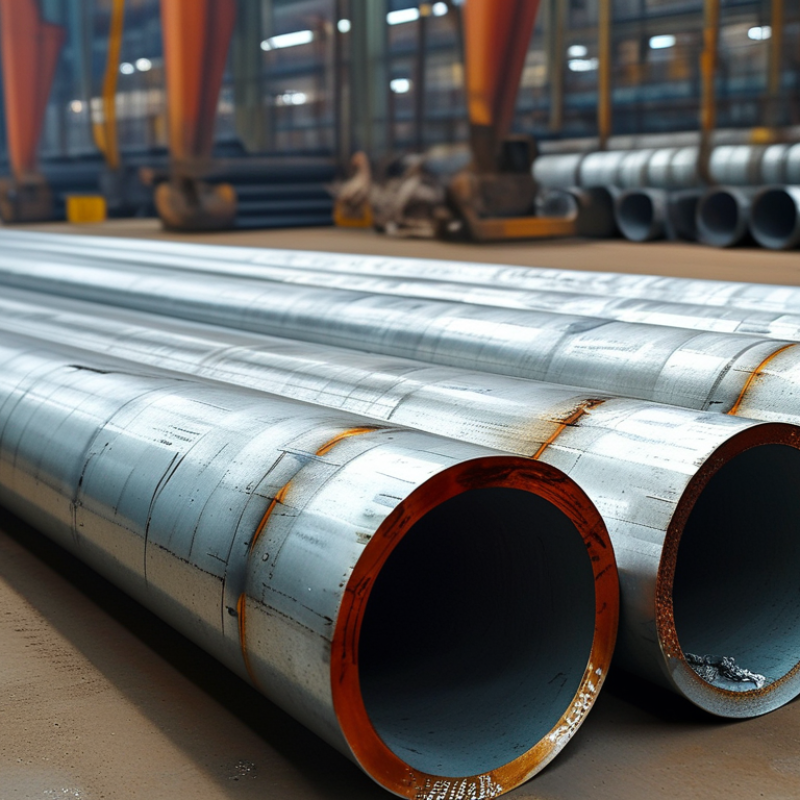
The best China aluminum tube manufacturer is defined by consistent performance, not attractive claims. Experienced buyers inspect alloy grades, wall thickness, surface finish, and dimensional tolerance before placing large orders. A reliable factory should explain its extrusion, cutting, bending, and anodizing processes clearly. It should also provide traceable inspection records for each production batch.
Practical expertise appears in small details. For example, a qualified team checks tube straightness after cutting and protects finished surfaces during packing. It understands how alloy selection affects strength, corrosion resistance, weight, and weldability. Technical drawings should receive careful review, especially around tolerances and connection points. Certifications can support credibility, but they do not replace sample testing or factory communication. Good factories usually answer difficult questions directly. That matters.
Tips: Request samples from different production batches. Measure outer diameter, inner diameter, wall thickness, and length independently. Ask for material certificates and inspection reports. Confirm packaging with photos before shipment. A video tour may help, but it is not perfect evidence. I would still compare test results with the agreed specifications. Some suppliers communicate well before payment, then respond slowly when problems appear. Set response times and corrective procedures in writing. The strongest manufacturer welcomes reasonable audits, admits production limits, and improves after a failed sample. That honesty is valuable.

Choosing an aluminum tube manufacturer requires more than comparing catalog prices. Review the product range carefully. Common options include round, square, rectangular, oval, and precision tubes. Ask whether the supplier supports standard and custom profiles. Seamless and extruded tubes serve different engineering needs, so product knowledge matters.
Manufacturing capability often separates a dependable factory from a trading office. Check the extrusion press capacity, die-design process, alloy selection, and temper control. A capable supplier should explain tolerances in clear numbers, not vague promises.
Look for cutting, drilling, bending, CNC machining, anodizing, powder coating, and welding services. These processes can reduce outside handling and delivery risks. Details matter.
Quality evidence should include inspection records, material certificates, dimensional reports, and batch traceability. Request sample tubes with measured wall thickness, surface finish, and straightness.
In practical sourcing, packaging deserves attention too. Thin tubes may arrive scratched or slightly deformed without proper separators and protective film. No supplier is perfect. A factory may have excellent extrusion equipment but limited finishing capacity. Another may offer attractive customization yet struggle with repeat orders. Production audits, test samples, and honest communication reveal these gaps better than polished brochures.
What Is the Best China Aluminum Tube Manufacturer?
How to Evaluate Aluminum Tube Quality and Industry Standards
A reliable aluminum tube manufacturer proves quality through records, testing, and consistent production. Do not judge suppliers by polished websites alone. Request the alloy grade, temper, dimensions, tolerance, and intended application. Common references include ASTM B210, ASTM B241, EN 755, and GB/T 6892. The correct standard depends on whether the tube is seamless, extruded, drawn, structural, or pressure-related.
Inspect the details closely. Measure outer diameter, wall thickness, straightness, and length from multiple samples. Check the surface for scratches, dents, oil marks, and uneven anodizing. Material certificates should match the actual batch number. Independent chemical analysis can confirm alloy composition. For demanding applications, ask for hardness, tensile, flaring, corrosion, and leak-test results. A factory audit should also examine calibration labels, inspection procedures, and employee training. Small gaps matter.
Tips: Ask for a production sample before placing a large order. Compare three random sections, not just one polished piece. Confirm packaging protects tube ends during transport. Keep approved drawings and test reports in writing. No checklist is perfect. I have seen acceptable dimensions hide weak traceability, which creates problems later. A dependable supplier welcomes reasonable verification and explains any variation instead of avoiding the question.
| Quality Dimension | Recommended Benchmark or Requirement | Relevant Industry Standard | Verification Method | Why It Matters When Selecting a Manufacturer |
|---|---|---|---|---|
| Alloy and Temper | The alloy designation and temper must match the purchase specification. Common extrusion grades include 6060, 6061, and 6063; mechanical properties depend on the temper, such as T5 or T6. | ASTM B221; EN 573-3; EN 755-2 | Review the material certificate and verify chemical composition with optical emission spectroscopy or an equivalent laboratory method. | Correct alloy and temper provide the required balance of strength, corrosion resistance, weldability, and formability. |
| Chemical Composition | Element percentages must remain within the limits specified for the ordered alloy. Silicon, magnesium, iron, copper, manganese, zinc, and titanium are commonly controlled elements. | ASTM B221; EN 573-3; applicable alloy specification | Check heat or batch test certificates and conduct independent laboratory verification for critical applications. | Composition directly influences extrusion behavior, surface appearance, corrosion resistance, and final mechanical performance. |
| Outside Diameter or Width | The dimensional tolerance must comply with the applicable product standard and the agreed drawing. Tolerances vary according to profile size, wall thickness, shape, and manufacturing method. | ASTM B221; EN 755-3; EN 755-9 | Use calibrated micrometers, vernier calipers, coordinate measuring equipment, or an optical profile measuring system. | Stable dimensions are essential for assembly fit, sealing performance, automated processing, and interchangeability. |
| Wall Thickness | Wall thickness should meet the drawing requirement and the tolerance stated in the selected standard. Thin-wall sections require tighter process control. | ASTM B221; EN 755-9; project-specific drawing | Measure at multiple positions around the circumference using ultrasonic thickness equipment or calibrated mechanical gauges. | Consistent wall thickness reduces weak points, leakage risk, distortion, and uneven weight distribution. |
| Straightness and Twist | Straightness and twist must remain within the limits specified for the profile and application. Long, thin tubes are particularly sensitive to distortion. | EN 755-9; ASTM B221 | Place the tube on a certified reference surface and measure bow, twist, and angular deviation with feeler gauges, dial indicators, or optical tools. | Good straightness supports precise cutting, bending, welding, installation, and robotic handling. |
| Mechanical Strength | Tensile strength, yield strength, and elongation must meet the values for the specified alloy and temper. Values should be confirmed for every relevant production batch. | ASTM B557; EN 755-2; ISO 6892-1 | Perform tensile testing on representative samples using a calibrated universal testing machine. | Mechanical test results demonstrate whether the tube can withstand design loads, vibration, pressure, and forming operations. |
| Surface Quality | The surface should be free from harmful cracks, tears, deep scratches, excessive die lines, dents, corrosion, and contamination. Cosmetic limits should be defined before production. | ASTM B221; EN 755-9; approved visual sample | Conduct visual inspection under controlled lighting and use surface roughness measurement when the application requires it. | Surface defects can reduce appearance, interfere with anodizing or coating, and become initiation points for corrosion or fatigue. |
| Internal Cleanliness | The internal bore should be free from loose chips, lubricant residue, excessive oxide, moisture, and foreign particles beyond the agreed cleanliness limit. | Purchase specification; application-specific cleanliness procedure | Use borescope inspection, compressed-air cleanliness checks, gravimetric residue testing, or particle counting where required. | Clean internal surfaces are important for fluid handling, hydraulic systems, heat exchangers, medical equipment, and precision assembly. |
| Leak Tightness | For fluid or gas service, the tube must pass the pressure, hydrostatic, pneumatic, or helium leak test defined by the application specification. | ASTM E1003; ASTM E432; project-specific pressure standard | Use a calibrated pressure test system and record test pressure, holding time, medium, and leakage result. | Leak testing confirms service reliability and helps prevent failures in cooling, pneumatic, hydraulic, and process systems. |
| Corrosion Resistance | The selected alloy, surface treatment, and storage conditions must be suitable for the expected environment. Uncoated aluminum should be protected from chloride contamination and galvanic contact. | ASTM B117 for salt-spray testing; ISO 9227; applicable anodizing specification | Review alloy and treatment records, inspect for corrosion products, and perform accelerated testing only when required by the application. | Corrosion resistance affects service life, appearance, maintenance cost, and safety in outdoor or chemically exposed environments. |
| Anodizing or Coating | For treated tubes, coating thickness, color, adhesion, and appearance must comply with the approved specification. Anodizing thickness is application-dependent and should not be assumed to be universal. | ISO 7599; ISO 2360; ASTM B244 | Measure coating thickness with eddy-current or equivalent equipment and perform adhesion and visual tests according to the agreed method. | Controlled surface treatment improves corrosion resistance, wear resistance, appearance, and compatibility with downstream assembly. |
| Cut Length and End Condition | Cut lengths, squareness, burr height, chamfer, and end deformation must conform to the technical drawing or purchase order. | ISO 2768 where applicable; project-specific drawing | Measure length and squareness with calibrated gauges; inspect ends visually and use a profile projector for critical components. | Accurate ends reduce assembly gaps, installation time, rework, and risk of injury during handling. |
| Batch Traceability | Each shipment should be traceable to the alloy heat, extrusion batch, tempering process, inspection records, and packing date. | ISO 9001 quality-management principles; purchase specification | Cross-check labels, certificates, production records, inspection reports, and packing lists. | Traceability enables fast root-cause analysis, controlled recalls, and reliable compliance documentation. |
| Quality Management System | Preferred: ISO 9001 certified with documented incoming inspection, process control, calibration, nonconformance handling, and corrective-action procedures. | ISO 9001:2015 | Review the current certificate, audit scope, certification validity, internal procedures, and recent corrective-action records. | A documented quality system reduces process variation and provides evidence that quality controls are repeatable. |
| Packaging and Storage | Tubes should be separated to prevent metal-to-metal damage, protected from moisture and contamination, and packed to avoid bending during transport. | Purchase specification; agreed logistics and packaging procedure | Inspect packaging materials, moisture protection, load stability, identification labels, and tube condition upon arrival. | Proper packaging preserves dimensional accuracy and surface quality after production and during international shipment. |
Certifications, customization, and production capacity reveal a manufacturer’s real capability. ISO 9001 supports controlled quality systems, while ISO 14001 addresses environmental management. ISO 45001 signals attention to worker safety. For automotive or pressure-related applications, buyers should also verify relevant industry approvals. A certificate alone is not enough. Check its scope, expiry date, issuing body, and product coverage. The USGS Mineral Commodity Summaries 2024 reported global primary aluminum production of about 70 million metric tons in 2023. This scale creates many supplier choices, but consistency remains difficult.
Customization should include alloy, temper, outer diameter, wall thickness, length, surface finish, and packaging. Ask for dimensional tolerances and sample inspection records. A capable supplier can explain how extrusion, drawing, cutting, and anodizing affect performance. Production capacity also needs careful reading. Monthly tonnage may exclude tooling, testing, or peak-season delays. I would question any factory that promises every specification immediately. Capacity figures can mislead.
Tips: Request a trial order, a recent inspection report, and a clear corrective-action process. Compare actual lead times with quoted lead times. The International Aluminium Institute continues to report strong recycling importance across the sector, so ask how scrap is controlled and traced. Small details matter. A clean production line, calibrated instruments, and labeled material batches often reveal more than polished sales language.
What Is the Best China Aluminum Tube Manufacturer?
Choosing the right Chinese aluminum tube manufacturer requires more than comparing prices. Start by checking production experience, alloy options, tube dimensions, wall thickness, and surface treatments. A capable supplier should provide clear technical data, inspection standards, and realistic tolerance ranges. Ask for recent samples. Measure their diameter, wall thickness, straightness, and finish before approving large orders.
Verification should include factory records, quality certificates, equipment details, and export experience. Request photos or videos of extrusion lines, cutting equipment, and inspection areas. Better still, arrange an independent factory audit. Check whether material batches are traceable from raw billet to packed tubes. This small detail often reveals how seriously a manufacturer controls quality. Do not rely on polished presentations alone.
Tips: Compare at least three suppliers. Ask the same technical questions. Review sample results, not promises. Confirm packaging, lead times, payment terms, and inspection responsibilities in writing. A pre-shipment inspection can prevent expensive surprises.
The “best” manufacturer depends on your application. Construction tubes need different performance from heat exchanger tubes or precision profiles. Explain your end use, drawings, alloy requirements, and expected quantity. Some suppliers may claim broad capabilities, yet outsource important processes. That is not always unacceptable, but it deserves careful checking. I would also leave room for doubt: one successful sample does not prove stable mass production. Test a second batch when accuracy matters.
Use these internationally recognized verification points when evaluating a Chinese aluminum tube manufacturer. The chart highlights the evidence that should be checked before placing an order.
"*" indicates required fields