"*" indicates required fields
Aluminum pipe is becoming more than a simple tubing choice for global buyers. In 2026, procurement teams will compare seamless, extruded, welded, drawn, anodized, and precision pipe. Each type responds differently to pressure, corrosion, weight, machining, and delivery risks. The choice is rarely obvious. A lightweight tube may reduce handling costs, yet a thin wall can complicate welding or pressure testing.
Industry data explains this growing attention. The International Aluminium Institute reported global primary aluminium production of approximately 73 million tonnes in 2024. Its recycling research also indicates that aluminium recycling can save up to 95% of the energy required for primary production. These figures do not prove that every recycled alloy fits a demanding application. They do show why recycled content, traceability, and energy reporting increasingly influence purchasing decisions. The USGS Mineral Commodity Summaries 2025 also highlights aluminium’s continuing importance in transportation, construction, packaging, and electrical applications.
Standards provide a practical quality filter. ASTM B241 covers seamless extruded aluminium and aluminium-alloy pipe. ASTM B210 covers seamless drawn tube. European buyers may also request EN 755 dimensions or EN 10204 inspection documents. Dimensions alone are insufficient. Alloy grade, temper, wall tolerance, pressure testing, surface condition, and protective packing deserve equal attention. This guide compares the top aluminum pipe types for 2026, connecting technical features with real sourcing conditions. Forecasts can be wrong. Some buyer checklists remain too generic. A pipe that performs well in a clean factory may fail after long ocean transport, rough unloading, or coastal exposure.
2026 Top Aluminum Pipe Types for Global Buyers
What Aluminum Pipes Are and How They Differ from Tubes
Aluminum pipes are hollow, usually round products used to move fluids, gases, or air. Buyers commonly specify nominal size, wall thickness, alloy, temper, and pressure needs. Tubes are more flexible in form. They may be round, square, rectangular, or custom-shaped. Their dimensions usually rely on outside diameter and precise wall thickness.
The difference is practical, not just linguistic. A pipe often supports flow and pressure calculations. A tube may serve as a frame member, heat-transfer path, or lightweight enclosure. ASTM standards, including relevant aluminum pipe and tube specifications, define mechanical properties, dimensions, and testing requirements. Always check the latest edition. Terms can vary between countries and suppliers.
Scale matters. The USGS Mineral Commodity Summaries 2025 reported about 72 million metric tons of global primary aluminum production in 2024. That large supply base supports wide product availability, but it does not guarantee identical quality. In real purchasing work, a “pipe” label may hide different tolerances or testing levels. That is where mistakes begin. Request mill certificates, alloy verification, dimensional reports, and pressure-test details. One overlooked decimal can change installation fit, weight, and service life.
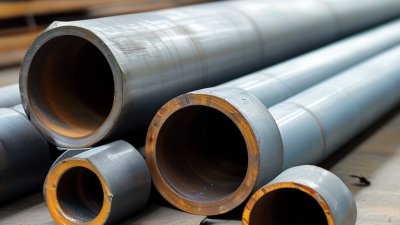
2026 Top Aluminum Pipe Types for Global Buyers
Choosing an aluminum pipe starts with the alloy and temper, not the surface finish. In production, 6061-T6 remains a dependable choice for structural and pressure-related applications. It offers strong tensile performance, good machinability, and moderate corrosion resistance. However, welding can reduce strength near the heat-affected zone.
6063-T5 and 6063-T6 are widely used for extruded pipes requiring smooth surfaces and accurate profiles. T5 gains strength during artificial aging after extrusion, while T6 receives additional solution heat treatment. The difference matters. A decorative frame may accept 6063-T5, but a loaded support usually needs tighter engineering review.
For better corrosion resistance, buyers often consider 5052-H32 or 3003-O. 5052-H32 handles marine air and forming operations well, although it is not always the strongest option. 3003-O is softer and easier to bend, but its lower strength limits demanding service. 7075-T6 provides high strength, yet it is less attractive for welded pipe because of cost and reduced weldability.
Temper is easy to overlook. It changes hardness, bending behavior, and post-welding performance. A pipe marked only “6061” gives incomplete purchasing information. Specify alloy, temper, outside diameter, wall thickness, manufacturing method, and inspection requirements. Small gaps create large risks. Inconsistent temper control can also cause springback during fabrication. That problem is often underestimated. A careful buyer should verify mill certificates and test results, while remembering that certificates alone cannot replace application-specific design checks.
Global buyers usually compare aluminum pipes through three practical lenses: shape, structure, and manufacturing method. Round pipes remain common for fluid transfer because their walls distribute pressure evenly. Square and rectangular tubes suit frames, rails, and modular structures. Oval sections can reduce drag, but they often require tighter tooling control. Custom profiles add design freedom, though replacement sourcing becomes harder.
Structure changes performance. Seamless pipes offer consistent walls for demanding pressure applications. Extruded hollow sections provide efficient production and accurate external geometry. Welded pipes can reduce cost for larger dimensions, but the seam needs careful inspection. Drawn tubes improve dimensional accuracy and surface quality. The distinction is not always clean. Some suppliers use “pipe” and “tube” interchangeably, which can confuse purchasing teams.
Manufacturing choices also affect sustainability and supply risk. The USGS Mineral Commodity Summaries 2025 estimated global primary aluminum production at about 72 million metric tons in 2024. This large supply base supports extrusion and drawing capacity worldwide. The International Aluminium Institute reports that recycled aluminum uses roughly 5% of the energy required for primary production. That matters for buyers measuring embedded carbon. Still, recycled content does not guarantee identical strength or finish. Check alloy, temper, outside diameter, wall thickness, tolerance, pressure rating, and test documentation. A lower unit price may hide machining losses or inconsistent batches. Specification discipline is often imperfect, but it prevents expensive surprises.
2026 Top Aluminum Pipe Types for Global Buyers
Aluminum pipe selection should begin with the application, not appearance. Seamless pipe suits hydraulic lines, compressed air systems, and demanding pressure service. Its uniform wall reduces weak points, but production costs can be higher. Extruded pipe supports heat exchangers, machine frames, and irrigation equipment. It offers consistent dimensions and efficient large-scale production.
Welded pipe often serves structural supports, handrails, drainage systems, and low-pressure water movement. Square and rectangular profiles simplify solar panel frames, transport bodies, and lightweight architectural structures. Thin-wall tubing helps reduce vehicle weight. However, it may dent during rough handling. Marine projects commonly use corrosion-resistant alloys for railings, walkways, and small vessel components. Saltwater still demands careful alloy and coating choices.
Local climate changes the decision. In humid coastal regions, engineers should review galvanic corrosion risks near steel fasteners. In desert projects, thermal expansion and dust exposure need attention. Food-processing facilities may require smooth internal surfaces for easier cleaning. Medical and laboratory equipment often needs precise tolerances, although aluminum is not suitable for every chemical environment. A polished finish can look impressive, but it does not replace verified mechanical data. Site inspections frequently reveal mismatches between drawings and actual loads. That mistake deserves more attention. Buyers should confirm alloy grade, temper, wall thickness, pressure rating, dimensional standards, and inspection records before production. Availability also varies by region, so a theoretically ideal pipe may create unnecessary delays.
Key applications for different aluminum pipe types worldwide
The chart compares the typical application fit of four widely used aluminum pipe forms across major global sectors. Scores range from 1 (limited suitability) to 5 (strong suitability) and reflect common engineering uses rather than company sales, market share, or brand data.
2026 Top Aluminum Pipe Types for Global Buyers
Global buyers should compare pipe types by service conditions, not appearance. Extruded seamless pipe suits hydraulic lines, frames, and moderate-pressure systems. Welded pipe can reduce cost for larger diameters, but the weld zone needs careful inspection. Drawn pipe offers tighter dimensions. It may cost more than expected.
Start with the governing standard. ASTM B241 covers seamless aluminum-alloy pipe, while EN 755 specifies extruded products, dimensions, and tolerances. ISO 6362 can support international extrusion comparisons. Standards are not interchangeable by default. Check alloy, temper, outer diameter, wall thickness, ovality, and pressure requirements on the purchase order. A 50 mm pipe with a 2 mm wall is not equivalent to one with a 3 mm wall. Small differences affect weight and collapse resistance.
Supplier evaluation needs evidence. Request heat numbers, chemical analysis, mechanical results, dimensional inspection records, and certificates linked to each bundle. The U.S. Geological Survey’s Mineral Commodity Summaries 2025 estimates global primary aluminum output at roughly 72 million metric tons in 2024, showing a deep but complex supply base. The International Aluminium Institute reports that recycling aluminum requires about 95% less energy than primary production. Ask for recycled-content data, but verify its calculation method. A polished certificate is not proof of consistent pipe quality. Inspect sample ends, packaging, moisture protection, and actual lead times. I have seen a perfect quotation fail on tolerance details. Price alone misleads.
| Pipe type | Common alloys and tempers | Typical manufacturing route | Typical size range for quotation | Key advantages | Important limitations | Standards commonly requested | Best comparison criteria for buyers |
|---|---|---|---|---|---|---|---|
| Seamless round pipe | 6061-T6, 6063-T6, 2024-T3 where specified | Extrusion followed by solution heat treatment and artificial aging when required | Outside diameter commonly 6–300 mm; wall thickness commonly 0.8–25 mm | No longitudinal weld; good concentricity potential; suitable for structural and pressure-related applications when properly specified | Higher cost than standard welded tube; availability decreases for large diameters, thin walls, and special tempers | ASTM B241/B241M; ASTM B429/B429M; EN 755-2; EN 754-2 | Alloy and temper, dimensional tolerances, hydrostatic or pressure test requirements, certification, and traceability |
| Extruded structural tube | 6061-T6/T651, 6063-T5/T6, 6082-T6 | Direct extrusion through a solid or porthole die; optional cutting, aging, and surface finishing | Round, square, and rectangular sections from approximately 10–400 mm across; wall thickness commonly 1–20 mm | Efficient production; broad profile flexibility; good strength-to-weight ratio; suitable for frames and supports | Dimensional tolerances and corner radii depend on profile size and die design; not automatically suitable for pressure service | EN 755-1 and EN 755-2; EN 12020-2 for precision extrusions; ASTM B221/B221M for extruded products | Section dimensions, straightness, corner radius, wall variation, mechanical properties, and die ownership or tooling cost |
| Welded tube | 3003-H14, 5052-H32, 6061-T6 after processing | Formed strip or sheet joined by high-frequency, laser, or TIG welding; seam may be finished or drawn | Outside diameter commonly 10–500 mm; wall thickness commonly 0.5–12 mm | Competitive cost; practical for long lengths and larger diameters; flexible material sourcing | Weld-zone properties may differ from the parent metal; seam quality and post-weld heat treatment must be controlled | ASTM B547/B547M; ASTM B315/B315M for certain seamless or welded applications; EN 754-2 where applicable | Weld procedure, nondestructive testing, seam location, flattening or flaring tests, corrosion exposure, and allowable leakage |
| Drawn precision tube | 6061-T6/T8, 6063-T832, 3003-H14 | Cold drawing through a die and mandrel, usually after extrusion or welding | Outside diameter commonly 4–150 mm; wall thickness commonly 0.3–8 mm | Improved dimensional accuracy, surface finish, and concentricity compared with standard extrusions | More processing steps; minimum order quantities and tooling requirements may be higher | EN 754-2; EN 755-2; applicable ASTM product specifications | OD and ID tolerances, wall eccentricity, roughness, straightness, hardness, and dimensional inspection method |
| Square and rectangular tube | 6063-T5/T6, 6061-T6, 6082-T6 | Hollow-profile extrusion; welded construction is also available for selected large sections | Side dimensions commonly 10–300 mm; wall thickness commonly 1–15 mm | Efficient bending resistance; flat faces simplify joining, machining, and installation | Internal corner radii, wall distribution, and local buckling behavior must be considered in design | EN 755-2; EN 12020-2; ASTM B221/B221M | Section modulus, corner radius, flatness, twist, cut-length tolerance, and surface requirements |
| Heat-exchanger tube | 3003, 6061, 6063, and selected 5xxx alloys depending on application | Extrusion or drawing; finned, internally grooved, or multi-port designs may be produced | Outside diameter commonly 5–50 mm; wall thickness commonly 0.3–3 mm | Good thermal conductivity, low weight, and compatibility with brazed or mechanically assembled systems | Must be matched to refrigerant, fluid chemistry, pressure, temperature, and joining process | ASTM B210/B210M; ASTM B234/B234M; ASTM B241/B241M; EN 754-2 where applicable | Thermal conductivity, internal cleanliness, leak testing, burst pressure, dimensional consistency, and corrosion resistance |
| Marine and corrosion-resistant pipe | 5083-O/H116, 5086-O/H116, 5052-H32 | Extrusion, rolling, welding, and forming according to the required geometry and temper | Outside diameter commonly 20–400 mm; wall thickness commonly 2–20 mm | Strong resistance to marine atmospheres; good weldability; 5xxx alloys generally do not require precipitation heat treatment | Lower strength than many heat-treatable 6xxx alloys; stress-corrosion and sensitization considerations apply to some service conditions | ASTM B241/B241M; ASTM B429/B429M; EN 755-2; project or classification-society requirements where applicable | Alloy chemistry, temper, weldability, saltwater exposure, galvanic compatibility, impact requirements, and inspection records |
| Anodizing-grade architectural tube | 6063-T5/T6, 6060-T5/T6 | Precision extrusion with controlled billet quality and surface preparation before anodizing | Outside diameter or section width commonly 10–250 mm; wall thickness commonly 1–8 mm | Excellent surface appearance; consistent anodized color potential; easy fabrication for architectural assemblies | Decorative consistency depends on alloy chemistry, extrusion conditions, batch control, and anodizing parameters | EN 755-2; EN 12020-2; ISO 7599 for anodic oxidation of aluminum | Surface grade, anodizing thickness, color tolerance, gloss, straightness, protective film, and batch-to-batch consistency |
"*" indicates required fields