China Best Steel and Aluminum Suppliers for Global Buyers?

Choosing the best steel and aluminum suppliers for global buyers requires more than comparing prices. It requires evidence, process knowledge, and careful communication. As Lakshmi Mittal, a prominent steel industry leader, said, “Steel is the backbone of modern society.” That backbone must remain dependable from the mill to the customer’s production line.

This guide examines suppliers through practical buyer concerns. These include material grade, dimensional accuracy, production capacity, export experience, and delivery consistency. Reliable suppliers should provide mill test certificates, clear traceability, and relevant ISO 9001 quality systems. They should also understand ASTM, EN, JIS, and other market standards. A strong supplier can explain the difference between 304 and 316 stainless steel, or between 6061 and 7075 aluminum, without hiding behind technical language.

Real purchasing experience often reveals small details. Does the supplier protect aluminum coils from moisture during ocean transport? Are steel plates separated with suitable spacers? Can the team respond quickly when a certificate contains an incorrect heat number? These details matter.

Price still matters.

However, the lowest quotation may create higher costs later. Rejected batches, port delays, and uncertain documentation can damage production schedules. Buyers should compare total procurement risk, not only the invoice value. Sustainability also deserves attention, including recycled content, energy use, and transparent emissions data. No supplier is perfect. Even experienced buyers can overlook packaging or communication weaknesses. This article offers a practical framework for evaluating steel and aluminum suppliers with greater confidence, while recognizing that every project has different technical and commercial requirements.

China Best Steel and Aluminum Suppliers for Global Buyers?

China’s Role in the Global Steel and Aluminum Supply Chain

China Best Steel and Aluminum Suppliers for Global Buyers?

China’s Role in the Global Steel and Aluminum Supply Chain

China plays a central role in the global steel and aluminum supply chain. Its industrial network connects mines, smelters, rolling mills, fabricators, ports, and inland transport. This structure gives international buyers access to many product forms, including coils, sheets, bars, profiles, and precision components. Large production capacity can support stable volumes, but capacity alone does not guarantee dependable supply.

Experienced buyers examine more than price. They review material grades, dimensional tolerances, surface quality, test reports, and production consistency. Independent inspections can verify chemical composition, mechanical strength, packing, and labeling before shipment. Traceability matters. A reliable supplier should identify the heat number, production date, and inspection records for each batch.

China’s supply chain also faces pressure from energy costs, freight disruptions, environmental controls, and changing trade requirements. Delivery schedules may shift. That reality deserves honest planning. Some buyers focus too heavily on quotations and overlook communication delays or unclear specifications. This is a costly mistake. Clear drawings, accepted standards, sample approval, and written inspection criteria reduce avoidable disputes. Sustainable sourcing remains difficult, too. Emissions data may be incomplete, and recycled content claims need supporting evidence. Careful verification is still necessary.

China’s Role in the Global Steel and Aluminum Supply Chain

China was the world’s largest producer of both crude steel and primary aluminum in 2023, accounting for approximately 54% of global crude steel output and 59% of global primary aluminum output.

Production volumes are shown in million metric tonnes. “Other producers” represents global production excluding China. Sources: World Steel Association, 2023 crude steel production; International Aluminium Institute, 2023 primary aluminum production.

Key Product Categories Offered by Chinese Suppliers

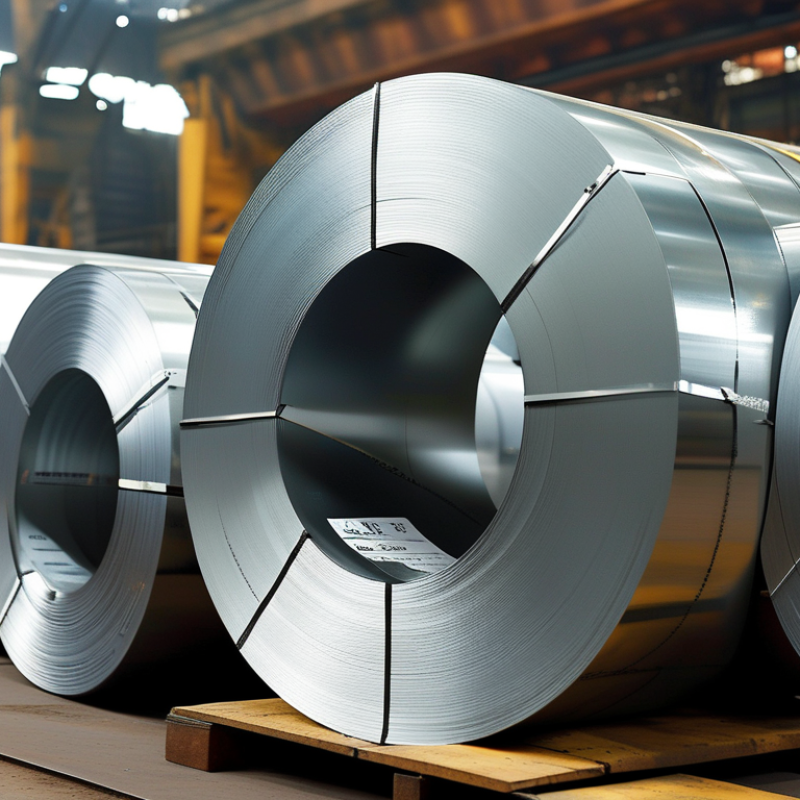
Chinese suppliers serve global buyers through a broad range of steel and aluminum product categories. Carbon steel sheets, coils, plates, bars, and structural sections support construction, machinery, and transport projects. Galvanized steel adds zinc protection for roofing, ductwork, and outdoor frames. Stainless steel sheets, pipes, tubes, and fittings suit food equipment, architectural details, and corrosion-sensitive applications.

Aluminum suppliers commonly offer sheets, coils, plates, bars, tubes, profiles, and foil. Common grades support lightweight frames, electrical enclosures, heat exchangers, and packaging components. Extruded profiles can follow customer drawings, while anodized or powder-coated surfaces improve appearance and service life. Temper matters. A soft aluminum sheet behaves very differently from a hardened one.

In practical sourcing, I check thickness tolerance, alloy or steel grade, surface condition, edge quality, and packing methods. Mill certificates and independent inspection reports help verify the order. A 2.0-millimeter sheet may require tighter tolerance than a general-purpose panel. Small details affect fabrication costs. They matter.

One sourcing mistake is comparing prices without comparing yield strength, coating weight, or usable dimensions. That approach can create hidden waste. Specifications can still be misunderstood, especially when drawings use different measurement systems. Clear approval samples reduce this risk. I also recommend confirming loading plans, moisture protection, and labeling before production. Lower cost is not always better value.

How to Evaluate Steel and Aluminum Manufacturers in China

China Best Steel and Aluminum Suppliers for Global Buyers?

How to Evaluate Steel and Aluminum Manufacturers in China

Choosing a Chinese steel or aluminum manufacturer requires more than comparing prices. A low quotation may hide inconsistent thickness, weak packaging, or delayed production. Examine the company’s operating history, factory capacity, and export experience. Request business licenses, quality certifications, and recent third-party inspection records. Documents matter. They are not enough.

Ask for product-specific evidence. Review mill test reports, chemical composition, tensile strength, hardness, and dimensional tolerances. Match each report with the heat number printed on the material. This small detail can reveal weak traceability. For aluminum products, check alloy grade and temper carefully. For steel, confirm the standard, surface condition, and coating thickness.

Visit the production site when possible. Watch how workers store coils, protect edges, and label finished bundles. A clean laboratory is useful, but the warehouse often tells more. Ask how defects are handled and whether rejected material is separated. Reliable manufacturers should explain corrective actions without avoiding difficult questions. No factory is perfect. I have seen impressive samples fail during larger orders. Request a trial order before committing to regular volume. Check packing photos, loading procedures, delivery records, and communication during the test. Also clarify inspection rights, payment terms, and claims procedures in writing. That protects both sides when specifications change.

Quality Standards, Certifications, and Export Compliance

China’s best steel and aluminum suppliers should prove quality through consistent records, not attractive claims. Buyers should request ISO 9001 certification and confirm whether products meet ASTM, EN, or GB requirements. The correct standard depends on the end use and destination market.

Each shipment should include a mill test certificate, heat number, chemical analysis, mechanical results, and dimensional tolerances. Traceability matters. The heat number should match the tags, packing list, and inspection report. A polished certificate is not proof of every shipment. Experienced buyers still verify the issuing body and compare documents with random samples. Small inconsistencies can become expensive problems.

Tips: Ask for pre-shipment inspection. Check export packaging, moisture protection, and visible markings. Confirm the HS code, commercial invoice, packing list, certificate of origin, and required customs declarations before dispatch. Export rules vary by country and may change. Suppliers should explain their compliance process clearly, but buyers must review local import rules independently. I would also request sample photos and production updates. They are useful, though not a substitute for testing.

China Best Steel and Aluminum Suppliers for Global Buyers? - Quality Standards, Certifications, and Export Compliance

Material / Product Category Common International Standards Key Quality Data to Verify Relevant Certifications or Systems Export Compliance Documents Recommended Buyer Evidence
Carbon steel plates and sheets ASTM A36; ASTM A572; EN 10025; GB/T 700; GB/T 1591 Chemical composition, yield strength, tensile strength, elongation, impact toughness, thickness and flatness ISO 9001 quality management system; product certificate or mill test certificate Commercial invoice, packing list, bill of lading, certificate of origin, customs declaration data Heat number traceability, third-party inspection report, dimensional inspection records and signed certificate of conformity
Stainless steel sheet, coil and plate ASTM A240; EN 10088; GB/T 3280; common grades include 304 and 316/316L Chromium and nickel content, corrosion resistance requirements, tensile properties, surface finish and thickness tolerance ISO 9001; applicable pressure-equipment or construction approvals when required by the end use Invoice, packing list, transport document, origin documentation and destination-market customs records Material test report, positive material identification when specified, surface inspection and corrosion-related test results
Steel pipes and tubes ASTM A53; ASTM A106; API 5L where applicable; EN 10210; EN 10219 Outside diameter, wall thickness, ovality, hydrostatic or non-destructive testing, chemical composition and mechanical properties ISO 9001; API certification only where the product and intended application require it Mill test certificate, inspection certificate, packing list, invoice, bill of lading and certificate of origin Pipe-end inspection, coating records, test-pressure records, heat-number traceability and independent inspection release note
Structural sections and beams ASTM A36; ASTM A572; EN 10025; EN 10219; GB/T 11263 Section dimensions, mass per metre, yield strength, tensile strength, weldability and straightness ISO 9001; project-specific welding or fabrication qualifications where required Commercial invoice, packing list, certificate of origin, bill of lading and product test documentation Dimensional report, grade confirmation, marking photographs, bundle identification and pre-shipment inspection
Aluminum sheets and plates ASTM B209; EN 485; GB/T 3880; common alloys include 5052, 6061 and 7075 Alloy and temper, chemical composition, tensile strength, yield strength, elongation, thickness and surface condition ISO 9001; AS9100 only for aerospace-related supply chains when specifically required Invoice, packing list, bill of lading, origin documentation and tariff classification information Alloy and temper certificate, conductivity or hardness data where relevant, dimensional report and surface inspection records
Aluminum extrusions and profiles ASTM B221; EN 755; EN 12020; GB/T 5237 Profile dimensions, alloy and temper, straightness, twist, surface finish, tensile properties and coating thickness ISO 9001; ISO 14001 may support environmental-management verification; coating approval depends on the specified system Packing list, invoice, certificate of origin, transport document and coating or anodizing records where applicable Approved profile drawing, first-article inspection, alloy certificate, coating-thickness test and sample approval
Galvanized steel products ASTM A653/A653M; EN 10346; GB/T 2518 Base steel grade, zinc coating mass or thickness, coating adhesion, surface quality, dimensions and mechanical properties ISO 9001; environmental and occupational certifications should be verified independently if claimed Invoice, packing list, bill of lading, certificate of origin and destination-country import records Coating test results, substrate grade certificate, salt-spray data only when contractually specified and visual inspection report
General compliance screening for all products Contract-specified ASTM, EN, GB or other recognized national/international standard Correct grade, quantity, dimensions, tolerances, packaging, traceability and consistency between order and shipment Verify certificate scope, validity, issuing body and facility address; do not treat ISO 9001 as a product-performance certificate HS classification, customs invoice, packing list, origin certificate, transport documents, sanctions screening and applicable import permits Pre-shipment inspection, independent laboratory testing, supplier due diligence, contract acceptance criteria and corrective-action process
Buyer note: The applicable standard, certification and export documents depend on the product specification, end use, destination market and contract terms. Certificates should be checked against the issuing organization and the exact production facility.

Sourcing, Pricing, Logistics, and Risk Management Considerations

China Best Steel and Aluminum Suppliers for Global Buyers?

Reliable sourcing starts with technical clarity, not the lowest quotation. Define grade, thickness, tolerance, surface finish, temper, and applicable standards before requesting prices. Ask for recent mill test certificates, heat numbers, and production records. A supplier should explain whether materials are made in-house or purchased from another mill. That detail affects traceability. Samples should match the final production route, including cutting, coating, or anodizing requirements.

Pricing needs more than a unit figure. Compare the metal index, alloy surcharge, currency basis, packaging, inspection, and payment terms. A low offer may exclude export packing or inland transport. Request a line-by-line quotation with validity dates. Keep quantities realistic. Small trial orders may carry higher processing costs, while large orders can create excess inventory. No scorecard is perfect. I would revise it after every shipment.

Logistics can change the real cost quickly. Confirm the loading port, container plan, estimated transit time, and responsibility under the chosen Incoterm. Moisture-resistant wrapping, edge protection, and desiccants matter during ocean transport. Review cargo insurance and arrange independent pre-shipment inspection for higher-value orders. Maintain a second qualified source for critical sizes. It may cost more at first. However, one delayed coil or rejected batch can disrupt production for weeks. Suppliers should also provide clear documentation for customs and destination-country compliance.

"*" indicates required fields