What Is the Best Quality Metal for Buyers in 2026?
For buyers in 2026, the best quality metal is not simply the most expensive or highly advertised option. It is the material whose documented properties fit the product, working environment, and expected service life. Stainless steel may suit damp or washdown areas, while aluminum can reduce weight in transport and equipment. Copper is often selected for electrical applications, and carbon steel can provide strength at a competitive purchase price. Context changes everything.
A reliable comparison starts with the metal grade, not just its family name. Check the supplier’s specification sheet, material test reports, dimensions, and any applicable industry standards. Then compare corrosion resistance, tensile strength, hardness, weldability, machinability, and temperature limits against your actual requirements. A shiny surface tells you little about what lies beneath. Ask how the material was tested and whether its batch information can be traced. If a claim sounds unusually broad, pause and verify it.
Price deserves careful attention, too. A cheaper sheet may require extra coating, more frequent replacement, or difficult fabrication; a premium grade may add cost without improving performance in your application. I would not treat any single ranking as final. Conditions vary, and supplier information can be incomplete. This guide will compare common metals, explain the trade-offs buyers should check, and outline practical questions to ask before ordering. The goal is a defensible choice—not a perfect one.
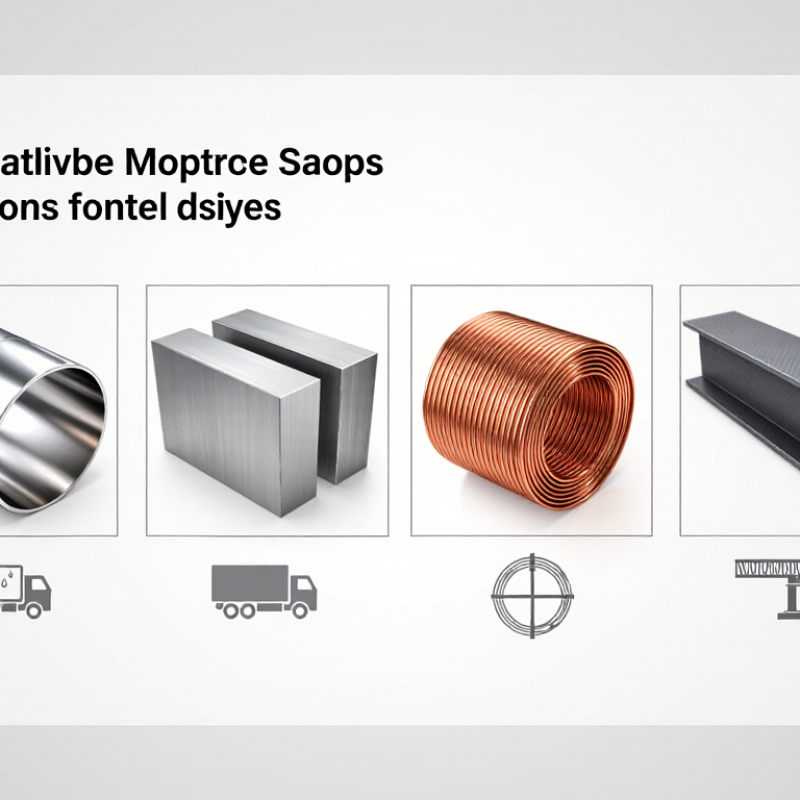
What “Best Quality Metal” Means for Buyers in 2026
For buyers in 2026, “best quality metal” does not mean the hardest or most expensive option. It means a material that suits the job, performs reliably, and comes with evidence of what it is. A stainless grade used near saltwater, for example, may resist corrosion better than a cheaper general-purpose grade. But it could be unnecessary for a dry indoor fixture.
Start with the conditions the metal will face: moisture, heat, load, chemicals, and repeated movement. Then check the exact alloy or grade, not just a broad label such as “steel” or “aluminum.” Ask for a material certificate or test data when the application demands it. A clean surface and uniform finish are useful clues, but they cannot prove composition. That matters.
Manufacturing quality counts too. A strong alloy can still disappoint if welds are poor, dimensions vary, or protective coatings are uneven. Buyers should compare expected service life, maintenance, fabrication needs, and total cost—not only the price per kilogram. Recycled content and repairability may also matter, though their value depends on the project. There is no perfect choice. Even experienced buyers sometimes prioritize one property and overlook a trade-off; documenting the operating conditions helps make that decision less guesswork.
How Common Metals Compare Across Major Applications
What Is the Best Quality Metal for Buyers in 2026?
How Common Metals Compare Across Major Applications
Across major applications, “best” means the metal that meets the load, environment, and lifecycle budget—not simply the highest laboratory strength. The World Steel Association reported 1,882.6 million tonnes of crude steel production in 2024, reflecting steel’s scale in buildings, vehicles, and machinery. Carbon steel offers strength at relatively low cost, but exposed surfaces need protection against corrosion. Stainless steel resists rust in food-processing and coastal equipment, though its alloy content can raise purchase costs.
Details matter.
Aluminum suits lighter transport parts, window frames, and heat-transfer components. The International Aluminium Institute reported about 72.8 million tonnes of global primary aluminum production in 2024; this indicates broad industrial use, not suitability for every job. Copper is widely used in wiring and motors because it conducts electricity well, while its weight and price can constrain designs. For wet or chemically aggressive settings, compare test data for the exact alloy, coating, and joint—not just metal names. I would not rank metals from a table alone; service conditions are often messier than a buyer’s specification. Check certified test results against the intended operating environment.
Matching Metal Grades to Performance and Budget Needs
The best metal grade is the one that meets the job without paying for performance you will never use. For a dry indoor frame, mild carbon steel may offer adequate strength at a lower cost. It needs suitable coating or paint where moisture can reach it. Stainless steel 304 handles many wet, clean environments, while 316 adds corrosion resistance around saltwater and chlorides. Salt changes things.
Aluminum 6061 is a practical option when lower weight and machinability matter, such as brackets or equipment housings. It may not suit every load or joining method, so check the design requirements rather than choosing by alloy name alone. A heavier steel part can sometimes cost less overall if it needs fewer supports. That trade-off is easy to overlook.
Compare more than the quoted price. Ask for the material grade, condition, and relevant inspection documents, then confirm they match the drawing and service environment. Consider machining time, finishing, replacement frequency, and delivery availability. A premium grade can be wasteful, but the cheapest option can become expensive after corrosion or rework. Even a neat comparison table can miss local exposure or unusual loads. When those details are uncertain, test a sample or consult a qualified materials engineer before ordering.
What Is the Best Quality Metal for Buyers in 2026? Matching Metal Grades to Performance and Budget Needs
Minimum yield strength for common grades, paired with broad relative material-cost tiers. Higher strength is not automatically the best choice: corrosion exposure, weight, fabrication, and total project cost matter too.
Lower cost
Mid-range cost
Higher cost
Very high cost
Values are representative minimum yield strengths for specified product forms: ASTM A36 steel, ASTM A240 Type 304 and 316 stainless sheet/plate, ASTM B209 6061-T6 aluminum sheet/plate, and ASTM B265 Grade 2 titanium sheet/plate. Cost tiers are broad market comparisons, not quotations; actual prices vary by product form, thickness, quantity, region, and market conditions.
Buyer takeaway: A36 is a cost-effective choice for general structural use; 304 suits many corrosion-resistant applications; 316 is often preferred for more demanding chloride exposure; 6061-T6 offers low weight and useful strength; Grade 2 titanium combines corrosion resistance with low density but usually carries a much higher material cost.
How Buyers Can Verify Grades, Testing, and Supplier Claims
A “best” metal is only useful when its grade can be verified against the job. Ask for a material test certificate showing the grade, chemical composition, mechanical properties, and production lot. Check that the lot number matches the labels on the delivered bars, sheets, or coils.
A certificate can look convincing and still leave a gap: it may not identify the exact shipment. Paper is not proof. For demanding parts, arrange independent testing through a qualified laboratory. Chemistry, hardness, and tensile tests answer different questions, so select tests based on the material specification and service conditions.
Request the test method, sample location, and report date, not just a pass result. Confirm that the stated standard and revision match your purchase documents; similar grade names can have different limits. Keep a labeled sample from the shipment when practical, and record who collected it.
Details matter. Supplier claims about corrosion resistance or strength should be tied to measurable requirements, not broad assurances. A quick visual check may catch rust, dents, or mixed sizes, but it cannot confirm alloy content.
Even careful checks have limits, and I would not treat one certificate as a guarantee of every piece. If results conflict, pause acceptance and ask the supplier to explain the discrepancy in writing.