Why Choose a Durable Push Button for Global Sourcing?

Global sourcing often begins with a simple question: can this switch survive real work? A Durable Push Button must withstand repeated pressing, dust, vibration, moisture, and careless handling. Its value appears in the small details: a firm tactile response, stable contact resistance, and a housing that does not crack after months of use. Buyers also need consistent samples, clear specifications, and dependable production records. A low price means little when a failed button stops a control panel, machine, or public-use device.

Quality is built into the process. W. Edwards Deming, a leading manufacturing quality expert, said, “Quality comes not from inspection, but from the improvement of the production process.” This principle matters when comparing global suppliers. Ask how they test actuator life, sealing performance, terminal strength, and temperature tolerance. Request test conditions, not vague promises. Review batch consistency, material data, and traceability before placing a large order. Evidence matters.

Small component. Large consequences.

A practical sourcing decision should balance durability, certification needs, lead time, customization, and after-sales support. A supplier may offer an attractive prototype, yet production results can vary. That possibility deserves attention. It is easy to trust a polished sample too quickly. A more reliable approach combines factory audits, independent verification, and limited pilot orders. In the following discussion, we examine why a Durable Push Button supports safer, longer-lasting products and more predictable global purchasing. No component is perfect. The goal is controlled risk, measurable performance, and honest supplier communication.
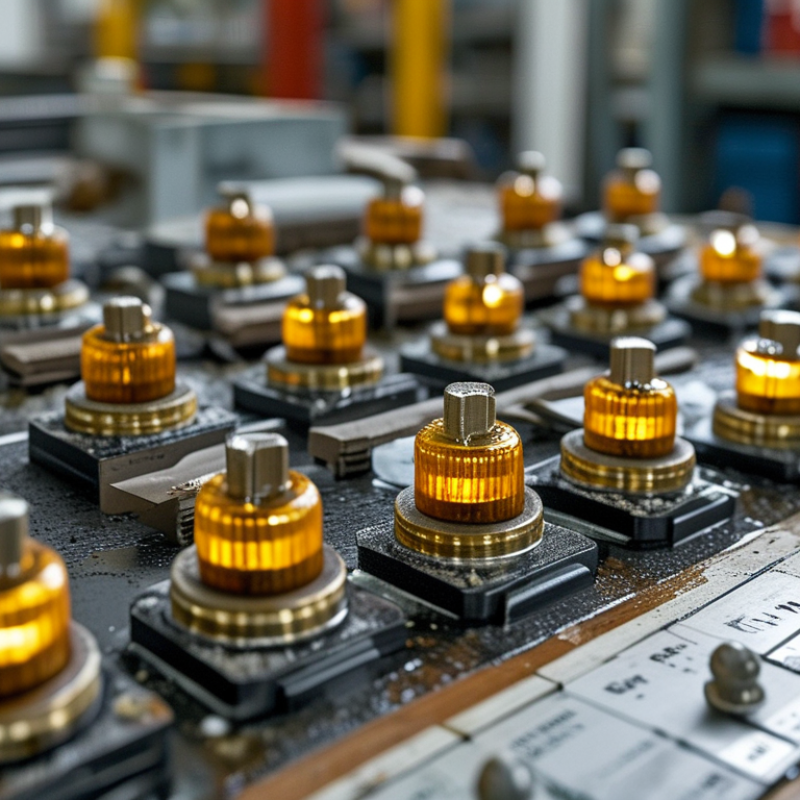
Why Choose a Durable Push Button for Global Sourcing?

What Is a Durable Push Button and How Does It Work?

When buyers source control components globally, durability must mean more than a strong-looking housing. A durable push button is an electromechanical switch designed to handle repeated pressing, vibration, dust, and changing temperatures. It usually contains an actuator, return spring, electrical contacts, and a protective body. Small parts matter.

When the button is pressed, the actuator moves an internal contact across a fixed contact. This completes, breaks, or changes an electrical circuit, depending on the switch design. Releasing the button lets the spring return the actuator to its original position. In a control panel, that simple movement may start a motor, trigger an alarm, or send a signal to a controller. Normally open and normally closed configurations support different control requirements.

From practical sourcing experience, I check contact ratings, mechanical life, electrical life, mounting dimensions, and operating force together. A metal body can improve impact resistance, but it may not protect contacts from moisture. Sealing levels, terminal construction, and material certificates deserve equal attention. The button should also fit the panel thickness without excessive play. That detail is easy to miss. Suppliers should provide test records, drawings, tolerance data, and traceable quality procedures. Sample testing under realistic conditions is still necessary because published figures may not reflect every installation. A reliable choice balances service life, safety margins, availability, and maintenance needs rather than chasing the lowest unit price.

Why Choose a Durable Push Button for Global Sourcing?

A push button works by moving an actuator that opens or closes an electrical contact. The return spring restores the button after release, while the housing, contact system, sealing, and mounting structure determine its service life. The chart shows representative mechanical life ratings commonly specified for different durability classes. Actual performance depends on load, environment, installation, and operating conditions.

Which Materials and Design Features Determine Durability?

A durable push button begins with material selection, not appearance. Stainless steel suits outdoor panels because it resists impact, moisture, and surface corrosion. Brass offers reliable conductivity, but it may need protective plating in humid environments. Engineering polymers reduce weight and electrical risk. Their quality depends on temperature resistance and molding precision.

Inside the switch, silver alloy contacts can support repeated electrical loads. A strong spring preserves tactile feedback after many cycles. Sealed gaskets help block dust and water around the actuator. However, no material is perfect. I have seen metal buttons survive harsh handling while their internal contacts failed early. The rated voltage, current, switching frequency, and expected cycle count must match the application. Design details matter too. Anti-rotation features prevent twisting during installation. A guarded actuator reduces accidental activation. Clear panel dimensions simplify sourcing across different factories and markets.

Tips: Request cycle-test data, contact-material details, and sealing information. Check samples at low and high temperatures. Test the button with the actual load, not only a meter. Confirm terminal strength and mounting tolerance. A small mismatch can create a costly production problem. Also inspect several samples, because one perfect unit proves very little. The easiest specification is not always the most reliable one.

How Does Durability Improve Performance in Global Sourcing?

A durable push button improves performance by surviving repeated human use, vibration, dust, and moisture. In global sourcing, these stresses often appear together during transport, installation, and daily operation. A button that feels solid on day one may become loose after thousands of presses.

Durability begins with materials and design. A reinforced housing can resist impact, while sealed contacts help limit oxidation. Consistent tactile feedback also matters. Operators notice when activation becomes soft, delayed, or uncertain. That hesitation can slow production and create avoidable errors. For better sourcing decisions, buyers should request cycle-test results, operating-temperature data, ingress protection details, and tolerance specifications. Ask for samples from different production batches.

Small details matter. A clear actuation point helps gloved workers. A stable mounting thread prevents panel movement. A visible status ring can reduce repeated pressing. These features may seem minor, but they influence maintenance time across many sites.

No laboratory test predicts every field condition. I have seen components pass endurance testing yet perform poorly after careless installation. That is why supplier audits, incoming inspection, and installation guidance remain necessary. Durability is not only a product trait. It depends on manufacturing control, transport protection, and actual use. A slightly higher purchase price may be justified when replacement access is difficult, although cost assumptions should still be checked against real failure data.

Why Choose a Durable Push Button for Global Sourcing? - How Does Durability Improve Performance in Global Sourcing?

Durability Dimension Recognized Test or Rating Verified Technical Meaning Global Sourcing Benefit Recommended Purchasing Evidence
Dust and water protection IP65 under IEC 60529 Dust-tight and protected against water jets from any direction when tested under the specified conditions. Reduces contamination-related failures in outdoor, industrial, and dusty operating environments. Request an IP test report identifying the exact button configuration and test conditions.
Temporary immersion resistance IP67 under IEC 60529 Dust-tight and protected against temporary immersion in water up to 1 metre for the standardized test duration of 30 minutes. Supports more reliable operation during washdown, flooding incidents, and equipment relocation. Confirm that the rating applies after installation, including the bezel, seal, terminals, and actuator.
Impact resistance IK08 or IK10 under IEC 62262 IK08 corresponds to an impact energy of 5 joules; IK10 corresponds to 20 joules. Lowers the risk of cracked bezels, damaged actuators, and unplanned replacement during handling or operation. Request the IK rating, test direction, mounting method, and post-test functional results.
Mechanical operating life Manufacturer-declared cycle rating The number of specified mechanical actuation cycles completed under defined load, force, speed, and environmental conditions. Improves expected service life and helps standardize replacement planning across multiple countries. Compare cycle ratings only when the test method, load, actuator force, and acceptance criteria are equivalent.
Electrical endurance Rated voltage, current, and electrical cycle life Indicates whether the contacts can interrupt the specified electrical load for the declared number of operations. Reduces contact welding, excessive resistance, intermittent signals, and field-service interruptions. Check AC/DC ratings separately and require test data for the actual load type used in the application.
Temperature capability Declared operating-temperature range Defines the temperature limits within which switching, sealing, insulation, and materials are expected to meet specifications. Supports deployment across different climates and reduces temperature-related material failures. Request operating and storage limits, plus evidence of low- and high-temperature testing.
Corrosion resistance Material specification and corrosion test report Demonstrates resistance of exposed metal parts, terminals, fasteners, and plating to the specified corrosive environment. Extends service life in coastal, humid, chemical-processing, and transportation applications. Verify material grades, surface treatments, salt-spray method, exposure time, and acceptance criteria.
Vibration and shock stability IEC 60068 environmental test methods Provides a framework for evaluating resistance to vibration and mechanical shock under defined laboratory conditions. Helps protect signal continuity in vehicles, machinery, control panels, and equipment shipped over long distances. Request the test profile, frequency range, acceleration, duration, mounting arrangement, and functional inspection results.
Material and regulatory conformity RoHS substance restrictions and material declaration Supports control of restricted substances in electrical and electronic equipment according to the applicable market requirements. Reduces customs, compliance, and market-access risks when products are sourced for multiple regions. Request a current declaration, bill-of-materials review, and change-notification procedure.
Quality consistency between batches Incoming inspection and lot traceability Confirms that dimensions, actuation force, contact resistance, sealing parts, and markings remain within approved specifications. Reduces variation between shipments and simplifies qualification of replacement or secondary sources. Define sampling plans, critical-to-quality measurements, retained samples, and serial or lot identification.
Procurement note: A durability claim is meaningful only when the rating, test method, product configuration, operating conditions, and acceptance criteria are clearly documented. IP, IK, environmental, and electrical ratings should be verified for the exact push-button assembly being purchased.

What Standards Should Buyers Check Before Purchasing?

Durable push buttons matter only when their ratings match the real operating environment. Buyers should define voltage, current, switching load, actuation force, cycle life, and panel thickness before comparing suppliers. A button tested for light signals may fail under motor loads. That difference is easy to miss. Check whether IEC 61058-1 fits an appliance application or IEC 60947-5-1 fits industrial control equipment. The applicable standard depends on use, not marketing language.

Review the enclosure rating under IEC 60529 when dust, water, or cleaning sprays are present. IP65 may suit a protected control panel, but it does not guarantee chemical resistance or outdoor durability. Ask for test conditions, not only an IP number. Electrical safety documents should include relevant insulation, dielectric strength, and temperature tests. For material compliance, request current declarations covering restricted substances and regional chemical requirements. A certificate alone is not proof.

For reliability, examine cycle-life reports, contact resistance, terminal construction, and fire-performance evidence. Reports from an ISO/IEC 17025-accredited laboratory offer stronger verification. Confirm that the tested model matches the delivered model, including seals and terminals. Keep samples from incoming inspections. Small details matter. Traceability records can reveal production changes before failures reach the field. No checklist is perfect. Buyers should challenge unclear translations, missing test dates, and unusually high durability claims. A careful review may feel slower, yet it reduces replacement costs and safety concerns.

How Can Businesses Select the Right Push Button Supplier?

Choosing the right push button supplier requires more than comparing unit prices. In practical sourcing work, the first useful question is simple: what will the button face? Dust, water, vibration, gloves, and repeated operation all change the specification. Ask suppliers for rated operating cycles, contact resistance, ingress protection data, material details, and test conditions. Request samples from normal production, not specially prepared pieces. Test them with the intended panel, wiring, load, and cleaning routine. Small differences become obvious. A button may feel solid yet fail after heat exposure or side pressure. Suppliers should explain their quality process, inspection frequency, traceability, and corrective-action method. Vague answers deserve attention.

A capable supplier also provides clear drawings, tolerance records, compliance documents, and realistic lead times. Verify whether tooling, custom engraving, packaging, and replacement parts are included in the quotation. Check production capacity before approving a large order. A factory visit or live video audit can reveal storage problems, manual rework, or weak final inspection. It is not perfect evidence, but it improves judgment. Ask how rejected batches are isolated and how urgent failures are reported. Communication matters when a shipment is delayed across time zones. I once treated a low price as proof of efficiency; it became an expensive lesson. Total cost includes testing, downtime, freight, and field replacements. Choose the supplier that can show repeatable evidence, not merely confident promises. There is room for doubt. Good sourcing keeps checking.

"*" indicates required fields