Why Choose an Iron Pipe Bending Machine?

Why Choose an Iron Pipe Bending Machine?

Industrial piping is becoming more demanding. Projects require tighter bends, cleaner surfaces, and repeatable dimensions. The World Steel Association’s Short Range Outlook projected global steel demand growth of 1.7% in 2024 and 1.2% in 2025. That growth does not automatically guarantee higher equipment sales. It does signal continued pressure on fabrication capacity.

An Iron Pipe Bending Machine can reduce manual marking, heating, and correction work. Modern systems use hydraulic force, programmable controls, and interchangeable tooling. These features help operators produce consistent bends across repeated pipe batches. Peter Zelinski, editor-in-chief of Modern Machine Shop, describes automation as “a means, not an end.” That principle matters here. A machine should solve a measurable production problem, not simply look advanced.

Consider a workshop bending thick pipe for frames, handrails, or process lines. A controlled machine can limit flattening at the bend shoulder. It can also improve setup repeatability between shifts. Reports from the OECD and UNIDO continue to emphasize productivity, industrial upgrading, and resilient manufacturing systems. Still, the investment is not automatically suitable for every company. Material grade, pipe diameter, wall thickness, bend radius, tooling cost, and operator training all influence the outcome. Some buyers may overestimate speed while underestimating maintenance. That is an uncomfortable gap. The right choice requires production records, sample bends, and a realistic return-on-investment review. Efficiency matters. Accuracy matters more.
Why Choose an Iron Pipe Bending Machine?

What Is an Iron Pipe Bending Machine?

Why Choose an Iron Pipe Bending Machine?

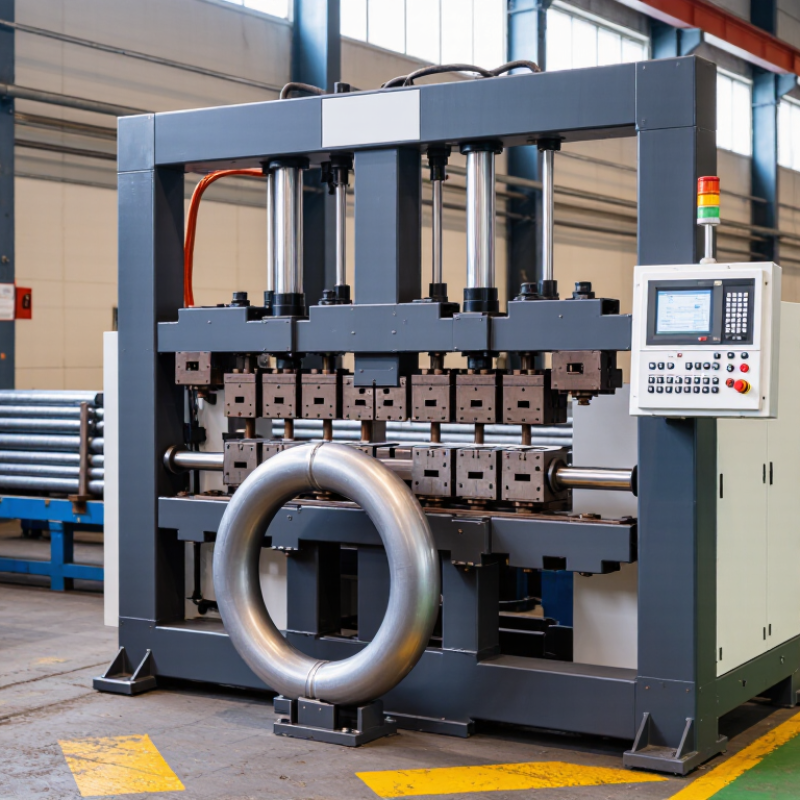
An iron pipe bending machine shapes metal tubes into controlled curves without cutting or welding joints. It normally uses a forming die, clamp, pressure system, and adjustable mandrel. Hydraulic models handle thick pipes, while electric or CNC systems provide faster, repeatable production. The machine is useful for handrails, frames, fluid lines, agricultural equipment, and structural assemblies.

Its value becomes clearer at industrial scale. The World Steel Association reported approximately 1.89 billion tonnes of crude steel production in 2023. Much of that material enters fabricated products, where accurate bending reduces welding points and fitting time. The International Energy Agency states that industry consumed about 37% of global final energy in 2022. Efficient motors, correct tooling, and shorter rework cycles therefore matter. Still, automation is not automatically efficient. A poorly selected die can waste material, electricity, and several hours of adjustment.

Tips:

Measure the pipe’s outside diameter and wall thickness before choosing tooling. Check the required centerline radius. Allow for springback, especially with high-strength steel. A tighter bend is not always a better bend. Test one sample first, then inspect wrinkles, flattening, and surface marks. Operators sometimes chase speed too early; accuracy should come first. Keep written settings for each pipe size, although real materials may still behave differently.

How Does an Iron Pipe Bending Machine Work?

An iron pipe bending machine shapes straight pipe into controlled curves without cutting or joining separate sections. The operator places the pipe against a forming die and secures it with a clamp. A pressure roller then applies force while the die rotates or advances. The pipe follows the die’s radius.

Many machines use hydraulic or electric power for steady movement. For thin-walled pipe, a mandrel may support the inside wall and reduce flattening. This detail matters. Without internal support, the bend can wrinkle, ovalize, or collapse. The machine’s settings depend on pipe diameter, wall thickness, material strength, and required bending radius.

In practical workshop use, accurate measurement comes before pressing the control. Marking the bend location helps prevent wasted material. Operators also allow for springback, because iron pipe may open slightly after pressure is released. A test bend is wise. It may still be imperfect. Checking the angle, outer shape, and surface condition reveals whether the pressure or radius needs adjustment. Light lubrication can reduce friction, but excessive lubricant may affect handling and inspection. Safe operation requires guards, stable supports, and trained control of the machine. Small setup errors can create large alignment problems.

Why Choose an Iron Pipe Bending Machine? - How Does an Iron Pipe Bending Machine Work?

Evaluation Dimension How the Machine Works Typical Data or Range Practical Benefit
Basic forming principle A die supports the pipe while a pressure die, clamp, or forming roller applies force to create a controlled bend around a specified centerline radius. Common processes include rotary draw bending, roll bending, press bending, and mandrel bending. Produces repeatable curved sections without cutting and welding multiple straight pieces.
Pipe material compatibility The machine applies controlled force suited to the material strength, wall thickness, and diameter of the workpiece. Suitable configurations can process carbon steel, stainless steel, galvanized steel, aluminum, and selected copper alloys. One machine platform can support multiple fabrication requirements when the correct tooling is installed.
Typical outside diameter capacity The pipe is positioned between tooling components sized for its outside diameter and wall thickness. Compact machines may handle approximately 6–50 mm; medium-duty models commonly cover about 20–100 mm; heavy-duty equipment can exceed 150 mm. Capacity can be matched to furniture tubing, structural pipe, vehicle components, and industrial assemblies.
Minimum bend radius The die rotates or presses the pipe around a fixed radius while the tooling controls deformation. Rotary draw bending can commonly achieve approximately 1.5D to 3D centerline radii, where D is the pipe outside diameter; the exact value depends on material and tooling. Tight bends can reduce assembly size and improve the appearance of frames and tubing systems.
Bending angle The control system stops the die or forming rollers at a programmed position to define the bend angle. Typical production cycles support bends from a few degrees up to approximately 180°, depending on machine design and tooling clearance. Accurate angle control helps parts fit consistently during welding and final assembly.
Cross-section control A mandrel, wiper die, pressure die, or correctly matched groove supports the pipe and limits wrinkling, flattening, and wall thinning. Mandrel bending is generally preferred for tight-radius bends or thin-wall tubing where shape retention is critical. Maintains internal flow area and improves dimensional consistency.
Machine drive system Hydraulic cylinders, electric servo motors, or a combination of both generate and regulate forming motion. Hydraulic systems provide high force; electric servo systems provide precise programmable motion and may reduce idle energy use. The drive type can be selected according to production volume, precision requirements, and pipe size.
Control and repeatability A programmable controller stores bend angles, feed lengths, rotation positions, and multi-step sequences. Modern CNC tube benders can coordinate several axes; achievable accuracy depends on machine configuration, material springback, and calibration. Reduces manual measurement and supports consistent batch production.
Springback compensation The machine slightly overbends the pipe or adjusts the programmed position to compensate for elastic recovery after forming. Springback varies with material grade, yield strength, wall thickness, bend radius, and bending angle. Improves final angle accuracy and reduces trial-and-error adjustments.
Production efficiency Once tooling and programs are set, the machine repeats feeding, clamping, bending, and unloading steps with limited manual intervention. Cycle time depends on pipe length, number of bends, bend angle, machine axes, and loading method; automated cells can integrate cutting and end forming. Usually lowers labor per part and increases output compared with manual heating or multi-piece fabrication.
Material utilization The pipe remains a continuous piece through the bend, avoiding separate elbows and many welded joints. Waste is mainly associated with end allowances, setup pieces, rejected parts, and cut-length optimization. Can reduce welding consumables, joint preparation, and scrap in suitable applications.
Common applications The machine forms pipes and tubes into specified geometries for structural, fluid-handling, and equipment assemblies. Typical uses include handrails, frames, exhaust systems, heat-exchanger tubing, hydraulic lines, roll cages, and furniture components. Supports both functional flow paths and visually continuous structural designs.
Main selection considerations Machine size and tooling are selected according to pipe diameter, wall thickness, material, bend radius, angle sequence, production volume, and required tolerances. Verify maximum outside diameter, wall-thickness range, centerline radius, number of controlled axes, motor or hydraulic capacity, tooling availability, and safety features. Proper matching helps prevent excessive flattening, wrinkling, cracking, springback, and unnecessary equipment cost.

Note: Capacity and accuracy figures are typical industry ranges rather than universal specifications. Actual performance depends on the machine design, tooling, pipe material, outside diameter, wall thickness, bend radius, and production settings.

What Are Its Main Types and Bending Methods?

Why Choose an Iron Pipe Bending Machine?

Iron pipe bending machines are selected according to pipe diameter, wall thickness, production volume, and required accuracy. Manual machines suit small repairs and occasional fabrication. They are affordable and easy to control. Hydraulic machines handle thicker pipes with steady force. CNC or electric machines support repeated bends with accurate angles and consistent spacing. In practical workshop work, tooling matters as much as machine power. A poorly matched die can flatten the pipe.

Several bending methods are widely used. Rotary draw bending uses a clamp die, pressure die, and forming die. It creates clean, precise bends for frames, rails, and structural tubing. Roll bending passes the pipe through three rollers. This method produces large-radius curves with less surface marking. Compression bending is simpler and often suitable for moderate accuracy. Induction bending heats a narrow section before forming it. It helps bend large, heavy pipes, but temperature control must remain stable.

Operators should check the pipe grade, outside diameter, and bend radius before production. Springback can change the final angle, especially with harder iron or steel. A test piece is worth the extra time. I have seen accurate settings fail because the pipe was not supported correctly. That is an easy mistake to repeat. Lubrication, die alignment, and slow inspection reduce wrinkles and cracks. Not every machine delivers the same result, even with identical settings.

Why Choose an Iron Pipe Bending Machine?

Pipe bending machines improve dimensional consistency, reduce manual effort, and help produce smooth bends with less risk of flattening or wrinkling. The chart compares common bending methods by their typical minimum centerline radius, expressed as multiples of pipe outside diameter (D).

Typical engineering ranges: rotary draw bending is commonly used for tighter, accurate bends; roll bending is suited to large-radius curves; press bending is practical for general-purpose forming; and hot or induction bending supports tighter radii in heavier sections. Actual results depend on pipe material, wall thickness, diameter, tooling, and process settings.

What Benefits Does It Offer in Pipe Fabrication?

An iron pipe bending machine brings control to a demanding fabrication task. It forms consistent curves with less manual force and fewer improvised adjustments. In a busy workshop, this repeatability helps operators produce matching frames, rails, supports, and structural sections. Each bend can follow a programmed angle, radius, and sequence. That reduces measurement errors between parts.

The machine also protects material quality when properly configured. Suitable dies support the pipe and limit flattening, surface marks, and unwanted wrinkles. Clean bends make welding and assembly easier. They also improve the final appearance. Production becomes faster because workers spend less time heating, cutting, and correcting pipes. Less scrap can lower material costs over repeated projects. It is not magic, though. Thick iron pipe still needs the correct tooling, pressure, and bending speed.

Practical experience shows that setup matters as much as machine power. Operators should check pipe dimensions, wall thickness, bend allowance, and alignment before production. A trial piece can reveal springback or slight distortion early. That step may feel slow. It prevents larger mistakes later. Regular inspection also supports safer operation and more reliable results. Some projects still require manual finishing, especially when tolerances are extremely tight or shapes change frequently.

How Should You Choose the Right Machine?

Choosing an iron pipe bending machine starts with the pipe, not the machine name. Record outside diameter, wall thickness, grade, ovality, and required centerline radius. World Steel Association’s World Steel in Figures 2024 reports 1,892 million tonnes of crude steel produced in 2023. That scale does not make every steel tube easy to bend. High-strength grades may need greater torque, controlled speed, and proper tooling. Measure twice.

Ask suppliers for test bends using your actual pipe. Inspect springback, flattening, wrinkles, surface marks, and cut-end distortion. A practical machine should cover your largest routine diameter without operating at its limit. Leave capacity for material variation.

For tight radii, a rotary-draw system with a mandrel and pressure die usually offers better control. For larger radii and lower volumes, roll bending may reduce tooling cost.

Fit matters. Check die-change time, controller repeatability, lubrication access, and operator guarding. The right choice is not always the fastest machine. Stable bends across shifts matter more.

Automation deserves a realistic review. The International Federation of Robotics reported 541,302 industrial robots installed worldwide in 2023, a 10% annual increase.

Yet automation can expose poor upstream measurements. Connect a bender only after confirming tube loading, end preparation, and inspection methods. Ask for repeatability data, not marketing adjectives. Request sample parts and maintenance records.

I would also calculate five-year costs, including dies, energy, training, downtime, and rejected bends. A cheaper machine may become expensive when one wrinkle stops production. That assumption needs testing, not optimism.

"*" indicates required fields