"*" indicates required fields

A Wheel Hub Assembly is a compact but critical part connecting the wheel to the vehicle’s suspension and braking system. It commonly contains the hub, bearings, wheel studs, seals, and sometimes an integrated ABS sensor. Behind the wheel, it supports vehicle weight while allowing smooth rotation. It also transfers braking and cornering forces through the wheel end.
Professional sources underline its safety role. Timken’s Wheel End Systems technical literature explains how bearing preload, sealing, and lubrication influence durability. SKF’s automotive aftermarket guidance similarly emphasizes correct installation and contamination control. Research and Markets’ automotive wheel hub bearing reports identify replacement demand as a continuing part of the global vehicle aftermarket. Meanwhile, the U.S. National Highway Traffic Safety Administration’s recall database shows why wheel-end defects deserve serious attention. A loose bearing can create play, vibration, uneven tire wear, or unusual humming. In severe cases, wheel control may be compromised.
Small noises matter.
However, diagnosis is not always straightforward. A humming sound may come from a tire, differential, or wheel bearing. Inspection should include wheel play, sensor faults, torque values, and service history. I have found that rushed replacements often miss damaged knuckles or corroded connectors. That weakens an otherwise new assembly. This article explains what a Wheel Hub Assembly does, how its internal parts work, and which symptoms deserve professional inspection. It also considers design differences between passive and active ABS systems. The details may seem mechanical, but they directly affect braking confidence, steering stability, and everyday driving safety.
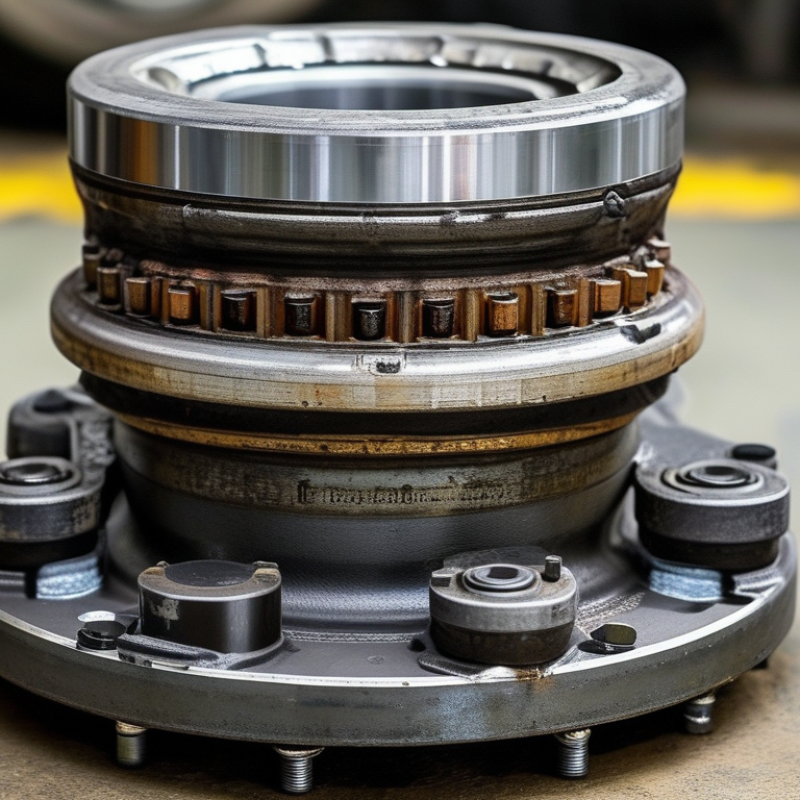
A wheel hub assembly connects the wheel to the vehicle’s suspension and supports smooth rotation. It usually contains a hub, bearing, mounting flange, and ABS sensor. These parts work together near the wheel, where heat, water, road salt, and impact are common.
The hub is the central mounting point for the wheel and brake components. Its studs or bolt holes hold the wheel securely. Inside or beside it, the bearing carries the vehicle’s weight while allowing the wheel to turn with minimal friction. A worn bearing may produce a humming sound that changes with vehicle speed. It can also create looseness during a careful wheel-rocking check. Not every noise means bearing failure, though. Tire wear can imitate it.
The flange provides a precise mounting surface for the hub, bearing, and related suspension parts. Even a small bend can cause vibration or uneven brake contact. The ABS sensor monitors wheel speed through a tone ring or encoder built into the assembly. Its signal helps the control system manage braking stability and traction. Damaged wiring, contamination, or an incorrect air gap can trigger a warning light. During inspection, technicians should check torque, sensor connections, bearing play, and flange condition. A quick visual check is useful, but it can miss early internal damage. Careful diagnosis matters.
| Component or Dimension | Primary Role | How It Works | Typical Material or Design | Common Wear or Failure Signs |
|---|---|---|---|---|
| Wheel Hub | Connects the wheel to the vehicle's rotating assembly. | The wheel mounts to the hub, which rotates on the bearing around a fixed spindle or axle. | Usually precision-machined steel or another high-strength metal alloy. | Wheel looseness, vibration, corrosion, damaged mounting surfaces, or abnormal noise. |
| Wheel Bearing | Reduces friction while supporting radial and axial wheel loads. | Hardened rolling elements move between inner and outer races while seals retain lubricant and exclude contaminants. | Commonly a sealed ball-bearing or tapered-roller-bearing design. | Growling, humming, rumbling, rough rotation, excessive play, or increased heat. |
| Mounting Flange | Provides attachment points for the wheel, brake rotor, caliper support, or steering knuckle. | Bolt holes and machined faces keep connected parts aligned and transfer braking and driving forces. | Stamped or forged steel, or cast and machined metal, depending on the application. | Bent flange, damaged bolt holes, corrosion, runout, or uneven brake contact. |
| Wheel Studs or Lug Holes | Secure the wheel to the hub. | Clamping force from lug nuts or wheel bolts holds the wheel firmly against the hub face. | Hardened steel studs, threaded holes, or integrated wheel-bolt mounting points. | Cross-threading, stretched studs, damaged threads, loose fasteners, or wheel movement. |
| ABS Wheel-Speed Sensor | Measures wheel rotation speed for braking and vehicle-control systems. | A magnetic or electronic sensor reads changes in a tone ring or encoder ring as the hub rotates. | Sealed sensor housing with an encoder ring integrated into or positioned beside the bearing. | ABS warning light, traction-control warning, inaccurate speed signals, or intermittent fault codes. |
| Inner and Outer Races | Guide the rolling elements and distribute loads. | Precisely ground raceways allow balls or rollers to rotate with minimal friction. | Heat-treated bearing steel with accurately finished race surfaces. | Pitting, scoring, brinelling, discoloration, noise, or roughness during rotation. |
| Seals and Lubricant | Protect the bearing and maintain smooth operation. | Seals retain factory-applied grease and help prevent water, dust, and road debris from entering the bearing. | Elastomeric seals with high-temperature bearing grease. | Grease leakage, water contamination, seal cracking, overheating, or premature bearing wear. |
| Load Capacity | Supports vehicle weight and forces generated during acceleration, cornering, and braking. | The bearing and hub distribute radial loads vertically and axial loads laterally through the suspension. | Rated according to vehicle mass, wheel size, suspension geometry, and expected operating loads. | Accelerated wear, looseness, noise while turning, or abnormal tire wear. |
| Rotation and Alignment | Keeps the wheel centered and rotating smoothly. | Precision-machined interfaces maintain concentricity between the hub, bearing, brake rotor, and wheel. | Manufactured to close dimensional tolerances with controlled runout. | Steering-wheel shake, brake pulsation, uneven rotor contact, or wheel wobble. |
| Integrated Assembly Service | Combines the hub, bearing, flange, and often the ABS encoder into one replacement unit. | The preassembled unit is bolted to the steering knuckle or axle housing, reducing the need for separate bearing pressing and adjustment. | Sealed, factory-preloaded module designed for a specific vehicle application. | Replacement is commonly considered when bearing noise, excessive play, sensor faults, or flange damage is confirmed. |
"*" indicates required fields