What Is a Stationery Hardware Manufacturer?

A Stationery Hardware Manufacturer produces the functional metal components used in everyday stationery. These parts include binder rings, lever-arch mechanisms, paper clips, staples, eyelets, corner protectors, and notebook wire systems. The manufacturer may stamp steel, form wire, apply surface finishes, and assemble mechanisms under one production program. A small ring must open smoothly. A coated clip must resist rust after repeated handling. These details decide whether a product feels dependable or disposable.

Market data explains why this work matters. Grand View Research estimates that the global stationery products market reached about USD 90.6 billion in 2023. Its report also projects continued growth through 2030, supported by education, offices, packaging, and creative products. Mordor Intelligence’s office supplies research similarly describes steady demand for organized document storage and workplace consumables. The figures differ because research firms define “stationery” differently. That limitation deserves attention.

In practical terms, a qualified Stationery Hardware Manufacturer combines tooling experience, material knowledge, and controlled inspection. Engineers may check steel thickness, coating adhesion, closing force, and cycle performance. Production teams should also trace batches and review supplier certificates. ISO 9001-based quality systems can support this discipline, although certification alone never proves product excellence. A factory visit can reveal more: clean presses, calibrated gauges, labeled cartons, and operators recording defects. The category remains broad and imperfectly standardized. Still, reliable manufacturers make small hardware perform consistently across thousands of notebooks, folders, and filing products.
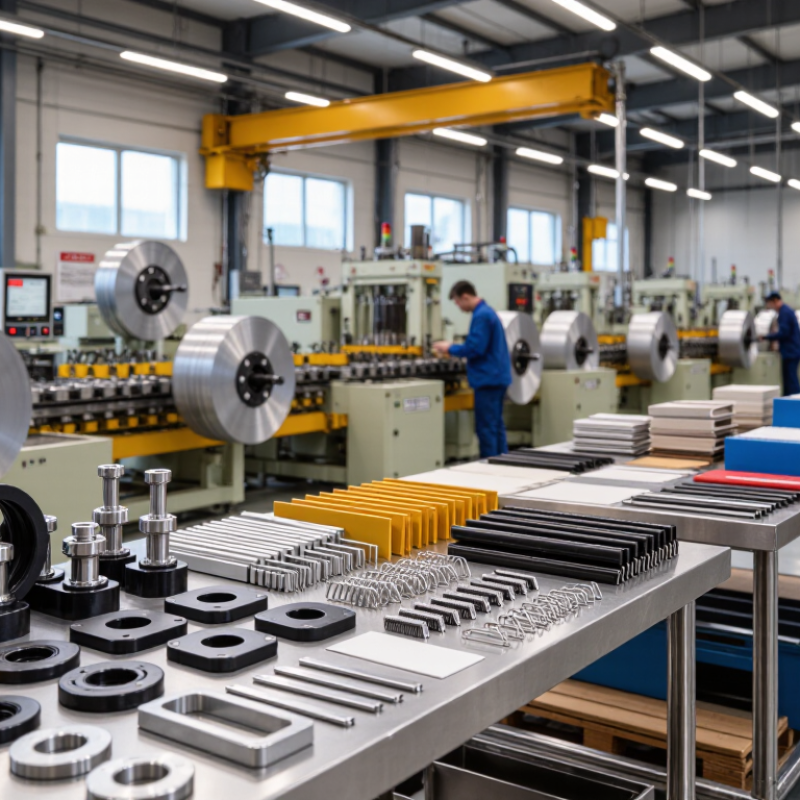
What Is a Stationery Hardware Manufacturer?

Definition and Scope of a Stationery Hardware Manufacturer

A stationery hardware manufacturer produces the functional components that make paper products usable, durable, and adjustable. Its scope includes metal binder rings, paper clips, eyelets, fasteners, corner protectors, wire mechanisms, and custom fittings. It may also design tooling, stamping dies, plating processes, and assembly lines. The boundary is not always neat. Some manufacturers produce complete filing products, while others supply only precision parts to stationery converters.

According to the IMARC Group’s Stationery Products Market report, the global market reached approximately USD 90.6 billion in 2023. The report projects a compound annual growth rate of about 4.5% from 2024 to 2032. This growth increases demand for consistent hardware, especially in schools, offices, archives, and creative workspaces. A professional manufacturer must control material thickness, hole alignment, opening force, and surface finish. Small errors can tear paper or jam a mechanism.

Reliability depends on more than appearance. Manufacturers commonly use dimensional inspection, cycle testing, salt-spray testing, and load checks. ISO 9001-based quality systems can improve traceability across batches. Environmental requirements also influence material selection, coating control, and packaging decisions. Yet compliance alone does not guarantee good user experience. A ring may pass a laboratory test but feel stiff in daily use. This is where practical feedback matters. The industry still has room to improve. Scratches, sharp edges, and inconsistent closing pressure remain surprisingly common in low-cost hardware.

What Is a Stationery Hardware Manufacturer? — Definition and Scope of a Stationery Hardware Manufacturer
Dimension Definition or Scope Typical Products, Activities, or Requirements
Core Definition A stationery hardware manufacturer designs, produces, assembles, and supplies physical components used in stationery, office-supply, school-supply, and paper-converting products. The manufacturer may produce individual parts, complete mechanisms, finished stationery items, or a combination of these. Its work generally involves engineering, material processing, assembly, inspection, packaging, and supply-chain management.
Product Scope Hardware used to join, hold, cut, protect, organize, or operate stationery products.
  • Binder rings, lever-arch mechanisms, and file fittings
  • Paper clips, bulldog clips, binder clips, and spring clips
  • Stapler components, staples, and staple-removal parts
  • Ruler edges, cutting blades, pencil-sharpener parts, and paper-cutter components
  • Eyelets, rivets, grommets, book corners, and reinforcing washers
  • Notebook spirals, wire-o binding elements, clasps, buckles, and closures
Materials Materials are selected according to strength, corrosion resistance, weight, appearance, cost, and intended use.
  • Carbon steel and stainless steel for springs, clips, rings, blades, and structural parts
  • Aluminum for lightweight fittings and decorative components
  • Brass and copper alloys for corrosion-resistant or decorative hardware
  • Engineering plastics such as nylon, polycarbonate, ABS, and polypropylene for housings, handles, and molded components
  • Elastomers and rubber-like materials for grips, pads, seals, and protective elements
Manufacturing Processes Processes convert raw materials into precise, functional stationery hardware.
  • Stamping and progressive die forming for high-volume sheet-metal parts
  • Wire forming and coiling for rings, springs, and binding elements
  • CNC machining, turning, drilling, and milling for precision parts
  • Plastic injection molding for handles, covers, housings, and molded fittings
  • Cutting, bending, riveting, welding, and mechanical fastening for assembly
  • Deburring, polishing, cleaning, and surface finishing before inspection
Surface Finishing Finishing improves appearance, wear resistance, corrosion resistance, or surface safety.
  • Electroplating with finishes such as nickel, zinc, or chromium where appropriate
  • Powder coating and liquid painting for colored or protective surfaces
  • Black oxide, passivation, polishing, brushing, and tumbling
  • Protective coatings designed to reduce corrosion or surface scratching
Engineering and Design Design work ensures that hardware fits the stationery product and performs reliably during repeated use.
  • Dimensional design using drawings, specifications, and three-dimensional CAD models
  • Tolerance analysis for moving, mating, and assembled components
  • Spring-force, opening-force, load, wear, and fatigue considerations
  • Prototype development through samples, pilot tooling, or additive manufacturing
  • Design-for-manufacturing and design-for-assembly reviews
Quality Control Quality control verifies that products meet dimensional, functional, visual, and material requirements.
  • Incoming inspection of metal, plastic, coatings, and purchased components
  • In-process checks for dimensions, forming accuracy, assembly position, and surface condition
  • Functional tests such as opening and closing cycles, clamping force, cutting performance, and load resistance
  • Final inspection, sampling plans, traceability records, and nonconformance management
Customization Manufacturers may adapt hardware to the required size, geometry, finish, color, packaging, or assembly method.
  • Custom dimensions for different notebook, folder, binder, or filing formats
  • Special hole patterns, mounting positions, spring characteristics, or closure designs
  • Specified surface finishes, colors, textures, and corrosion-protection levels
  • Customer-specific tooling, fixtures, labels, kits, and packaging configurations
Assembly Services Some manufacturers supply components only, while others deliver fully assembled stationery products.
  • Riveting, screwing, snap-fitting, crimping, and press-fitting
  • Installation of mechanisms into folders, binders, notebooks, or cases
  • Application of adhesive labels, protective films, or cushioning parts
  • Final kitting and packaging for retail, institutional, or industrial distribution
End-Use Markets Stationery hardware is used across consumer, educational, commercial, industrial, and archival applications.
  • Schools, universities, offices, and administrative departments
  • Retail stationery and office-supply distribution
  • Printing, bookbinding, filing, archiving, and document-management operations
  • Packaging, labeling, craft, hobby, and promotional-product production
Compliance and Safety Requirements depend on the product, destination market, materials, and intended user group.
  • Material declarations and restricted-substance controls where applicable
  • Sharp-edge, pinch-point, small-part, and mechanical-safety assessments
  • Packaging, labeling, recycling, and product-information requirements
  • Documented quality systems, supplier controls, and production traceability
Supply-Chain Role The manufacturer can operate as an original equipment supplier, contract manufacturer, component supplier, or finished-goods producer. A typical supply-chain role includes material procurement, tooling management, production planning, quality assurance, inventory control, packaging, shipment preparation, and technical support for customers.
Key Performance Indicators Performance is commonly evaluated through measurable manufacturing and product metrics.
  • Dimensional accuracy and functional consistency
  • Defect rate, first-pass yield, and corrective-action response time
  • Tooling life, production capacity, delivery reliability, and lead time
  • Corrosion resistance, cycle durability, load performance, and product safety
  • Material utilization, packaging efficiency, and recyclability considerations
In practical terms, a stationery hardware manufacturer is more than a metal-part producer: it combines product engineering, material processing, precision manufacturing, assembly, quality assurance, and supply-chain services to create functional hardware for stationery and document-related products.

Products and Components Produced by Stationery Hardware Manufacturers

A stationery hardware manufacturer produces the small metal and plastic parts that make paper products functional, durable, and easier to use. These parts include binder rings, paper clips, rivets, eyelets, corner protectors, snap fasteners, and spiral coils. Some factories also make pen clips, notebook closures, card holders, and adjustable file mechanisms.

Production usually begins with materials such as stainless steel, carbon steel, aluminum, brass, or engineering plastic. Machines stamp, bend, cut, polish, and assemble each component. For example, a binder ring must open smoothly, align accurately, and resist repeated pressure. A rivet needs a stable head without sharp edges. Surface treatments may include plating, painting, or powder coating for appearance and corrosion resistance.

Quality control is more than checking appearance. Manufacturers often measure dimensions, test opening cycles, inspect coating adhesion, and examine edges under strong light. Packaging also matters because loose hardware can scratch finished stationery during transport. A clean sample does not guarantee perfect mass production. Small changes in material thickness can affect fit. This is where production records, sample approval, and clear tolerance requirements become valuable. Some defects are easy to notice; others appear only after weeks of use. That detail deserves more attention.

What Is a Stationery Hardware Manufacturer?

Stationery hardware manufacturers produce metal and plastic mechanisms used to assemble, bind, fasten, organize, and protect paper products. The chart shows typical component groups found in common stationery hardware products.

Component counts represent the main functional hardware groups commonly used in each product type; exact construction can vary by design and application.

Materials and Manufacturing Processes Used in Stationery Hardware

What Is a Stationery Hardware Manufacturer?

Materials and Manufacturing Processes Used in Stationery Hardware

A stationery hardware manufacturer produces the small metal and plastic components used in folders, notebooks, planners, and writing tools. Common products include binder rings, clips, eyelets, rivets, pen parts, and corner protectors. Steel offers strength for repeated opening and closing. Brass provides a warm appearance and good corrosion resistance. Aluminum is lighter, while engineering plastics reduce weight and production noise. Material selection depends on load, surface contact, cost, and expected service life.

Manufacturing usually begins with cutting, stamping, or CNC machining. Stamping presses shape thin steel or brass sheets with carefully designed dies. CNC equipment creates precise holes, grooves, and threads in thicker parts. Die casting forms detailed components from molten metal, while injection molding shapes plastic pieces under controlled pressure.

Edges may then be deburred, polished, brushed, plated, or coated. Small differences matter. A rough edge can tear paper or scratch a user’s hand.

Reliable manufacturers inspect dimensions, spring tension, coating adhesion, and repeated-use performance. They may test samples through thousands of opening cycles. Experienced engineers also check whether parts fit different paper thicknesses without excessive force.

In practice, production is rarely perfect. A coating can look uneven, or a stamped hole may shift slightly. That result requires investigation, not concealment.

Better manufacturers record the defect, adjust the process, and review the design before mass production. Human judgment still matters, especially when appearance and durability conflict.

Industries and Customers Served by Stationery Hardware Manufacturers

What Is a Stationery Hardware Manufacturer?

A stationery hardware manufacturer produces the metal and plastic components used in everyday paper products. These parts include binder rings, paper clips, eyelets, corner protectors, fasteners, and notebook mechanisms. The work combines material selection, precision forming, surface finishing, and quality inspection. A reliable manufacturer checks thickness, strength, alignment, and corrosion resistance before shipment.

Small parts matter.

Stationery producers are major customers. They need consistent hardware for notebooks, folders, planners, sketchbooks, and filing products. Bookbinding workshops also require dependable mechanisms for repeated opening and closing. Schools, offices, and government departments buy finished stationery through distributors and wholesalers. Packaging companies may use similar components for presentation boxes, sample books, and document cases. Craft suppliers and custom product makers often request unusual sizes or finishes.

Different industries value different features. An office buyer may focus on durability and smooth operation. A premium notebook maker may care more about appearance and precise fitting. An experienced manufacturer can recommend suitable materials for indoor storage, frequent handling, or humid environments. Practical testing should include repeated movement and load checks.

The process is not perfect. A small mismatch can still appear during assembly, especially with custom orders. That is why clear drawings, sample approval, traceable inspections, and honest communication remain essential. Suppliers should also review customer feedback and improve weak points instead of assuming every batch is flawless.

Quality Standards, Customization, and Supply Chain Management

What Is a Stationery Hardware Manufacturer?

A stationery hardware manufacturer produces the metal and functional parts used in notebooks, folders, planners, and filing products. These parts include rings, clips, fasteners, eyelets, corners, and adjustable mechanisms. Quality standards guide every production stage, from wire selection to surface finishing.

Experienced manufacturers inspect dimensions with gauges and test opening cycles on assembled samples. A ring mechanism may need to open smoothly after thousands of repeated movements. Surface plating should resist scratches, discoloration, and light moisture during normal office use. Small defects matter. A sharp edge can damage paper or cause an uncomfortable user experience.

Customization often involves hole spacing, metal thickness, color, logo placement, and packaging format. Before mass production, buyers usually review drawings, samples, and tolerance limits. Supply chain management keeps these decisions connected. Reliable factories track raw materials, production batches, inspection records, and shipment schedules. They also maintain backup suppliers for essential metals and packaging materials. Delays still happen. Forecasts can be wrong, and rushed changes may create inconsistent finishes. Careful communication reduces that risk, but it does not remove it. A responsible manufacturer reports problems early and proposes practical adjustments instead of hiding them.

"*" indicates required fields