What Are the Top WPC Decking Material Types in 2026?

Choosing among the top Wpc Decking Material types in 2026 requires more than comparing colors and prices. Homeowners now examine board composition, surface texture, warranty terms, and long-term weather performance. The market includes capped composite boards, uncapped wood-plastic composites, mineral-filled composites, and recycled-content formulations. Each type behaves differently under sunlight, rain, foot traffic, and seasonal movement.

Dr. Susan E. M. Selke, a respected wood-polymer composites researcher, offers a useful reminder: “Performance depends on formulation, processing, and end use—not on a material label alone.” That principle should guide every buying decision. A capped Wpc Decking Material usually provides stronger stain and moisture resistance because its outer shell protects the core. Uncapped boards can cost less, but their exposed surface may weather faster. Mineral-filled options often offer greater rigidity, although they can feel less forgiving during installation. Recycled-content boards support resource efficiency, yet their consistency depends on manufacturing quality.

Small details matter. A darker board can become hot beside a south-facing glass door. Fine grooves may collect pollen after spring rain. A beautiful sample may still expand, contract, or fade differently outdoors. I have seen product comparisons overlook drainage, substructure spacing, and fastener compatibility. That is a mistake.

The best choice is not always the most expensive board. It is the type that matches climate, maintenance expectations, budget, and installation conditions. This guide examines those differences closely, while acknowledging an uncomfortable truth: no Wpc Decking Material performs perfectly in every setting.
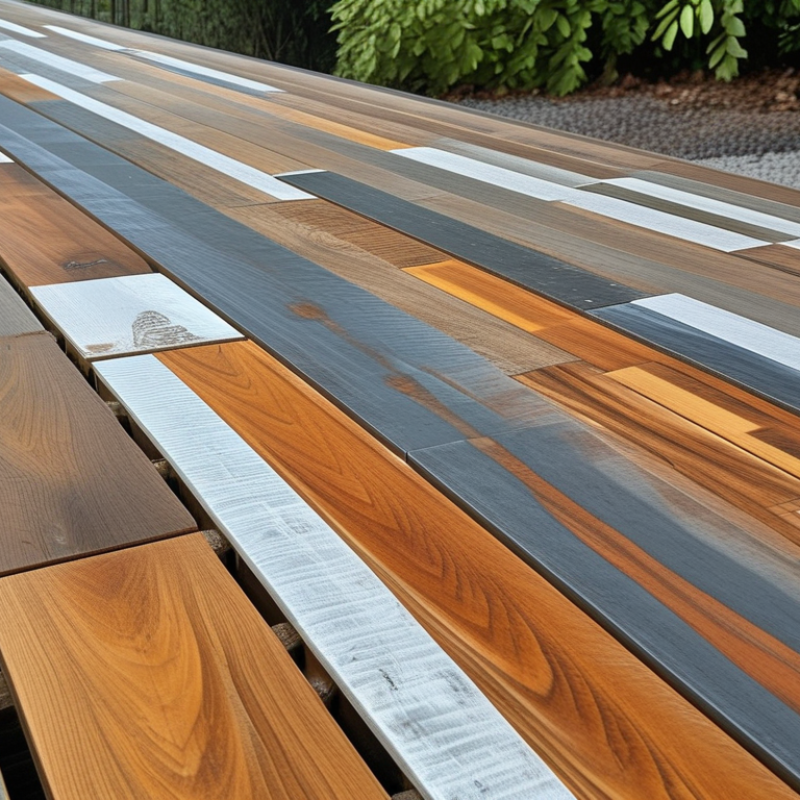
What Are the Top WPC Decking Material Types in 2026?

WPC Decking: Definition, Composition, and Core Performance Features

Wood-plastic composite (WPC) decking combines wood fibers with thermoplastics, usually polyethylene, polypropylene, or PVC. Additives improve color stability, moisture resistance, and processing. The result is not natural timber. It is an engineered surface with more consistent dimensions.

Grand View Research reported that the global wood-plastic composites market was valued at approximately USD 7.1 billion in 2023. Its 2024 analysis also projected strong growth through 2030. In 2026, buyers will commonly compare three WPC decking types: hollow-core boards, solid boards, and capped co-extruded boards. Hollow boards reduce weight and material use. Solid boards feel denser underfoot. Capped boards add a protective polymer layer against stains and water. Performance still varies. Resin ratio, fiber quality, board geometry, and installation matter greatly.

Tips: Check the technical datasheet, not only the surface sample. Look for water absorption, slip resistance, flexural strength, and color-retention test results. A heavier board is not automatically better. That assumption often fails. Leave the specified expansion gaps, especially on sunny balconies. I have seen attractive installations distort because installers ignored temperature movement. Also inspect the joist spacing and drainage path. WPC resists decay, but trapped water can still create problems. Source data should come from recognized testing laboratories or published industry reports, such as Grand View Research’s Wood-Plastic Composites Market Analysis, rather than unsupported sales claims.

What Are the Top WPC Decking Material Types in 2026?

WPC decking is commonly produced with a thermoplastic polymer matrix, wood fiber or flour, and performance additives. The chart shows representative midpoint values from typical formulation ranges by material type; actual recipes vary by product and application.

Key insight: PE-based WPC is widely used for balanced moisture resistance and flexibility, PP-based WPC offers higher heat resistance and stiffness, while PVC-based WPC generally provides low water absorption and strong dimensional stability. In all three types, wood fiber is the primary reinforcing component by mass.

Capped WPC Decking for Enhanced Moisture and Stain Resistance

Capped WPC decking is becoming a leading choice for outdoor projects exposed to rain, pool splashes, and food stains. Its structure combines a wood-plastic composite core with a protective polymer shell. That outer layer limits water absorption and helps prevent oil, wine, and muddy footprints from penetrating deeply. It is not waterproof, though.

Grand View Research valued the global wood-plastic composites market at about $7.14 billion in 2023. The report forecasts a 7.7% compound annual growth rate from 2024 to 2030. This figure covers several applications, not decking alone. That limitation matters. Still, it reflects growing interest in lower-maintenance composite materials.

In practical installation, capped boards feel more forgiving around outdoor kitchens and shaded gardens. A quick rinse often removes surface dirt before it becomes a stubborn mark. However, poorly sealed ends, open board gaps, and standing water can still create trouble. Drainage remains essential. According to ASTM-based performance testing practices, moisture exposure, slip behavior, and surface durability should be evaluated under controlled conditions. Homeowners should request test details, not rely only on color samples. Darker boards can also become uncomfortable under direct summer sunlight. I have found that appearance often wins the first inspection, while drainage determines long-term satisfaction.

Uncapped WPC Decking for Practical and Cost-Effective Outdoor Use

Uncapped WPC decking remains a practical choice for many outdoor projects in 2026. Its composite core is exposed, without an additional protective polymer layer. This simpler construction often reduces the initial material cost. It also allows manufacturers to offer varied colors and surface textures.

From site experience, uncapped boards work well on garden paths, balconies, and covered patios. A brushed surface can provide useful grip after light rain. However, exposed material may show stains, scratches, and color changes more clearly over time. I would not call it maintenance-free. Leaves, cooking oil, and standing water still need prompt attention. Regular sweeping and gentle washing usually protect the surface better than harsh chemicals.

Installation quality matters as much as the board itself. Leave the specified expansion gaps, especially where afternoon heat reaches the deck. Use a stable, well-drained substructure. Poor spacing can cause movement, while trapped moisture may encourage mold around the joists. Before purchasing, request test information for water absorption, slip resistance, UV performance, and load capacity. These figures provide stronger evidence than attractive photographs. One detail is easy to overlook: darker boards can become uncomfortable under direct summer sunlight. A shaded layout may be worth the small design compromise. Uncapped WPC is cost-effective, but only when its limits match the site.

Recycled and Bio-Based WPC Decking Materials in 2026

What Are the Top WPC Decking Material Types in 2026?

Recycled and Bio-Based WPC Decking Materials in 2026

In 2026, recycled WPC decking remains a practical choice for outdoor projects. It commonly combines reclaimed wood fibers with recycled plastic polymers. This mix can reduce dependence on virgin materials while providing stable boards for patios, balconies, and garden paths. In real installations, board density matters. Lightweight profiles may flex more between joists, especially under heavy furniture.

Bio-based WPC decking is also gaining attention. It may use plant-derived polymers, wood flour, bamboo fibers, or agricultural residues. However, bio-based does not automatically mean biodegradable. That distinction needs clear technical documentation. Some products also blend recycled and bio-based inputs, creating a hybrid material with a lower fossil-plastic share. I find this category promising, but durability claims still require careful comparison. Weather exposure can reveal weaknesses that showroom samples hide.

How to Compare WPC Decking Types for Different Applications

Choosing WPC decking in 2026 requires more than comparing colors or prices. A 2024 Grand View Research report estimated the global composite decking market at about USD 5 billion in 2023, with continued growth expected through 2030. That expansion reflects varied applications, not one universal board type. Capped WPC uses a protective polymer shell around the core. It usually offers better resistance to stains, moisture, and fading. Uncapped boards cost less, but exposed fibers may weather faster in wet areas.

Match the structure to the project. Hollow boards reduce weight and can simplify rooftop installation or raised balconies. Solid boards feel firmer underfoot and suit busy patios, public walkways, and furniture-heavy spaces. Co-extruded boards often perform better beside pools because their surface limits water absorption. However, “water-resistant” does not mean waterproof. Poor drainage can still cause mold, movement, and slippery conditions.

Check technical evidence, not just sales language. ASTM D7032 evaluates performance requirements for composite decking, while ASTM D6109 covers flexural properties of plastic lumber. A 2023 Freedonia industry analysis also identified durability and low maintenance as major demand drivers in decking materials. Ask for slip resistance, fastener guidance, thermal movement data, and warranty limits. Small details matter. Dark boards can become uncomfortable in direct sun. Hollow profiles may sound noisier. I would also inspect a full-size sample after rain; brochure photographs rarely reveal surface texture, edge quality, or color variation.

What Are the Top WPC Decking Material Types in 2026? - How to Compare WPC Decking Types for Different Applications
WPC Decking Type Typical Core Structure Typical Material Composition Moisture and Rot Resistance Maintenance Level Typical Weight and Rigidity Best-Fit Applications Main Advantages Key Limitations Relative Cost
Hollow WPC Decking Internal longitudinal chambers reduce the amount of material used. Wood flour or wood fiber combined with thermoplastic polymer and additives. Good resistance to normal outdoor moisture when the ends and installation details are properly protected. The internal chambers should not be allowed to retain standing water. Low Lighter than solid boards; adequate rigidity depends strongly on board profile, joist spacing, and support design. Residential balconies, raised decks, rooftop terraces, and projects where handling weight is important. Lower material consumption, easier handling, and reduced dead load on the supporting structure. More sensitive to improper support spacing, impact at unsupported areas, and water entering open board ends. Low to medium
Solid WPC Decking Full or nearly full polymer-wood composite cross-section. Wood fiber or flour, thermoplastic resin, pigments, stabilizers, and processing additives. Very good resistance to decay and moisture compared with untreated natural wood, although prolonged water exposure can still affect fasteners and substructures. Low Heavier and generally more resistant to localized impact than hollow profiles. High-traffic walkways, public terraces, stairs, seating areas, and applications requiring easier end cutting or routing. Strong, stable, and less vulnerable to crushing at board ends or around fasteners. Higher weight, greater material use, and potentially higher transport and installation effort. Medium
Uncapped WPC Decking Single-layer composite material is exposed across the top and sides. Wood-polymer composite formulated as one homogeneous profile. Good general moisture resistance, but the exposed wood content can absorb more water than a capped profile if the surface is damaged or poorly maintained. Low to medium Available in both hollow and solid constructions; rigidity depends on the selected profile. Covered or moderately exposed residential decks where initial budget is a priority. Usually more economical and easier to color-match after cutting because the core and surface are similar. More susceptible to staining, color variation, surface weathering, and moisture-related dimensional changes than capped boards. Low to medium
Capped or Co-Extruded WPC Decking Composite core protected by a thin polymer-rich outer cap, often on the top and sides. WPC core with an additional protective layer made mainly from thermoplastic polymer and color additives. Very good surface protection against moisture, common stains, and everyday outdoor exposure. Cut ends may require end coating or sealing where specified. Very low Available in hollow or solid profiles; the cap improves surface protection but does not replace correct structural support. Uncovered decks, pool surrounds, coastal properties, restaurants, hospitality areas, and high-use outdoor spaces. Improved stain resistance, more consistent appearance, better color retention, and easier routine cleaning. Higher purchase cost; damaged caps can be difficult to repair invisibly, and some surfaces can become hot in strong sunlight. Medium to high
Mineral-Filled WPC Decking Composite profile containing mineral fillers in addition to wood fiber and polymer. Thermoplastic resin, wood content, mineral filler, pigments, and stabilizers. Good resistance to moisture and decay; actual performance depends on the polymer matrix, formulation, and cap construction. Low Can provide increased dimensional stability and stiffness, but may be heavier and more difficult to cut than conventional WPC. Large-format terraces, areas with substantial temperature changes, and projects prioritizing dimensional stability. Lower thermal movement in some formulations, good rigidity, and improved resistance to profile deformation. Heavier boards, more demanding machining, and performance differences between formulations require careful specification review. Medium to high
Recycled-Content WPC Decking Solid or hollow composite profile manufactured partly or largely from recovered polymer and wood materials. Recycled thermoplastic, recycled wood fiber or flour, pigments, stabilizers, and other additives. Can offer good moisture and rot resistance, but recycled feedstock quality and formulation consistency are important. Low to medium Weight and rigidity vary by profile and formulation rather than by recycled content alone. Residential and commercial projects with environmental procurement targets or requirements for recycled material content. Can reduce reliance on virgin raw materials and support project sustainability goals. Color consistency, technical performance, and documented recycled content should be verified through product test data and certification. Low to medium
PVC-Rich WPC Decking Composite profile with a higher proportion of PVC polymer relative to wood content. Polyvinyl chloride, wood flour or fiber, stabilizers, pigments, and processing modifiers. Very good resistance to water, rot, and insects when correctly installed; performance remains dependent on joints, fasteners, and substructure drainage. Low Generally lighter than many polyethylene-based solid composites and can provide good dimensional stability. Rain-exposed decks, balconies, wet climates, and projects requiring lower water absorption and stable profiles. Low water absorption, good resistance to biological decay, and relatively stable dimensions. May have a less wood-like feel, can be sensitive to high temperatures during installation, and requires compatible cutting and fastening methods. Medium to high
Comparison values are typical industry characteristics rather than universal specifications. Final selection should be based on verified manufacturer test data, local climate, joist spacing, fire requirements, slip resistance, drainage, and the intended traffic level.

"*" indicates required fields