"*" indicates required fields
Choosing China’s top three Three Phase Surge Protector suppliers requires more than comparing factory photos or low prices. A credible review should examine design quality, test evidence, production experience, and after-sales support. These details matter when a protection device must withstand lightning impulses, switching surges, and unstable industrial power.
Peter Hasse, a widely recognized surge protection specialist, stated, “Surge protection is a system, not a single device.” His observation remains practical. A Three Phase Surge Protector can fail when grounding is poor, cable routing is careless, or the selected voltage rating does not match the installation. Therefore, supplier evaluation should include maximum continuous operating voltage, nominal discharge current, maximum discharge current, response time, thermal protection, and short-circuit withstand capacity. Ask for test reports, factory inspection records, and traceable production information. A supplier with clear documentation is easier to trust.
Real performance also depends on service. Can the manufacturer provide wiring diagrams for a control cabinet? Can its engineers explain replacement indicators after a damaged module trips? Can it support overseas certification and customized enclosure layouts? These questions separate experienced manufacturers from simple trading companies. Still, no ranking is perfect. Product models change, test standards vary, and marketing claims can sound stronger than field evidence. A careful comparison should leave room for doubt. The following guide examines three leading Chinese suppliers through product reliability, certification, technical capability, manufacturing scale, and customer support. It aims to offer useful direction, not an unquestionable verdict.
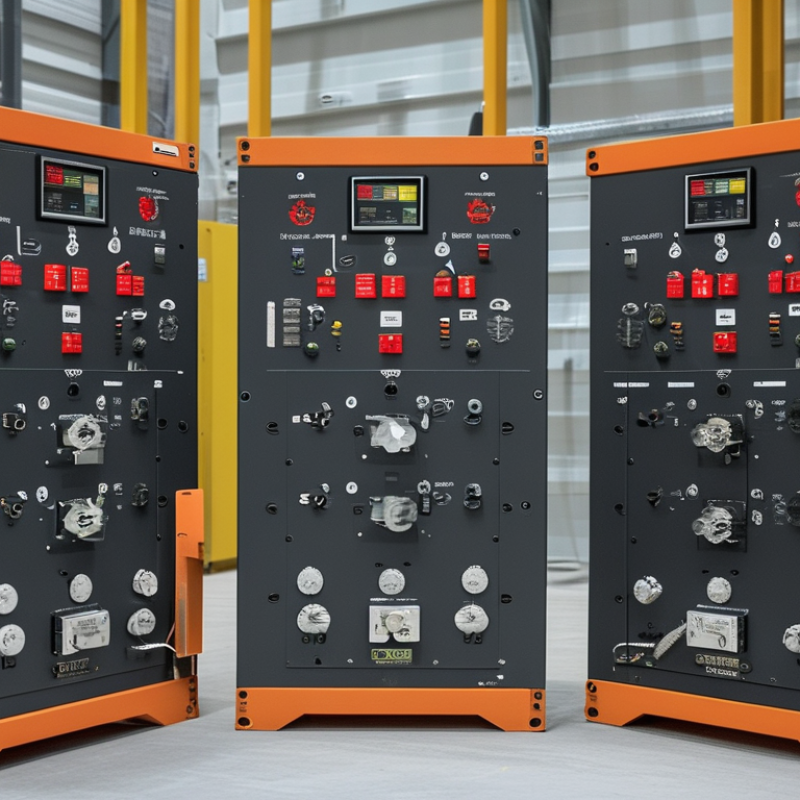
A three-phase surge protector is a protective device installed in electrical distribution systems. It helps limit sudden voltage increases caused by lightning, switching operations, or grid disturbances. These surges can damage motors, inverters, control panels, and sensitive monitoring equipment.
The device normally remains inactive. When voltage rises above its safe threshold, its internal surge-limiting components create a low-resistance path to ground. Excess energy is diverted away from connected equipment. After the surge passes, the protector returns to its high-resistance state. Fast response matters. Even a brief spike can weaken insulation or destroy electronic circuits.
A suitable model must match the system voltage, grounding arrangement, and expected discharge current. Three-phase systems may use separate protection paths for each phase and neutral. Installation quality is equally important. Short, straight grounding conductors usually improve performance, while loose terminals can reduce protection. A backup disconnect may also be required for safe maintenance.
In panel inspections, technicians often find a correctly rated protector with poor wiring. That mistake is easy to overlook. Some suppliers provide technical drawings, test data, and selection support, but buyers should verify these details independently. No protector lasts forever. Repeated surges, heat, and aging can reduce its effectiveness, so visual indicators and replacement records deserve regular attention. A device can look normal and still need testing.
China Top Three Phase Surge Protector Suppliers?
Chinese suppliers matter because surge protection is a volume-driven, specification-sensitive market. MarketsandMarkets projects the global surge protection devices market to grow at roughly 7% annually through 2028. This growth reflects expanding data centers, renewable energy systems, and industrial automation. Chinese manufacturers support these sectors with large-scale production and faster customization. A factory can adjust terminal spacing, enclosure materials, or monitoring contacts for a specific control cabinet.
Supplier quality still needs careful checking. Professional buyers should review IEC 61643-11 test evidence, thermal protection design, impulse current ratings, and traceable batch records. The International Energy Agency reports continued growth in global electricity demand, increasing exposure across commercial and industrial networks. That creates demand for dependable three-phase protection, not merely low-cost components.
The strongest Chinese suppliers usually combine automated assembly with laboratory testing. Look for tests using 8/20 μs current impulses, temperature cycling, insulation checks, and repeated discharge trials. Field inspections also reveal practical details, such as loose terminals, unclear wiring labels, or weak packaging. These small faults matter. A supplier may publish an impressive 40 kA rating, yet the actual system performance depends on grounding, backup protection, and installation quality. This is where some purchasing decisions become too optimistic. Price is useful, but documented testing and consistent production deserve greater weight.
Three-phase surge protection devices must be matched to the local electrical system voltage, including maximum continuous operating voltage and protection level. China offers a broad manufacturing base for configurable SPD solutions, supporting different regional voltage requirements, certification needs, production volumes, and delivery schedules. The values shown are common nominal reference voltages; actual installations may vary by country, grid type, and local electrical regulations.
China Top Three Phase Surge Protector Suppliers?
How to Identify China’s Top Three-Phase Surge Protector Suppliers
Finding China’s top three-phase surge protector suppliers requires more than comparing prices. A serious supplier should provide clear data for Uc, In, Imax, Up, and short-circuit ratings. These values must match your distribution system and installation environment.
Request test reports based on IEC 61643-11 or other accepted standards. Check whether the reports cover the exact model, not only a similar product. Ask about Type 1, Type 2, and Type 3 protection. A reliable factory should explain thermal disconnection, remote signaling, enclosure ratings, and replacement procedures without avoiding technical questions.
Inspect the production site when possible. Look for controlled assembly areas, surge-testing equipment, incoming material records, and serial-number traceability. Sample orders can reveal loose terminals, unclear labels, or inconsistent dimensions. Small details matter.
A polished catalog is not proof. Contact two or three technical staff members and compare their answers. Do they understand residual voltage, backup protection, and grounding length? Ask for installation drawings and failure-analysis records. Suppliers with practical engineering experience usually discuss limitations openly.
Pricing still matters, but unusually low quotations deserve careful review. Confirm warranty terms, inspection procedures, production capacity, and lead times in writing. No evaluation is perfect. Even experienced buyers may miss a weak batch or an outdated certificate. Recheck critical evidence before placing a large order.
China’s top three-phase surge protector suppliers should be compared by evidence, not catalogue size.
A practical shortlist includes IEC-focused manufacturers, UL-oriented exporters, and high-volume OEM factories. Grand View Research estimates the global surge protection devices market will expand at a 6.1% CAGR from 2024 to 2030. That growth increases supplier choice, but also increases quality differences.
Product testing comes first.
Check Type 1, Type 2, or Type 1+2 classification under IEC 61643-11. Review maximum discharge current, voltage protection level, response time, and short-circuit ratings.
A reliable three-phase unit should show clear L1-L2-L3 wiring, thermal disconnection, status indicators, and replaceable modules.
Certification matters. Request current IEC test reports, CE documentation, or UL 1449 evidence where required. A certificate alone is not proof. Traceable test records are stronger.
Manufacturing depth separates serious suppliers from trading companies.
Ask for copper busbar specifications, MOV batch control, aging tests, and final inspection photographs.
Customization may include enclosure size, remote alarm contacts, terminal layout, labeling, and private packaging. Some factories accept low-volume engineering changes; others only alter labels. The difference affects delivery risk.
MarketsandMarkets reports that industrial applications remain a major surge protection demand segment, making stable production important.
My comparison is not perfect. Factory audits can miss seasonal subcontracting. Sample testing can also hide long-term degradation.
Request third-party verification and test several production batches before approval.
Choosing a three-phase surge protector supplier in China starts with your application, not a catalog ranking. Define the system voltage, grounding method, impulse exposure, and installation location. A factory line may need a different device from a rooftop solar inverter. Be specific.
Ask suppliers for measurable technical evidence. Check maximum continuous operating voltage, nominal discharge current, maximum discharge current, voltage protection level, and short-circuit ratings. Request current test reports and product samples. Do not rely on copied certificates. Inspect the marking, terminals, housing, and disconnect indicator.
Small details matter. A loose terminal can overheat inside a crowded control cabinet. Confirm conductor size, torque requirements, enclosure rating, temperature range, and replacement method. For outdoor equipment, examine sealing and ultraviolet resistance. For sensitive automation, compare the protection level with the equipment’s withstand voltage.
Evaluate the supplier’s manufacturing control. Can they provide batch traceability, inspection records, and clear failure analysis? Ask how they handle damaged units and technical questions after delivery. Response quality reveals practical competence. A factory audit or video inspection can expose inconsistent assembly, but it is not perfect. I have seen polished samples hide weak production controls.
Request a trial order before committing to large quantities. Test the protector under your actual wiring conditions, including cable length and grounding impedance. Confirm delivery stability and documentation accuracy. The lowest quotation may omit accessories, testing, or support. That mistake becomes expensive later.
| Application | Recommended SPD Configuration | Typical System Voltage | Minimum Key Ratings to Review | Installation Location | Relevant Standards | Supplier Selection Focus |
|---|---|---|---|---|---|---|
| Commercial Buildings | Type 2, three-phase plus neutral and protective earth | 230/400 V AC or 230/415 V AC | Uc: 275 V AC for line-to-neutral protection; Imax: typically 20–40 kA per pole; Up: preferably ≤ 1.5 kV | Main distribution board or downstream distribution panel | IEC/EN 61643-11; IEC 60364-5-53 | Correct voltage configuration, replaceable modules, clear status indication, and coordination with upstream protection |
| Industrial Motor Systems | Type 2 or Type 1+2, three-phase configuration selected according to lightning exposure | 400/690 V AC systems are common in industrial facilities | Uc: matched to the actual line voltage and earthing system; Imax: typically 40–65 kA per pole; Short-circuit withstand: verify against the installation fault level | Motor control center, main switchboard, or feeder panel | IEC/EN 61643-11; IEC 60364; IEC 61643-12 | Low residual voltage, high temporary overvoltage capability, vibration resistance, and coordination with variable-frequency drives |
| Data Centers | Type 1+2 at the main incoming board and Type 2 at downstream distribution boards | 230/400 V AC or 230/415 V AC | Iimp: commonly 12.5 kA per pole or higher where partial lightning current is expected; Imax: commonly 40–65 kA per pole; Up: generally ≤ 1.5 kV for sensitive equipment zones | Main low-voltage switchboard and critical power distribution panels | IEC/EN 61643-11; IEC 62305; IEC 60364 | High availability, remote alarm contact, thermal disconnector, end-of-life indication, and documented coordination testing |
| Solar PV AC Side | Type 2 AC SPD; Type 1+2 may be required when external lightning protection or exposure conditions demand it | 230/400 V AC or 230/415 V AC | Uc: selected for the AC distribution voltage; Imax: typically 20–40 kA per pole; Up: commonly ≤ 1.5 kV | AC combiner panel, inverter output panel, or main distribution board | IEC/EN 61643-11; IEC 60364-7-712; IEC 62305 | Compatibility with inverter protection strategy, weather-resistant enclosure options, remote monitoring, and verified short-circuit ratings |
| Outdoor Utility Equipment | Type 1+2 or Type 2, selected according to lightning risk and service entrance arrangement | 230/400 V AC, 230/415 V AC, or site-specific low-voltage systems | Iimp: typically 12.5 kA per pole for partial lightning current; Imax: typically 40–65 kA per pole; IP rating: commonly IP54 or higher for outdoor enclosures | Service entrance, outdoor control cabinet, or remote equipment enclosure | IEC/EN 61643-11; IEC 62305; IEC 60529 | Ingress protection, operating temperature range, corrosion resistance, UV resistance, and long-term availability of replacement modules |
| High-Lightning-Risk Sites | Type 1+2 at the service entrance, with additional Type 2 protection downstream | System-specific; commonly 230/400 V AC or 230/415 V AC | Iimp: often 12.5 kA per pole or higher; Imax: typically 40–65 kA per pole; Follow the lightning protection system risk assessment | Origin of the electrical installation and coordinated downstream panels | IEC 62305; IEC/EN 61643-11; IEC 61643-12 | Verified impulse-current test data, coordination documents, reliable disconnection, and traceable production quality control |
| Supplier Evaluation | Compare technically equivalent three-phase products rather than headline discharge-current values alone | Must match the actual nominal system voltage and earthing arrangement | Check Uc, Up, Iimp, In, Imax, short-circuit rating, and follow current behavior | Confirm compatibility with the intended panel, conductor length, backup fuse, and installation environment | Request current certificates and test reports against applicable IEC/EN standards | Evaluate factory audit results, quality consistency, technical support, lead time, warranty terms, and spare-module supply |
| Selection note: The ratings above are typical starting points, not universal specifications. Final selection must be based on the site earthing system, nominal voltage, lightning risk assessment, prospective short-circuit current, backup overcurrent protection, conductor routing, and the manufacturer’s coordination instructions. | ||||||
"*" indicates required fields