What Are the Top Prehung Doors for Global Buyers?
Global buyers are rethinking how doors arrive, install, and perform. Prehung Doors combine the slab, frame, hinges, and often the threshold in one factory-aligned package. That configuration can reduce field measuring, shorten installation time, and improve consistency across housing and commercial projects.
Market evidence supports this attention. Grand View Research reports continued growth in the global doors market, driven by construction, renovation, and energy-efficiency upgrades. Fortune Business Insights also identifies residential development and replacement demand as important market drivers. However, these reports group several door categories together. Their figures should guide decisions, not replace product-level verification.
Door-industry specialist John McFeely explains the practical principle: “A door is a system, not merely a slab.” That distinction matters when buyers compare exterior, interior, fire-rated, sound-control, and energy-efficient Prehung Doors. A well-made unit should show square corners, steady hinge spacing, reliable weather seals, and a frame suited to the wall thickness.
Small details become expensive later.
Global sourcing adds more questions. Buyers must confirm rough-opening dimensions, handing, swing direction, moisture exposure, hardware preparation, packaging strength, and installation instructions. Regional building practices also vary. A prehung unit designed for a North American wood frame may not suit masonry construction elsewhere.
The strongest suppliers provide test documentation, material specifications, installation drawings, and traceable quality checks. They also explain limitations clearly. That honesty matters. No single Prehung Doors model fits every climate, project type, or budget, and this guide examines those trade-offs for informed global purchasing.
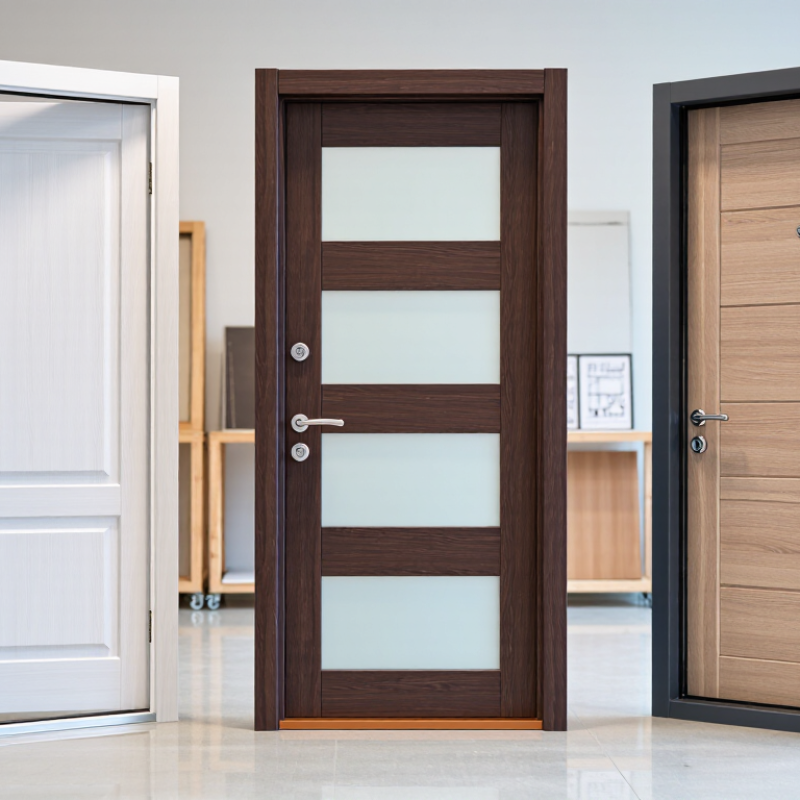
What Is a Prehung Door and Why Does It Matter to Global Buyers?
A prehung door is a complete door unit, not only a door slab. It usually includes the slab, frame, hinges, and prepared hardware openings. Some units also include casing, weather seals, or a threshold. The factory assembles these parts before shipment. This can reduce installation time and alignment errors on site. It matters to global buyers because labor skills, tools, and installation conditions vary across markets.
A prehung unit should match the rough opening precisely. Measure width, height, wall thickness, and swing direction before ordering. Check whether the door opens inward or outward. Small errors can create visible gaps around the frame. They can also affect sealing and security. Shipping deserves equal attention. Strong corner protection helps prevent crushed frames and damaged hinge areas. Moisture-resistant packaging is useful when containers face changing climates. Still, packaging is not a guarantee.
Global buyers should request material details, tolerance ranges, hardware specifications, and test documents. Fire, acoustic, thermal, and wind requirements differ by project and location. Local professionals should verify the applicable building rules. A certificate alone may not cover the complete installed assembly. That detail is easy to overlook. Buyers should also confirm replacement parts and installation instructions in a usable language. The cheapest unit may cost more after rework, storage delays, or unsuitable hardware. A careful comparison should include the whole door system, not only its listed price.
Which Prehung Door Materials Suit Different Climates and Building Types?
For global buyers, prehung door material should match the climate, wall system, and building’s daily use. Fiberglass doors suit humid, coastal, and rainy regions because they resist swelling, corrosion, and surface decay. Their insulated cores also help stabilize indoor temperatures. Steel doors offer strong security and reliable fire-rated options for apartments, workshops, and commercial buildings. However, unprotected steel can rust when moisture reaches damaged coatings.
Wood prehung doors bring warmth to homes, hotels, and traditional buildings. They perform well in dry or moderate climates when sealed properly. In tropical areas, repeated humidity changes may cause movement around the panels and jambs. That detail is often underestimated. Composite materials can reduce this movement and require less maintenance. Still, quality varies between core designs, edge seals, and surface finishes.
Cold regions need insulated slabs, tight weatherstripping, and thermally efficient frames. Hot, dry climates benefit from stable materials and finishes that resist ultraviolet exposure. For coastal buildings, stainless or corrosion-resistant hardware deserves close attention. I have seen good doors fail because installers ignored threshold drainage and wall alignment. Material alone cannot solve poor installation. Buyers should check regional building codes, fire requirements, moisture ratings, and replacement-part availability before ordering. A practical choice may look less elegant, but it usually performs better over time.
How Do Door Ratings Affect Security, Energy Efficiency, and Fire Safety?
For global buyers, top prehung doors are selected by tested ratings, not appearance alone. A prehung unit combines the slab, frame, hinges, seals, and threshold. Each part affects performance. Security ratings, such as EN 1627 resistance classes, show tested resistance against defined tools and methods. They do not promise absolute protection. RC2 may suit many apartments, while higher-risk entrances often require stronger assemblies, laminated glazing, and reinforced anchoring.
Energy performance depends heavily on installation quality. The U.S. Department of Energy reports that windows can cause 25–30% of residential heating and cooling energy use. A poorly sealed door can add similar discomfort locally, especially around the threshold. Buyers should check U-factor, air-leakage results, weather resistance, and tested water penetration under standards such as NAFS. In field inspections, I often see a high-rated door losing performance because installers compress the gasket unevenly. The rating looked excellent. The fitting was not.
Fire safety requires the complete door assembly, not merely a fire-resistant leaf. NFPA reported approximately 358,500 home structure fires in the United States during 2022, causing about 2,840 deaths. Fire-rated prehung doors should show tested durations, such as 20, 45, 60, or 90 minutes, under recognized procedures. NFPA 80 addresses installation and maintenance, while EN 1634-1 evaluates fire resistance in many international projects. Buyers should verify labels, frame compatibility, hardware, and local code acceptance. Paperwork can be incomplete. That is worth questioning.
What Sizes, Configurations, and Hardware Options Are Available Worldwide?
Global buyers usually begin with size, but the rough opening matters just as much. Common door leaves measure 24, 28, 30, 32, or 36 inches wide. Metric markets often specify 600, 700, 800, or 900 millimeters. Heights commonly range from 80 to 84 inches, or 2,000 to 2,100 millimeters. Always confirm the wall thickness before ordering. A standard jamb may not fit a thick masonry wall or insulated frame.
Prehung doors are available as single, double, sliding, and unequal-leaf configurations. Inswing and outswing options affect room planning, weather protection, and emergency access. Left-hand and right-hand handing must match the site drawing, not just the buyer’s description. That detail causes avoidable delays. For exterior projects, moisture-resistant frames, adjustable thresholds, compression seals, and drainage channels are practical choices. Interior projects may prioritize acoustic cores, glazed panels, or fire-rated assemblies. Fire and sound ratings should be verified against local building requirements.
Hardware choices include hinges, lever handles, pull handles, closers, locks, privacy sets, and electronic access components. Backset dimensions and cylinder formats vary between regions. Confirm these details with the installer before production. A small mismatch can make a complete door set unusable. Stainless steel suits humid coastal areas, while powder-coated hardware can support many inland applications. Finish samples also deserve attention because screen colors are unreliable. In practice, buyers sometimes focus on appearance and overlook clearance, sealing, or replacement access. That is worth reconsidering.
How Can Buyers Compare Quality, Compliance, Cost, and Installation Needs?
For global buyers, the top prehung door is not simply the cheapest or heaviest model. It should match climate, security needs, and building use. Insulated steel or fiberglass units often suit exposed entrances, while engineered timber can work well in controlled climates. The complete assembly matters: slab, frame, hinges, threshold, seals, and hardware must be tested together. A beautiful slab can still fail.
Compare compliance before comparing prices. Ask for test reports covering air leakage, water penetration, structural pressure, thermal performance, and fire resistance where required. Standards such as EN 14351-1, ASTM E283, ASTM E331, and ASTM E330 may apply in different markets. Requirements are not interchangeable. The U.S. Department of Energy reports that air leakage can represent 25–40% of energy used for heating and cooling. That makes compression seals and accurate fitting practical cost factors, not minor specifications. The 2024 Global Status Report for Buildings and Construction also states that buildings consume about 32% of global energy. Door insulation deserves attention.
Calculate landed cost, not factory price. Include packaging, freight, duties, storage, local hardware, installer time, and replacement risk. A prehung unit saves labor only when its rough-opening dimensions match local practice. Measure twice. Small errors create shimming, trim gaps, and delayed handover. I would also question vague claims such as “weatherproof” without laboratory results. Some comparisons remain imperfect because installation quality varies sharply between countries. A clear fitting guide, spare seals, and adjustable hinges can reduce that uncertainty.
