China Top 10 3D Jelly UV Printable TPU Film Suppliers?

The market for 3D Jelly UV Printable TPU Film is becoming more specialized as device customization, optical finishing, and flexible surface protection continue to grow. These films combine TPU elasticity with UV-printable surfaces, creating a practical layer for curved panels, decorative electronics, automotive interiors, and premium consumer products. Yet product quality varies sharply. A glossy sample may look impressive under showroom lighting, while poor adhesion, uneven ink absorption, or weak heat resistance appears after installation.

This review examines China’s top suppliers through measurable criteria. These include TPU consistency, printable surface treatment, UV ink compatibility, film clarity, stretch recovery, thickness tolerance, and production reliability. Factory experience also matters. A supplier should provide technical data, trial rolls, application guidance, and responsive after-sales support. Small details can reveal much, such as clean release liners, stable roll edges, and consistent color after curing.

Dr. Jennifer A. Lewis, a recognized 3D-printing materials researcher, has emphasized that “materials design and manufacturing process must be considered together.” That principle applies here. A film is not judged by its catalog photograph alone. It must perform during printing, lamination, cutting, stretching, and long-term use. This comparison may still have limits, because supplier specifications can change and independent testing is not always available. Buyers should verify samples before placing large orders. In the following guide, we compare ten Chinese suppliers and identify which companies appear strongest for different technical and commercial needs.
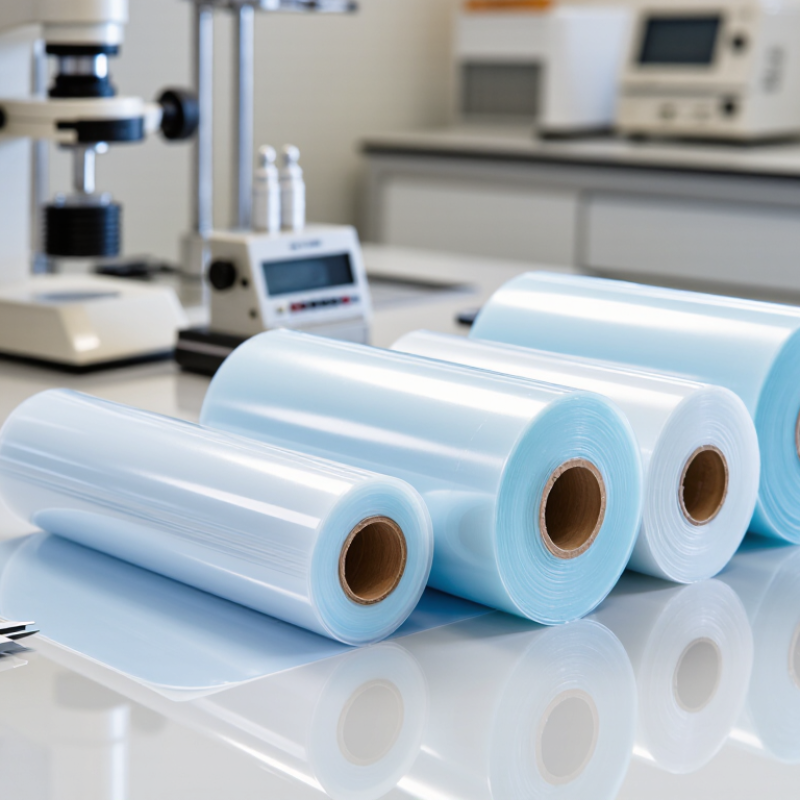
China Top 10 3D Jelly UV Printable TPU Film Suppliers?

Defining 3D Jelly UV Printable TPU Film and Its Main Applications

3D jelly UV printable TPU film is a flexible thermoplastic polyurethane film designed for direct or transfer UV printing. Its soft, gel-like appearance creates visual depth without making the material rigid. The surface usually includes a printable coating that helps UV inks bond to the film. Clear, translucent, and colored versions are available. Some films also use a textured layer for a raised jelly effect.

Its main applications include phone protection skins, decorative panels, vehicle interior accents, product labels, and small customized accessories. The film can follow curved surfaces more easily than ordinary rigid sheets. It also offers useful resistance to light scratches, moisture, and daily handling. However, performance depends on thickness, coating quality, ink compatibility, and curing conditions. A supplier may provide attractive samples, but samples alone prove little.

During practical evaluation, check adhesion after stretching, bending, and wiping. Test printed areas with a fingernail and a damp cloth. Measure color stability after controlled UV exposure.
Poor curing can cause tackiness or weak bonding. Excessive heat may distort thin TPU film. Supplier documents should identify thickness tolerance, elongation, surface energy, and recommended printing settings.

Independent testing remains valuable. I have found that handling differences can affect results, even within one production batch. That detail is easy to overlook.burukuru

Key Criteria for Ranking China’s Top 10 TPU Film Suppliers

China Top 10 3D Jelly UV Printable TPU Film Suppliers

Ranking China’s top TPU film suppliers requires more than comparing catalog prices. MarketsandMarkets estimates the global TPU films market could grow from about USD 785 million in 2023 to USD 1.1 billion by 2028, at roughly 7% CAGR. This growth increases supplier competition, but it also demands stricter screening. A reliable supplier should provide stable thickness, low haze, strong elongation, and clean UV ink adhesion. For 3D jelly applications, 0.15–0.30 mm thickness control matters because uneven film can distort curved details. Request batch records, not only attractive samples.

Production evidence carries greater weight than sales claims. Ranking should examine monthly capacity, coating-line consistency, incoming-material inspection, and laboratory testing under heat, humidity, and repeated bending. ASTM D638 tensile data and ISO 527 testing can help compare mechanical performance, while ISO 2859-1 sampling supports more disciplined quality checks. The China TPU film market is expanding with automotive, electronics, and protective-material demand, according to Grand View Research, yet market reports often define film categories differently. That limitation deserves attention. A supplier may appear large because several product types are grouped together.

UV print quality needs practical testing. Print a fine-line image, stretch the film, and inspect edge lifting after 24 hours. Check yellowing after accelerated aging. Ask whether recycled content, adhesive systems, and storage conditions are documented. Certification helps, but traceability is stronger. No ranking is perfect. Real production trials should still decide the final shortlist.

Profiles of China’s Top 10 3D Jelly UV Printable TPU Film Suppliers

China’s top ten 3D jelly UV printable TPU film suppliers differ in production focus and technical depth. One profile specializes in ultra-clear optical TPU for curved screens. Another focuses on high-rebound film that reduces edge lifting. A third develops matte surfaces for glare control. Practical results matter more than attractive brochures.

Other profiles include a coating specialist, a precision slitting factory, and a converter offering custom die-cut shapes. One supplier emphasizes low-yellowing formulas for long-term clarity. Another provides thicker film for impact protection. A flexible factory supports small trial orders and rapid sampling. A larger manufacturer offers automated coating lines and batch traceability. The final profile combines printing compatibility with adhesive development. That combination is useful, but not always consistent.

Experienced buyers should request thickness data, haze readings, elongation results, and curing tests. Check samples on curved glass, not flat panels alone. Inspect the adhesive after heat exposure and repeated bending. Ask whether each batch carries inspection records. Some suppliers provide excellent first samples but weaker production control. That gap deserves attention. Communication speed also affects real project costs. A reliable supplier explains limitations clearly, including surface defects and color variation. Factory visits, independent testing, and written specifications can reduce avoidable surprises. Performance still depends on storage, printing settings, and installation skill.

Comparing Product Quality, Customization, Pricing, and Production Capacity

Comparing China’s top ten 3D jelly UV printable TPU film suppliers requires more than checking catalog photographs. Quality starts with thickness, surface energy, haze, elasticity, and UV ink adhesion. Request samples in the intended thickness, often 0.15–0.30 millimeters, then inspect edges after forming. Rub tests matter. Prints that look bright on day one may crack around a curved phone case after repeated bending. Ask for test data, batch records, and clear inspection standards before placing a large order.

Customization can include film thickness, roll width, surface texture, liner type, color, and packaging. Confirm whether custom production requires new tooling or only revised cutting settings. Pricing should include sample fees, minimum order quantities, shipping weight, and packaging costs. The lowest quotation may hide higher waste rates or inconsistent coating. A detailed comparison should calculate usable square meters, not only the price per roll.

Production capacity is more than a large factory floor. Check monthly output, coating-line width, curing controls, storage conditions, and backup equipment. Ask how the supplier handles urgent reorders and defective batches. Lead times should be separated into sampling, production, inspection, and dispatch. One weakness in many supplier lists is overconfidence: factory claims are not proof. An independent sample inspection may reveal uneven gloss, weak adhesion, or unstable thickness. That extra step can feel slow. It is usually cheaper than correcting thousands of finished products.

China Top 10 3D Jelly UV Printable TPU Film Suppliers? - Comparing Product Quality, Customization, Pricing, and Production Capacity

Anonymized supplier benchmark for procurement screening. Values are indicative market ranges for China-made aliphatic TPU film and should be confirmed through current quotations, samples, and factory audits.

Rank Supplier ID Production Region Typical TPU Type Hardness
(Shore A)
Film Thickness
(mm)
UV Printing Compatibility Surface Finish Options Customization Capability Indicative MOQ
(m²)
Indicative Price
(USD/m²)
Typical Lead Time
(Days)
Estimated Capacity
(m²/Month)
Quality & Compliance Controls Overall
Score
1 Supplier A Jiangsu Aliphatic polyester TPU 82–90 0.15–0.50 Excellent
Designed for flatbed and roll-to-roll UV ink adhesion
Gloss, matte, micro-textured Color matching, embossing, slit widths, printed release liner 1,000 4.80–8.60 18–28 450,000–650,000 Thickness, haze, tensile strength, elongation, surface-energy and aging checks; ISO 9001 commonly available 9.1/10
2 Supplier B Guangdong Aliphatic polyether TPU 78–88 0.18–0.60 Very Good
Good wetting with UV inks after surface treatment
High gloss, satin, anti-glare Small-batch color development, adhesive lamination, custom cores 800 4.50–8.20 20–30 300,000–500,000 Incoming resin inspection, online thickness monitoring, peel and yellowing tests; RoHS/REACH documentation subject to order 8.8/10
3 Supplier C Zhejiang Aliphatic polyester TPU 80–92 0.20–0.80 Very Good
Suitable for decorative and protective printed applications
Gloss, matte, crystal-clear Custom thickness, roll length, die-cut blanks and packaging 1,500 4.20–7.90 22–35 250,000–420,000 Batch traceability, tensile and elongation testing, optical inspection, dimensional control 8.6/10
4 Supplier D Fujian Aliphatic TPU, clear grade 75–86 0.12–0.40 Good
Requires validated ink and curing settings
Gloss, soft-touch matte Custom widths, perforation, adhesive coating and liner selection 1,000 3.90–7.30 20–32 220,000–360,000 Visual inspection, thickness sampling, adhesion testing and accelerated UV screening 8.3/10
5 Supplier E Shandong Aliphatic polyester TPU 85–95 0.25–1.00 Good
Best suited to thicker 3D forming grades
Gloss, textured, anti-slip Thick-gauge development, custom texture, reinforced construction 2,000 4.10–7.80 25–40 180,000–320,000 Hardness, tear strength, abrasion resistance and heat-aging evaluation; third-party testing available 8.1/10
6 Supplier F Guangdong Aliphatic polyether TPU 76–88 0.15–0.55 Good
Compatible with selected UV ink systems
Gloss, matte, frosted Custom roll diameter, slit tolerance, release liner and packaging 600 3.70–7.00 15–25 200,000–350,000 Basic QC for thickness, appearance, tensile performance and roll defects; compliance files available by request 7.9/10
7 Supplier G Jiangsu Aliphatic polyester TPU 80–90 0.18–0.70 Good
Requires primer or corona treatment for selected inks
Gloss, satin, custom texture Custom color, surface pattern, roll width and lamination 1,200 3.80–7.40 25–38 160,000–280,000 Thickness and appearance inspection, tensile testing and dimensional checks; audit documentation varies by facility 7.8/10
8 Supplier H Zhejiang Aliphatic TPU, flexible grade 72–84 0.10–0.35 Moderate to Good
Suitable after ink, primer and curing validation
High gloss, matte, transparent Low-volume sampling, custom widths and adhesive-backed versions 500 3.50–6.80 18–30 120,000–240,000 Routine thickness, clarity, tensile and adhesion checks; certification scope should be verified for each product code 7.6/10
9 Supplier I Anhui Aliphatic polyester TPU 78–90 0.20–0.65 Moderate to Good
Recommended for standard UV decorative use
Gloss, matte, embossed Custom thickness, roll length, edge trim and carton labeling 1,000 3.30–6.50 25–40 100,000–220,000 Batch sampling for appearance, thickness, hardness and elongation; customer-specific testing available 7.4/10
10 Supplier J Hubei Aliphatic TPU, economical grade 75–88 0.15–0.50 Moderate
Requires application testing before mass production
Gloss, matte Standard customization for width, thickness and roll packaging 1,500 3.00–5.90 28–45 80,000–180,000 Basic production inspection covering thickness, appearance and mechanical properties; independent verification recommended 7.1/10
Evaluation basis: Product quality 30%, UV print compatibility 20%, customization 15%, pricing 15%, production capacity 10%, delivery and quality-control maturity 10%. Prices exclude tooling, freight, taxes, special coatings and certification fees. UV print performance depends on ink chemistry, corona or primer treatment, curing energy, film thickness and end-use conditions.

How to Select the Right Chinese TPU Film Supplier for Your Project

China’s TPU film sector serves growing demand from protective surfaces, soft-touch graphics, and UV-printable applications. The 2024 Wohlers Report valued the global additive manufacturing industry at $20.035 billion in 2023, with 13.5% annual growth. This expansion increases pressure on suppliers to deliver stable, printable materials.

For a 3D jelly UV project, verify more than price. Ask for film samples with documented thickness, hardness, transparency, and elongation. A reliable supplier should provide batch traceability, technical data sheets, and test results for UV ink adhesion.

Check whether the surface supports your printer, ink system, curing energy, and lamination process. Small differences in surface energy can create weak bonding or uneven color.

Production evidence matters. Review extrusion records, thickness mapping, and aging tests under heat and humidity. Grand View Research reports that the global TPU films market is projected to grow at about 6.6% annually from 2024 to 2030. That growth may attract inexperienced factories.

Do not assume a large facility guarantees better film. Request a pilot batch before signing a long contract. Measure curling after curing, edge shrinkage, clarity, and scratch resistance.

A sample can still mislead. My own selection mistake would be trusting a perfect showroom sheet without testing repeated production cycles. Also compare minimum order quantities, lead times, tooling costs, packaging, and communication speed. The cheapest quotation can become expensive when failed prints consume film, ink, and labor.

"*" indicates required fields