"*" indicates required fields
China’s Traffic Control Bollard industry has developed rapidly, serving airports, logistics parks, commercial streets, factories, and public facilities. Yet choosing a manufacturer requires more than comparing prices or polished websites. Product strength, impact resistance, control systems, corrosion protection, installation support, and after-sales service all deserve attention.
This guide examines ten leading Chinese manufacturers through practical purchasing criteria. These include manufacturing experience, testing capability, customization options, delivery reliability, certifications, and project performance. A strong supplier should explain its steel grade, hydraulic or electric mechanism, foundation requirements, safety controls, and maintenance schedule clearly. Small details matter. A damaged cable gland can stop an otherwise capable system.
Security consultant Dr. Randy Atlas has often emphasized, “Security is not a product; it is a process.” That principle applies directly to bollard selection. A Traffic Control Bollard must work as part of a complete access-control plan, not as an isolated roadside object. Readers should also remain cautious. Manufacturer rankings can change with new technology, ownership changes, or uneven project execution. A company may perform well in one climate and struggle near saltwater. A low quotation may also hide installation or maintenance costs. Therefore, this overview is designed as a practical starting point, not a final purchasing decision. Site conditions, vehicle risks, traffic frequency, drainage, visibility, and local engineering requirements still need professional review before approval.
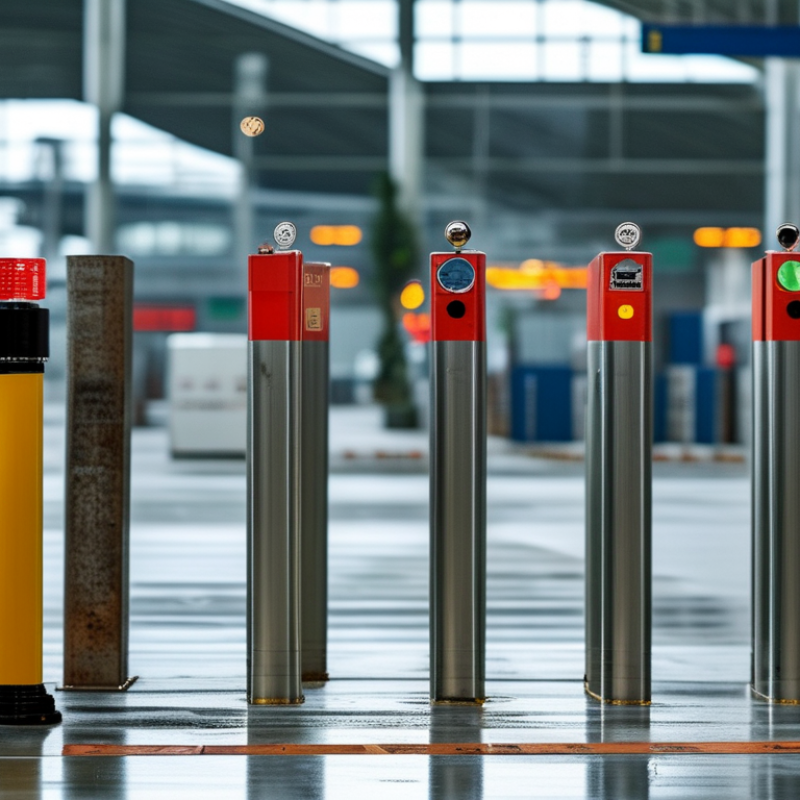
Traffic control bollards are short, sturdy posts that guide vehicles and protect people. They define boundaries without creating a solid wall. Common types include fixed, removable, retractable, and flexible bollards. They appear beside sidewalks, building entrances, loading zones, parking lanes, and shared streets. Some models also control timed vehicle access.
Their value is practical. Bollards can prevent careless parking near crossings and keep delivery vehicles away from pedestrian space. The World Health Organization’s Global Status Report on Road Safety 2023 records about 1.19 million road deaths every year. The same report identifies pedestrians, cyclists, and motorcyclists as especially vulnerable.
A well-positioned bollard cannot solve every collision risk. That assumption needs correction.
Placement matters more than appearance. Designers should check visibility, spacing, vehicle paths, drainage, maintenance access, and emergency requirements. The Federal Highway Administration’s traffic-control guidance stresses clear visibility and predictable road-user information.
The World Health Organization also reports that each 1% increase in average speed can raise fatal crash risk by about 4%. This supports slower, better-organized streets, but bollards must not narrow accessible routes.
At busy entrances, reflective bands and contrasting colors help drivers notice posts at night. Flexible units may suit temporary traffic changes, while engineered fixed units suit permanent protection.
Yet excessive bollards can create clutter and trip hazards. Good projects use fewer posts, place them precisely, and review the layout after real-world use.
Choosing a traffic control bollard manufacturer in China requires more than comparing catalog prices. Start by checking the manufacturer’s production experience, engineering team, and quality control records. Ask for material specifications, wall thickness, surface treatment, and load testing data. Stainless steel, galvanized steel, and reinforced polymers perform differently in coastal, industrial, and high-traffic areas.
Request samples before placing a large order. Examine welds, hinges, locks, reflective strips, and mounting plates closely. A reliable manufacturer should explain cycle testing, corrosion resistance, impact performance, and installation methods clearly. Factory videos are useful, but an independent inspection gives stronger evidence. I have learned that attractive photographs can hide uneven finishing or weak internal parts. Product drawings also deserve careful review, especially when dimensions vary by project.
Tips: Compare at least three suppliers using the same technical checklist. Confirm batch traceability, packaging details, spare-part support, and response times. Ask how defects are handled after delivery. A supplier that avoids specific answers may create delays later. Consider a small pilot order first. It may cost more initially, but it reveals consistency, communication, and real production capability. Do not rely on certificates alone. Their scope, testing method, and issuing body should match the product and intended application.
China’s top ten traffic control bollard manufacturers differ by engineering focus, production scale, and project experience. This profile considers material quality, testing records, customization, delivery control, and after-sales support. It is not a flawless ranking. Factory data can change, and local inspections still matter.
A coastal stainless-steel specialist serves wet entrances and parking facilities. A northern steel manufacturer focuses on heavy-duty fixed bollards for logistics yards. An eastern automation producer develops retractable models with hydraulic or electromechanical systems.
A southern precision workshop supplies compact products for hotels and commercial streets. A central factory combines bollards with access-control equipment. Its wiring documentation deserves close review. A metal-forming supplier offers economical removable bollards for temporary traffic management.
Another manufacturer specializes in impact-resistant security designs. Its test evidence should be checked carefully. A municipal-project supplier understands curb layouts, drainage, and installation sequencing. A smart-control producer supports remote monitoring, sensors, and emergency release functions. Integration can be impressive, but software support may vary. A custom fabrication company builds unusual heights, finishes, and mounting plates for architects. A high-volume exporter provides standardized models with competitive lead times. Sample approval remains essential.
Experienced buyers should request drawings, steel grades, coating specifications, load data, test reports, and installation guidance. Factory audits can reveal welding consistency, storage conditions, and spare-parts readiness. Ask how failures are handled after commissioning. A reliable manufacturer explains tolerances, maintenance intervals, and replacement procedures without vague promises. Catalogs rarely show every weakness. Field work exposes gaps. Practical evidence should carry more weight than polished photographs.
China Top 10 Traffic Control Bollard Manufacturers?
Comparing China’s leading traffic control bollard manufacturers requires more than checking price lists. Product differences appear in steel grade, wall thickness, lifting speed, and impact resistance. Fixed bollards suit permanent entrances, while removable and retractable models support changing access needs. Hydraulic units often handle frequent operation better. Electromechanical designs may simplify maintenance in smaller sites.
Technology creates another clear gap. Some manufacturers use loop detectors, remote controls, RFID readers, or integrated access software. Others provide only basic push-button operation. Reliable systems should include emergency release functions, weather protection, and visible status indicators. Check the control cabinet carefully. A polished brochure cannot replace test records, cycle data, and installation references.
Customization services also vary widely. Experienced suppliers can adjust bollard height, diameter, finish, foundation depth, and warning-light placement. They should review traffic frequency, drainage, soil conditions, and local climate before recommending a model. Stainless steel may suit coastal areas, but coating quality still matters. Many quotations overlook civil works. That mistake can increase the final cost.
Not every catalog is complete.
A practical evaluation should request drawings, material certificates, load-test evidence, spare-parts lists, and warranty terms. Ask how quickly technicians respond when a unit stops during heavy rain or freezing weather. Some suppliers answer confidently, yet provide vague documents. That deserves careful review. Even a strong manufacturer may need better communication during customization, especially when site measurements change late.
| Profile | Main Product Focus | Typical Product Type | Common Materials & Finish | Typical Dimensions | Drive Technology | Weather Protection | Safety & Control Features | Customization Services | Common Applications |
|---|---|---|---|---|---|---|---|---|---|
| Profile 01 | High-security perimeter protection | Automatic rising road blocker and anti-ram bollard | Carbon steel or stainless steel; powder coating, hot-dip galvanizing, or brushed finish | Diameter commonly 219–406 mm; raised height commonly 600–900 mm | Hydraulic power unit with underground foundation housing | Drainage system, sealed hydraulic components, outdoor-rated control cabinet | Photocells, loop detectors, emergency stop, manual lowering, warning lights | Height, diameter, finish, control logic, remote access, and lane layout | Government facilities, critical infrastructure, embassies, restricted sites |
| Profile 02 | Commercial access control | Automatic retractable bollard | 304 or 316 stainless steel; satin, mirror, or powder-coated finish | Diameter commonly 168–273 mm; raised height commonly 450–700 mm | Electromechanical screw or geared motor | Typically designed for IP55–IP67 protection, depending on configuration | Obstacle detection, inductive loop, access-card interface, key override | Logo-free decorative sleeves, LED rings, traffic-light integration, custom cabinets | Office parks, hotels, shopping centers, residential developments |
| Profile 03 | Heavy-duty industrial traffic management | Hydraulic automatic bollard and heavy-duty barrier system | Structural steel body with stainless steel top cap; anti-corrosion coating | Diameter commonly 219–325 mm; raised height commonly 600–800 mm | Hydraulic cylinder and centralized pump station | Oil-resistant seals, drainage pit, corrosion-protection treatment | Programmable cycle timing, emergency release, audible and visual alerts | High-cycle operation, multi-lane synchronization, PLC or relay control | Factories, logistics parks, ports, warehouses, industrial campuses |
| Profile 04 | Urban streetscape and architectural integration | Decorative automatic bollard and fixed protective bollard | Stainless steel, ductile iron, or coated carbon steel | Diameter commonly 114–219 mm; height commonly 450–900 mm | Electromechanical or hydraulic, selected according to duty cycle | Outdoor coating systems and concealed drainage arrangements | LED illumination, reflective bands, soft-stop operation, safety sensors | Custom shape, cap design, color, mounting plate, and illumination pattern | Pedestrian zones, historic districts, plazas, parks, public streets |
| Profile 05 | Cost-effective residential and parking control | Automatic parking bollard and compact retractable post | Powder-coated steel or 304 stainless steel | Diameter commonly 114–168 mm; raised height commonly 450–600 mm | Low-voltage electric motor or linear actuator | Commonly specified for sheltered or normal outdoor environments | Remote control, RFID, keypad, vehicle loop, and manual release | Power supply, mounting depth, remote frequency, and access-control protocol | Apartment entrances, private driveways, parking lots, small commercial sites |
| Profile 06 | Manual and removable access solutions | Removable, fold-down, and lockable fixed bollards | Galvanized steel, stainless steel, or cast iron | Diameter commonly 76–168 mm; height commonly 450–900 mm | Manual operation; locking pin, padlock, or keyed mechanism | Hot-dip galvanizing, powder coating, or stainless-steel surface treatment | Reflective bands, tamper-resistant fasteners, ground sockets, locking covers | Socket depth, locking method, plate shape, reflective color, and post profile | Temporary closures, service access, pedestrian areas, event venues |
| Profile 07 | Smart-city and integrated security systems | Network-connected automatic bollard system | Stainless steel or coated carbon steel with modular service panels | Diameter commonly 168–273 mm; height commonly 500–800 mm | Electric or hydraulic drive with programmable controller | Outdoor-rated enclosure, drainage, surge protection, and grounding provisions | Ethernet or RS-485 integration, CCTV triggers, access logs, emergency priority | API or dry-contact integration, centralized monitoring, customized software logic | Smart campuses, municipal roads, transport hubs, controlled parking networks |
| Profile 08 | Pneumatic solutions for specialized sites | Pneumatic rising bollard | Stainless steel or galvanized steel with reinforced internal cylinder | Diameter commonly 168–273 mm; height commonly 500–800 mm | Compressed-air cylinder and centralized pneumatic control | Corrosion-resistant air fittings, drainage, and protected valve cabinet | Pressure monitoring, emergency lowering, safety edges, and access sensors | Air-system layout, operating speed, control voltage, and lane sequencing | Sites with existing compressed-air infrastructure and specialized security needs |
| Profile 09 | Temporary and event traffic management | Portable water-filled, surface-mounted, and modular bollard systems | Steel, aluminum, recycled polymer, or composite materials | Product dimensions vary; portable units commonly use modular bases | Manual, surface-mounted electric, or battery-assisted mechanisms | Weather-resistant coatings and sealed electrical components where applicable | Reflective markings, warning lamps, quick-release parts, and anti-trip design | Transport handles, modular spacing, color coding, signage, and storage format | Events, construction zones, temporary road closures, festivals, exhibitions |
| Profile 10 | Export-oriented project and OEM supply | Fixed, removable, automatic, and crash-rated bollard assemblies | 304/316 stainless steel, carbon steel, ductile iron, and composite options | Configurations typically engineered to project drawings and local regulations | Hydraulic, electromechanical, pneumatic, or manual systems | Protection level, coating, drainage, and electrical rating selected by application | Safety loops, photocells, emergency access, traffic signals, and remote control | OEM drawings, private-label-free packaging, multilingual manuals, testing documents | International distributors, infrastructure projects, airports, campuses, security upgrades |
Urban traffic protection needs stronger evidence than attractive product photos. The WHO Global Status Report on Road Safety 2023 estimates 1.19 million annual road deaths worldwide. UN DESA projects that 68% of people will live in urban areas by 2050. These figures support careful supplier selection. A bollard protects only when its design matches the actual vehicle, speed, impact zone, and installation surface.
Request material certificates for stainless steel grades, concrete strength, and coating thickness. Check whether factory tests cover lifting cycles, impact resistance, drainage, and electrical safety. For security-rated models, ask for independent laboratory reports under the required standard. Do not accept a self-written test summary. Verify the laboratory, test date, product configuration, and failure condition. A product may pass with one foundation design and fail with another.
Factory experience matters. Review machining equipment, welding procedures, inspection records, and batch traceability. A live video audit can reveal more than a polished brochure. Ask for samples from current production, not specially prepared prototypes. I would also compare warranty terms, spare-part availability, packaging, and installation drawings. My own checklist once ignored drainage; that mistake can cause corrosion near coastal sites. Choose the manufacturer that explains limitations clearly. Confidence should come from evidence.
"*" indicates required fields