"*" indicates required fields

Choosing the right supplier for aluminum components can shape product quality, delivery performance, and long-term manufacturing costs. This guide introduces the Top 10 Nev Aluminum Machining suppliers worldwide, focusing on practical capabilities rather than impressive claims alone. Each company is considered through machining experience, equipment range, material knowledge, inspection systems, communication, and production scalability.
A reliable supplier should handle more than basic cutting and drilling. Look for evidence of CNC milling and turning expertise, controlled tolerances, consistent surface finishes, and documented quality checks. Details matter: a clean inspection report, calibrated measuring tools, and stable packaging can prevent costly problems after shipment. Experience with aerospace, automotive, electronics, medical, or industrial parts may also indicate stronger process discipline, although industry labels alone prove little.
No ranking is permanent. Supplier capacity, pricing, certifications, and lead times can change without warning. A polished website is not proof. Buyers should request current samples, drawings, quality records, and realistic production schedules before making a decision. Regional freight conditions and technical communication also deserve attention, especially for international projects. The strongest Nev Aluminum Machining partner may not be the largest company; it may be the supplier that understands your tolerances, answers difficult questions clearly, and improves weak areas when problems appear. This overview offers a practical starting point, while direct verification remains essential.
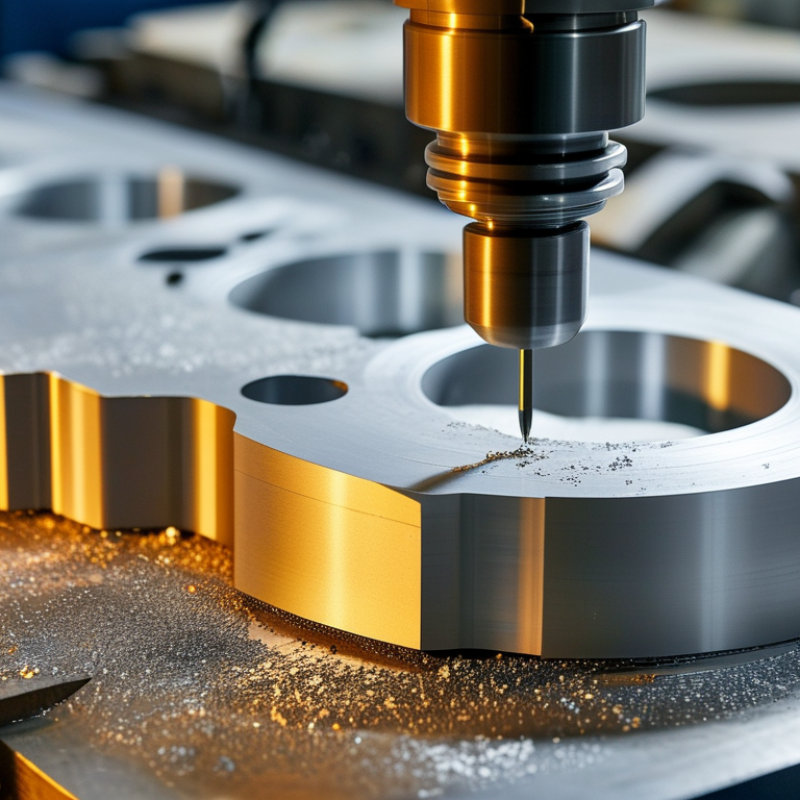
Aluminum machining suppliers for new energy vehicles produce precision parts from aluminum bar, plate, and cast blanks. Their work may include CNC milling, turning, drilling, tapping, and five-axis contouring. The scope covers prototypes, pilot batches, and repeat production. It also includes finishing, inspection, packaging, and technical communication.
In practical projects, these suppliers often support battery housings, cooling plates, motor components, structural brackets, and lightweight enclosures. They must understand alloy behavior, heat distortion, burr control, and dimensional stability. A capable supplier reviews drawings before production. They should question unclear tolerances and suggest realistic datum points. Small details matter, such as clean threads and protected sealing surfaces.
Reliable evaluation requires more than checking machine numbers. Buyers should examine inspection methods, material certificates, revision control, and traceability records. Sample reports can reveal whether measurements match actual production conditions. Shop experience helps, but it is not enough. A polished website may hide weak process control. Even experienced suppliers can miss a difficult tolerance. Clear feedback and corrective action are essential. The best scope definition includes capacity, quality responsibility, delivery expectations, and engineering support. Suppliers should also explain what they cannot do. That honesty is useful.
| Rank | Anonymized Supplier Profile | Primary Operating Region | Core Machining Scope | Common Aluminum Grades | Typical Processes | Typical Dimensional Capability | Quality and Compliance Focus | Typical Production Volume | Main End-Use Sectors |
|---|---|---|---|---|---|---|---|---|---|
| 1 | Profile A — High-precision aerospace machining specialist | North America and Western Europe | Complex 3-axis to 5-axis structural and thin-wall components | 6061-T6, 6082-T6, 7075-T6, 2024-T3 | CNC milling, turning, drilling, thread milling, deburring | Approximately ±0.01–±0.05 mm, depending on feature size and datum structure | Traceability, first-article inspection, calibrated measurement, aerospace quality controls | Low to medium batch production | Aerospace, defense, satellite systems, advanced transportation |
| 2 | Profile B — High-volume automotive component supplier | East Asia and Central Europe | Repeatable production of housings, brackets, heat-management parts, and mounts | 6061-T6, 6063-T5, 6082-T6, cast aluminum alloys | CNC machining, drilling, tapping, washing, automated inspection | Approximately ±0.03–±0.10 mm for production features | Process capability studies, control plans, statistical process monitoring, lot traceability | Medium to high volume | Automotive, electric vehicles, power electronics, mobility systems |
| 3 | Profile C — Rapid prototyping and low-volume CNC supplier | North America, Europe, and Southeast Asia | Prototype parts, engineering samples, design verification units, and replacement components | 6061-T6, 7075-T6, 2024, 5052, 6063 | 3-axis and 5-axis milling, CNC turning, surface finishing, laser marking | Approximately ±0.05–±0.13 mm for general machined dimensions | Drawing review, material certification, visual inspection, dimensional reports | Prototype to small batch | Product development, robotics, consumer equipment, industrial design |
| 4 | Profile D — Medical and laboratory equipment machining supplier | Western Europe and North America | Clean, burr-controlled parts for instruments, diagnostic equipment, and laboratory assemblies | 6061-T6, 6082-T6, 6063-T5, 5052-H32 | CNC milling, turning, polishing, bead blasting, anodizing preparation | Approximately ±0.03–±0.08 mm for controlled features | Clean handling, inspection records, material traceability, controlled documentation | Low to medium batch production | Medical devices, laboratory instruments, analytical equipment |
| 5 | Profile E — Electronics and thermal-management machining supplier | East Asia and Southeast Asia | Heat sinks, enclosures, frames, cold plates, and electronic equipment parts | 6061-T6, 6063-T5, 1050, 1100, 3003 | CNC milling, high-speed machining, fin machining, tapping, flatness correction | Approximately ±0.03–±0.10 mm; flatness often specified separately | Surface roughness control, thermal contact flatness, electrical and dimensional inspection | Medium to high volume | Telecommunications, computing, power supplies, renewable-energy equipment |
| 6 | Profile F — Industrial automation and robotics parts supplier | Central Europe and East Asia | Robotic arms, grippers, linear-motion parts, machine frames, and tooling components | 6061-T6, 6082-T6, 7075-T6, 2017A | CNC milling, turning, reaming, precision boring, assembly | Approximately ±0.02–±0.08 mm for precision interfaces | Geometric tolerance verification, repeatability testing, assembly checks | Small to medium batch production | Factory automation, robotics, packaging machinery, tooling |
| 7 | Profile G — Marine and corrosion-resistant component supplier | Northern Europe, North America, and coastal Asia | Marine fittings, pump bodies, brackets, deck hardware, and corrosion-resistant assemblies | 5083, 5052-H32, 6061-T6, 6082-T6 | CNC milling, turning, drilling, tapping, anodizing, protective coating preparation | Approximately ±0.05–±0.15 mm for general components | Corrosion resistance, alloy verification, surface-finish inspection, dimensional control | Small to medium batch production | Marine equipment, offshore systems, water-treatment equipment |
| 8 | Profile H — Energy and electrical enclosure machining supplier | North America, Europe, and South Asia | Enclosures, mounting plates, busbar supports, inverter parts, and battery-system components | 5052-H32, 6061-T6, 6063-T5, 3003-H14 | CNC milling, drilling, tapping, slotting, deburring, finishing coordination | Approximately ±0.05–±0.15 mm for enclosure and mounting features | Electrical safety documentation, flatness, burr control, coating and finish verification | Medium batch production | Solar energy, battery systems, electrical distribution, industrial controls |
| 9 | Profile I — Consumer product and precision enclosure supplier | East Asia and Southeast Asia | Visible housings, structural frames, camera parts, handheld-device components, and decorative parts | 6061-T6, 6063-T5, 5052, 7075-T6 | High-speed milling, CNC turning, polishing, brushing, anodizing coordination | Approximately ±0.03–±0.10 mm, with cosmetic criteria defined separately | Appearance inspection, color consistency, surface defect control, dimensional sampling | Medium to high volume | Consumer electronics, optical equipment, lifestyle products |
| 10 | Profile J — General industrial and custom fabrication supplier | South Asia, Eastern Europe, and Latin America | General-purpose brackets, shafts, plates, fixtures, covers, and replacement parts | 6061-T6, 6082-T6, 6063, 5052, 7075-T6 | CNC milling, turning, drilling, tapping, sawing, deburring | Approximately ±0.08–±0.20 mm for general machined dimensions | Drawing compliance, material checks, basic dimensional inspection, delivery consistency | Prototype to medium batch production | Industrial machinery, maintenance, construction equipment, custom engineering |
"*" indicates required fields