Top Tips for Choosing the Right AC DC Power Supply?
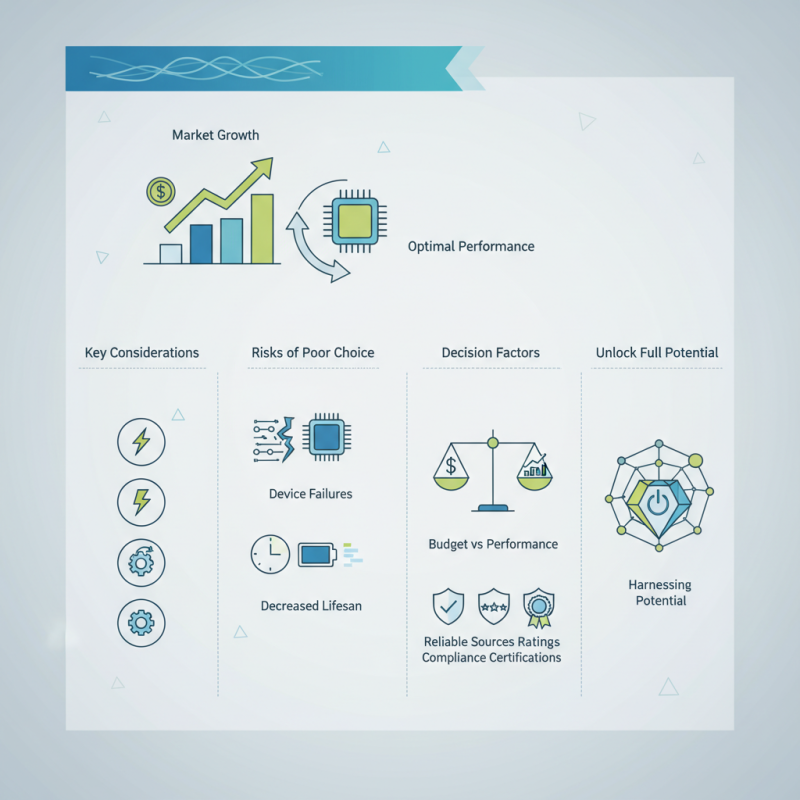
Selecting the right AC/DC Power Supply is crucial for the optimal performance of electronic devices. According to a report by Grand View Research, the global power supply market is projected to reach $39 billion by 2025. This growth highlights the importance of understanding AC/DC power supply specifications.
Different applications require different power supply characteristics. It’s essential to consider factors like voltage, current capacity, and efficiency. Poor choices can lead to device failures or inefficiencies. For instance, a mismatched power supply can decrease the lifespan of sensitive electronic components. Manufacturers often provide guidelines, but actual usage cases can present unforeseen challenges.
Investing in the right AC/DC power supply demands careful analysis. Users must balance budget constraints and performance needs. Thus, reflecting on your specific requirements will lead to better choices. Reliable sources, industry ratings, and compliance certifications can guide your decision-making process. Understanding these elements is key to harnessing the full potential of your electronic systems.
Factors to Consider When Selecting a Power Supply for Your Application
When selecting a power supply for your application, several crucial factors come into play. Understanding your voltage and current requirements is essential. Different devices demand varying specifications. For example, a sensitive electronics project might need precise voltage regulation. On the other hand, motors might require higher current ratings. Always measure the power needs accurately to avoid potential damage.
Another vital aspect is efficiency. Power supplies convert AC to DC, and not all are equally efficient. A more efficient unit produces less heat and reduces energy costs over time. Look for supplies that meet recognized efficiency standards. This can save you money in the long run.
Reliability also matters. Choose a power supply from a reputable source with robust protection features. Short circuits or overloads can lead to device failure. Check how the power supply performs under various conditions. Evaluating customer reviews can be beneficial for gauging real-world performance. Sometimes, the best choice isn’t the most costly but the one suited for your unique application.
Understanding the Difference Between AC and DC Power Supplies
When selecting a power supply, it's crucial to understand the difference between AC (Alternating Current) and DC (Direct Current) power supplies. AC power is typically used in household outlets. It alternates direction, allowing energy to travel efficiently over long distances. According to the U.S. Energy Information Administration, over 90% of homes rely on AC supply for appliances.
DC power supplies deliver constant voltage or current. They are widely used in electronic devices, like computers and smartphones. A report from the International Energy Agency shows that global demand for DC power is increasing, particularly with the rise of renewable energy sources. Solar panels and batteries often produce DC, making it essential for users to understand its application.
Choosing between AC and DC can be complex. Each has specific advantages depending on the application. AC is better for high-power transmission; DC excels in low-voltage applications. Users might find that the wrong choice can lead to inefficiency. This often results in power losses or equipment failure, making knowledge of each type critical.
Key Specifications: Voltage, Current, and Power Rating Explained
When selecting an AC DC power supply, understanding key specifications is vital. Voltage levels determine how much electric potential is supplied. It's crucial to match the power supply voltage with your device's requirements. If the voltage is too high, it can damage your equipment. If too low, it won't function properly.
Current ratings indicate how much electric flow the supply can provide. Choosing a power supply with insufficient current can limit device performance. For instance, a higher draw device will need a robust power supply. Always check the device's specifications to ensure compatibility.
Power rating, measured in watts, is the product of voltage and current. This metric helps you understand the total energy capacity of the power supply. Buying a supply with a higher wattage than needed may seem ideal, yet it could lead to inefficiencies. Finding the right balance is essential. Misjudgments here can lead to overheating or underperformance issues in your systems. Always take your time to verify these specifications before making a purchase.
Efficiency Ratings and Their Impact on Performance and Cost
When selecting an AC DC power supply, efficiency ratings are vital. These ratings reveal how much energy is converted into usable power. A higher efficiency often leads to lower electricity bills. It directly impacts both performance and costs. Poor efficiency can cause overheating issues. Over time, this can decrease the lifespan of your equipment.
Consider these tips when assessing efficiency. Look for power supplies with at least 80% efficiency. This ensures most of the energy is used effectively. Also, check for certifications like Energy Star. These certifications are indicators of quality and reliability. Be wary of options that seem too affordable. They may compromise on efficiency.
Moreover, remember the long-term costs. A cheap power supply often leads to higher energy consumption. Calculate potential savings from a more efficient model. Sometimes, investing upfront yields better value over time. Efficiency is not just about saving energy. It’s also about ensuring your devices operate smoothly without unnecessary disruptions.
Top Tips for Choosing the Right AC DC Power Supply
| Parameter | Description | Efficiency Rating (% | Cost Range ($) |
| Voltage Output | The output voltage level needed for your application | 85-95 | 50-150 |
| Current Rating | Defines how much current the power supply can provide | 80-92 | 100-300 |
| Load Regulation | Stability of output voltage with load changes | 85-90 | 80-200 |
| Temperature Range | Operating temperature limits | 82-94 | 60-180 |
| Form Factor | Size and shape compatibility for installation | 90 | 75-250 |
Safety Standards and Certifications for Reliable Power Supplies
When selecting an AC DC power supply, safety standards and certifications play a vital role. Various international standards, such as IEC 60950 and UL 60950, provide frameworks for evaluating the safety of power supplies. According to a report from the International Electrotechnical Commission, compliance with these standards can significantly reduce the risk of electrical hazards. This compliance ensures that the devices are designed to handle over-voltage, over-current, and thermal overload conditions effectively.
Moreover, certifications from agencies like Underwriters Laboratories (UL) and the European Conformity (CE) mark offer assurance of product reliability. Independent studies show that devices bearing these certifications experience 30% fewer failures in field applications. This is crucial for applications in sensitive environments like medical devices and industrial machinery, where reliability is paramount.
However, it’s important to approach these standards critically. Not all certifications guarantee the same level of safety or performance. Researchers emphasize that the manufacturing processes impact quality significantly. Gaps exist in quality assurance when manufacturers prioritize speed over accuracy. A deeper understanding of these certifications and their implications on power supply selection will enhance reliability and safety in your applications.
