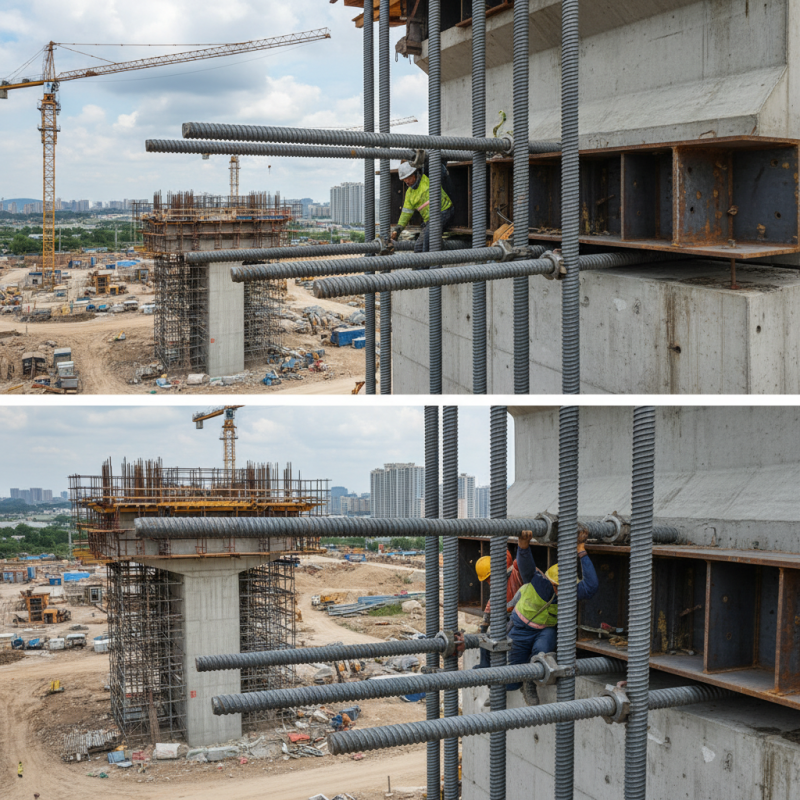
What is a Threaded Rod and How is it Used in Construction?
Threaded Rods play a crucial role in construction. These long, metal rods have continuous threads along their length. They are used for various structural applications. Their ability to connect components makes them invaluable.
In many projects, threaded rods provide stability. They're often seen in large buildings and bridges. However, choosing the right materials and sizes can be tricky. It's essential to consider load requirements carefully. If not, the consequences can be significant, impacting safety and performance.
Proper installation is critical when using threaded rods. Misalignment can lead to structural weaknesses. Some construction teams overlook this detail, resulting in costly mistakes. By paying attention to these factors, professionals can ensure a project’s success. Understanding the role and potential pitfalls of threaded rods is vital in any construction endeavor.
What is a Threaded Rod? Definition and Characteristics
A threaded rod is a long, cylindrical rod with continuous threads running along its entire length. This design allows it to act as a fastener and is essential in construction projects. Threaded rods are typically made from steel or similar materials. They come in various diameters and lengths, catering to different applications and specifications.
In construction, threaded rods provide structural support. They are commonly used to secure beams, hang ceilings, or reinforce structures. Their versatility makes them suitable for both residential and commercial projects. Fastening components together is just one of their many roles. Threaded rods can be used with nuts and washers, providing a strong hold that is easy to adjust or remove.
However, not every application is straightforward. Selection of the right size and material is crucial for durability. Using a rod that is too thin or short can compromise the integrity of a structure. Construction teams must frequently assess the load and tensions involved. This process requires experience and knowledge, highlighting the importance of proper installation techniques. Understanding these aspects can significantly impact the overall success of a project.
Threaded Rod Usage in Construction
Common Materials Used for Threaded Rods in Construction
Threaded rods are essential components in various construction applications. They are commonly made from materials like steel, stainless steel, and sometimes plastic. Steel rods are strong and widely used for structural support. Stainless steel offers corrosion resistance, making it ideal for outdoor and moist environments.
Additionally, plastic threaded rods are becoming popular for lightweight projects. They are non-corrosive and suitable for specific applications. Each material has unique properties that cater to different needs in construction.
Using the right material is crucial. A wrong choice can lead to structural failures or increased maintenance costs. Regular inspections are necessary to ensure longevity. Each project may require different specifications, so understanding materials is vital for success in construction.
Applications of Threaded Rods in Various Construction Projects
Threaded rods are essential components in construction, serving a variety of applications across different projects. According to a report by the U.S. Department of Commerce, the global demand for threaded rods is expected to grow at a CAGR of 4.5% through 2025. This growth highlights their importance in both residential and commercial construction. In buildings, threaded rods are often used to connect structural elements, providing stability and strength.
In large-scale constructions, such as bridges and skyscrapers, threaded rods are critical for anchoring and tensioning systems. This application helps distribute loads evenly, crucial for structural integrity. A study from the American Institute of Steel Construction (AISC) emphasizes that improper selection of threaded rods can lead to failures. Using the wrong material or size may compromise safety and lead to costly repairs.
In addition to traditional uses, threaded rods have found applications in innovative design solutions. For example, they are increasingly used in modular construction, where components are prefabricated. This method streamlines the building process but demands precise specifications. However, not all projects benefit from threaded rods equally. Evaluating specific needs is vital to avoid overspending on unnecessary materials. These considerations are essential as the industry evolves toward smarter construction practices.
Installation Techniques for Threaded Rods in Structural Supports
Threaded rods play a vital role in construction. They provide strong connections in structural supports. Proper installation techniques are essential to ensure their effectiveness. One common approach involves using a wrench to tighten nuts onto the rod. This ensures secure attachment and stability. However, it’s important to ensure that the threaded rod is correctly aligned. Misalignment can lead to structural weaknesses.
Another technique includes using washers. Washers distribute the load more evenly. They help prevent damage to surfaces and enhance stability. Tightening must be consistent. Over-tightening can strip threads, while under-tightening can compromise safety. Regular inspection of installed rods is also necessary. Wear and tear can affect performance, leading to potential hazards.
Choosing the right length and diameter for the job is crucial. Sometimes, contractors may purchase rods that are too short, limiting their use. The environment also affects the choice of materials. Rust and corrosion can reduce rod longevity. Therefore, it’s essential to account for moisture levels. Construction teams should share their experiences to improve practices. Learning from mistakes fosters better outcomes in future projects.
Advantages of Using Threaded Rods Compared to Other Fasteners
Threaded rods are essential components in construction, known for their sturdy design. They serve various purposes, from tensioning to securing fixtures. When compared to other fasteners, they offer distinct advantages. One significant benefit is their versatility. Threaded rods can support substantial loads, making them ideal for heavy-duty applications.
Another advantage is their ease of installation. Threaded rods can be cut to exact lengths on-site, which saves time. With proper fastening, they ensure a strong hold, reducing the risk of failure. Their design allows for easy adjustments, which is critical in dynamic construction environments.
However, there are challenges. Not all threaded rods are suitable for every application, as material choice impacts strength. Corrosion can also undermine performance in specific settings. It’s essential to choose the right rod for the job. Observing the environment and conditions is key in making effective choices. Understanding the limitations and potential risks associated with threaded rods can lead to better construction outcomes.
What is a Threaded Rod and How is it Used in Construction? - Advantages of Using Threaded Rods Compared to Other Fasteners
| Dimension | Threaded Rod Use | Advantages | Comparative Fasteners |
| 1/4 inch | Used for light-duty supports and fixtures | Cost-effective and easy to install | Compared to regular bolts, threaded rods have greater tensile strength |
| 3/8 inch | Common for connecting heavy equipment | Versatile and can be used in a variety of applications | More reliable than anchors in concrete |
| 1/2 inch | Ideal for high-load applications | Easy to adjust and fine-tune during installation | Stronger than standard screws and bolts in many cases |
| 5/8 inch | Used in structural applications | Greater load-bearing capacity | Can transmit forces better than weaker fastening methods |
| 3/4 inch | Used in heavy framing and construction | Durable in tough environments | More secure than any temporary fastening options |