"*" indicates required fields
A Ro Plant Water Chiller is a cooling system designed to control water temperature during reverse osmosis operations. It removes heat from process water, membranes, pumps, and nearby equipment. Stable temperatures can support more predictable filtration performance and protect sensitive components.
Water-treatment engineer Dr. James R. Mihelcic has emphasized a practical principle: “Reliable treatment depends on both sound science and dependable operation.” This idea fits every Ro Plant Water Chiller installation. The chiller typically circulates warm water through a heat exchanger. Refrigerant absorbs the heat. A compressor then transfers that heat outside the system. The cooled water returns to the plant, ready for continued use.
The process sounds simple. It is not always simple in practice. Operators must check flow rate, inlet temperature, ambient heat, fouling, and refrigerant performance. A dusty condenser can quietly reduce cooling efficiency. A blocked filter may increase pump pressure. Small changes matter.
In this article, we will examine how a Ro Plant Water Chiller works, where it fits within an RO plant, and why temperature control affects equipment reliability. We will also consider selection factors, including cooling capacity, water quality, energy use, maintenance access, and control accuracy. Real systems rarely behave perfectly. Site conditions, seasonal heat, and inconsistent maintenance can change results. That is why technical calculations should be verified against operating data, manufacturer specifications, and qualified engineering advice.
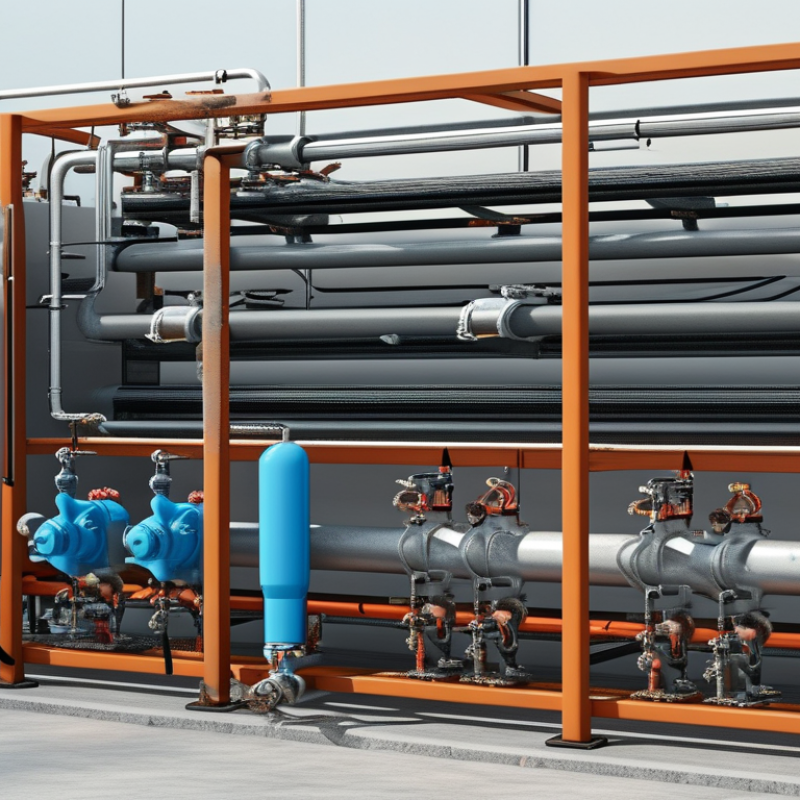
A RO plant water chiller is a cooling system used to control water temperature during reverse osmosis operations. It removes heat from process water before the water reaches sensitive treatment stages. This matters because warmer water usually passes through RO membranes more easily, but it can also reduce rejection performance and affect product quality. The chiller keeps conditions more stable.
The system normally uses a refrigeration circuit, a heat exchanger, pumps, and temperature controls. Warm process water enters the heat exchanger. Refrigerant absorbs its heat through a separate chilled-water loop. The cooled water then returns to the RO plant. Sensors monitor inlet and outlet temperatures. Operators can adjust the setpoint according to membrane specifications and production needs.
In real facilities, performance depends on flow rate, water quality, ambient temperature, and fouling. Small details matter. A blocked filter can reduce circulation. Poor insulation can add unwanted heat. An undersized chiller may run continuously without reaching the target temperature. Experience shows that operators should check temperature readings at several points, not only near the chiller outlet. Temperature control is rarely perfect. That is worth remembering. Regular cleaning, leak checks, and calibration help maintain reliable operation, although each RO plant may require a different maintenance schedule.
What Is a RO Plant Water Chiller and How Does It Work?
Why RO Plants Need Chilled Water
A reverse osmosis plant uses chilled water to control feedwater temperature and equipment heat. Temperature changes alter water viscosity, membrane flux, and salt rejection. The AWWA M46 technical manual reports that permeate flow can change about 2.5–3% for each 1°C temperature shift. Warmer water may increase production, but it can also increase salt passage and disturb product quality. Chilled water creates a steadier operating window. It usually circulates through a heat exchanger, removes heat, and returns to the chiller. Operators can then hold feedwater near the plant’s design temperature. This matters in beverage, laboratory, and high-purity water operations. Small changes matter.
In field operation, unstable temperature often appears as fluctuating conductivity or pressure. However, chilled water is not automatically the best answer. Overcooling can reduce membrane flow and raise pump energy use. The International Energy Agency reported that global cooling demand could more than triple by 2050. That warning makes chiller efficiency important, not optional. A practical design should match cooling capacity with seasonal water temperature, recovery rate, and cleaning cycles. A larger chiller may look safer, but it can create unnecessary operating costs.
Tips: Measure feedwater temperature beside the membrane inlet, not only inside the chiller. Track conductivity, pressure, flow, and energy together. Review the AWWA M46 guidance before setting temperature limits. Leave room for seasonal testing; one fixed setting may not suit every month.
What Is a RO Plant Water Chiller and How Does It Work?
A RO plant water chiller controls water temperature before the reverse osmosis process. It does not remove salts or particles. Instead, it supports stable membrane performance. Feed water enters a heat exchanger or chilled-water circuit. The chiller removes heat through an evaporator. Refrigerant absorbs this heat and changes into vapor. A compressor then raises the refrigerant’s pressure and temperature. The condenser releases heat into surrounding air or cooling water. An expansion valve lowers the refrigerant pressure, and the cycle begins again. It is a continuous loop.
How a RO Plant Water Chiller Works Step by Step
Sensors monitor inlet temperature, outlet temperature, pressure, and flow. A controller adjusts compressor operation when the water becomes too warm. Chilled water passes through the process heat exchanger, where it cools the RO feed without mixing with refrigerant. Cooler feed water can reduce thermal stress and help maintain more predictable membrane behavior. Actual results depend on feed chemistry, flow rate, and membrane design. A simple mistake is assuming colder water always improves output.
Tips: Keep strainers, filters, and condenser surfaces clean. Check temperature readings against a calibrated handheld meter. Inspect refrigerant leaks through qualified technicians only. Watch for unusual vibration, rising discharge pressure, or slow cooling. Record readings during normal operation. Small trends matter. In practice, operators may overlook seasonal heat changes, so control settings should be reviewed periodically.
| Step | Process Stage | What Happens | Typical Operating Data | Chiller Function | Main Result |
|---|---|---|---|---|---|
| 1 | Feed-Water Entry | Raw or pretreated water enters the reverse-osmosis system through the feed line. | Feed temperature may vary by season; many systems are designed around approximately 25°C. | The chiller is normally installed on a separate closed-loop circuit or on a designated process-water line. | A defined starting condition for pretreatment and membrane operation. |
| 2 | Pretreatment | Sediment, suspended solids, hardness, chlorine, and other membrane-damaging contaminants are reduced or removed. | Common controls include filtration, activated carbon, softening, antiscalant dosing, and cartridge filtration. | Cooling can help maintain a stable process temperature after pretreatment when the incoming water is too warm. | Lower fouling, scaling, and oxidation risk for the RO membranes. |
| 3 | Chilled-Water Circuit | A refrigeration system removes heat from circulating water through an evaporator heat exchanger. | A practical chilled-water supply range is often about 7–15°C, depending on the process design. | The compressor, condenser, expansion device, evaporator, pump, and controls work together to produce and circulate chilled water. | Stable cooling capacity without mixing refrigerant with process water. |
| 4 | Heat Transfer | Warm process water passes through a heat exchanger and transfers heat to the colder chilled-water loop. | The two water streams remain physically separated; heat moves through the exchanger wall. | The chiller absorbs sensible heat and returns warmer chilled water to the refrigeration unit for recooling. | The RO feed or process-water temperature is reduced to the selected setpoint. |
| 5 | High-Pressure Pumping | A high-pressure pump pushes conditioned water through the RO membrane vessels. | Typical pressure depends on water chemistry and membrane configuration; brackish-water systems commonly operate at about 10–25 bar. | The chiller does not create RO pressure; it maintains temperature before or during the membrane process. | Adequate pressure for water to pass through the membrane while most dissolved salts are rejected. |
| 6 | Membrane Separation | Water molecules pass through the semi-permeable membrane, while salts, many dissolved impurities, and microorganisms are concentrated in the reject stream. | RO recovery is commonly about 50–85%, depending on feed quality, membrane arrangement, and operating limits. | Temperature control supports predictable membrane flux and helps avoid excessive thermal stress. | Two outlet streams are produced: permeate and concentrate. |
| 7 | Permeate Collection | The purified permeate is collected in a storage tank or sent directly to the next treatment stage. | Permeate quality is tracked using conductivity, total dissolved solids, flow, pressure, and temperature. | It helps keep permeate temperature within the requirements of downstream equipment and applications. | A lower-salinity water stream suitable for further polishing or use, subject to the application. |
| 8 | Concentrate Handling | The reject stream carries the contaminants that were retained by the membranes and is routed for recovery, reuse, or disposal. | Concentrate flow is approximately the feed flow minus the permeate flow. | Cooling may be applied when concentrate temperature must be controlled before discharge or reuse. | Controlled management of the higher-salinity reject water. |
| 9 | Temperature Monitoring | Sensors continuously measure chilled-water supply and return temperature, process-water temperature, flow, and pressure. | Temperature setpoints are selected according to membrane limits, water quality, and downstream process needs. | A controller starts or unloads the compressor, adjusts valves, and protects the unit against abnormal conditions. | More consistent RO performance and easier fault detection. |
| 10 | Routine Maintenance | Operators inspect filters, clean heat-transfer surfaces, verify refrigerant-system operation, and monitor membrane differential pressure and conductivity. | Maintenance intervals depend on operating hours, water quality, fouling rate, and manufacturer requirements. | Proper maintenance preserves cooling efficiency and prevents inadequate temperature control from affecting the RO process. | Reliable operation, lower energy waste, and longer service life for the chiller and RO equipment. |
What Is a RO Plant Water Chiller and How Does It Work?
A RO plant water chiller removes heat from process water before or during reverse osmosis treatment. Stable water temperature helps maintain predictable pressure, flow, and membrane performance. The refrigeration compressor raises the refrigerant pressure and temperature. The condenser then releases heat into the surrounding air or cooling water. After that, the expansion valve reduces refrigerant pressure. The refrigerant becomes cold.
The evaporator is the key heat-transfer component. It absorbs heat from the RO water through a controlled circuit, often using stainless steel plates or tubes. A circulation pump keeps water moving through the chiller and plant loop. A buffer tank can reduce sudden temperature changes. Temperature sensors, flow switches, pressure gauges, and a controller coordinate safe operation. They also stop the system when flow becomes too low.
Small details matter. Poor insulation can waste cooling capacity around pipes and fittings. A dirty condenser may increase power use and discharge pressure. In practice, operators should check inlet temperature, outlet temperature, flow rate, and pump noise each shift. Cooling water too aggressively can increase viscosity and alter membrane behavior. That point is sometimes overlooked. The correct setpoint depends on feed-water quality, membrane design, and plant conditions. Regular cleaning and calibration keep the chiller reliable, although maintenance schedules should be reviewed when seasonal temperatures change.
What Is a RO Plant Water Chiller and How Does It Work?
A RO plant water chiller removes heat from feedwater before membrane treatment. A compressor circulates refrigerant through an evaporator, condenser, expansion valve, and compressor. The evaporator cools circulating water, while pumps deliver stable-temperature water toward the RO skid. This control matters because membrane flow changes with temperature. A common engineering estimate is a 2–3% permeate-flow change for every 1°C shift, depending on membrane design and feedwater chemistry.
Factors Affecting Chiller Performance and Efficiency
Feedwater temperature is only one variable. Fouled filters increase pressure loss and force pumps to work harder. Dirty condenser coils raise condensing pressure, especially in dusty plant rooms. Poor airflow does too. A 5°C rise in condenser-water temperature can noticeably reduce cooling capacity and compressor efficiency, although the exact penalty depends on equipment design. ASHRAE’s HVAC guidance identifies fouling, lift, airflow, and part-load control as recurring efficiency factors.
Load matching is often overlooked. An oversized chiller may short-cycle, causing unstable RO temperatures and unnecessary starting losses. The U.S. Department of Energy’s Industrial Decarbonization Roadmap (2022) reports that process heating represents about 51% of industrial energy use. Cooling should not quietly add waste. The IEA’s Energy Efficiency 2023 report places industry near 37% of global final energy demand. That context makes small control errors significant. In practice, a 20–25°C setpoint may work well, but it must be validated against local water quality, membrane limits, and seasonal conditions. Paper calculations can mislead. A clean condenser and realistic load profile usually matter more than an impressive rated COP.
Cooling capacity increases with chilled-water flow when the temperature difference remains constant. The values below are calculated using the standard water-cooling equation: Q = m × Cp × ΔT, with water density of 1,000 kg/m³, specific heat of 4.186 kJ/kg·°C, and a 5°C chilled-water temperature difference.
Performance factors: Higher condenser-water temperature, dirty heat-transfer surfaces, insufficient airflow, refrigerant problems, and an unsuitable chilled-water temperature difference can reduce chiller efficiency. Regular cleaning, correct flow control, and stable operating temperatures help maintain reliable RO plant cooling performance.
"*" indicates required fields