Why Choose Laser Cladding for Industrial Applications?
Industrial equipment rarely fails because its entire structure is unusable. More often, wear attacks a specific surface: a pump sleeve, valve seat, roller, or cutting edge. Laser Cladding addresses this problem by depositing a metallurgical coating onto selected areas. A focused laser melts the feedstock and a thin layer of the substrate, creating a strong bond with controlled heat input.
This precision matters in demanding environments. A properly designed cladding layer can improve resistance to abrasion, corrosion, erosion, and high-temperature exposure. It may also restore worn dimensions without replacing a costly component. Imagine a shaft returning to service after its damaged diameter is rebuilt, machined, and inspected. That practical recovery can reduce downtime, material waste, and maintenance expenses.
Still, Laser Cladding is not magic. Surface preparation, powder selection, laser settings, and operator experience directly affect results. Poor shielding can introduce porosity. Excessive heat can distort the component. A coating that performs well on stainless steel may fail on a different alloy or under unexpected loading. Careful trials are essential.
Experienced engineers typically assess the failure mechanism before recommending a coating system. They review hardness, bond quality, dilution, thermal history, and service conditions. Non-destructive testing and dimensional inspection add confidence. Relevant technical standards can guide quality control, but real performance must match the application.
The strongest reason to choose this process is balance. Laser Cladding combines targeted repair with engineered surface protection. It is efficient, but not automatically suitable. Reliable decisions come from measurable evidence, honest limitations, and designs tested against actual industrial demands.
What Is Laser Cladding and How Does It Work?
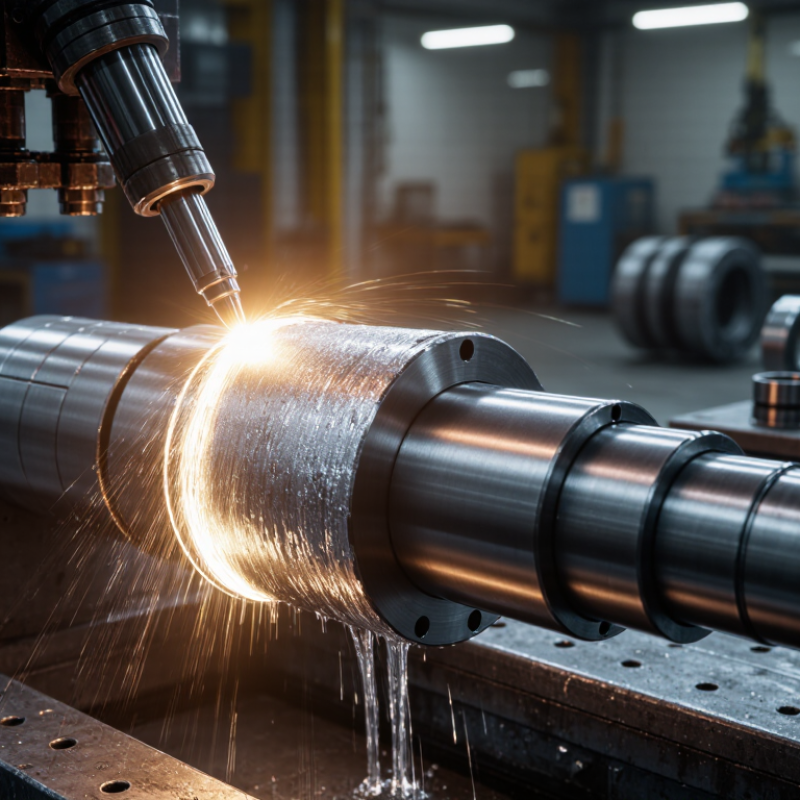
Laser cladding is a directed energy deposition process. A laser creates a small, controlled melt pool on a metal surface. Powder or wire enters this pool and fuses with the substrate. As the laser moves, it builds a dense layer with a metallurgical bond.
The process is precise. Typical dilution can remain below 10%, depending on power, speed, and feed rate. That matters because excessive substrate mixing can reduce the coating’s intended hardness or corrosion resistance. ISO/ASTM 52900 places this method within directed energy deposition. The 2024 Wohlers Report valued the global additive manufacturing industry at 20.035 billion dollars in 2023, showing stronger industrial interest in deposited materials and repair technologies.
Why choose laser cladding? It can restore worn shafts, seal damaged edges, and protect surfaces exposed to abrasion, heat, or corrosive fluids. Material is added only where needed. This often reduces machining, replacement, and extended equipment downtime. A well-controlled layer may also reduce heat-affected damage compared with conventional welding. The process sounds simple. It is not.
Surface cleanliness, shielding gas, powder size, and scanning strategy affect the final result. A poor setup can produce pores, cracks, or uneven hardness. Engineers should verify bond strength, dilution, and wear performance through documented testing. Laser cladding is powerful, but it is not automatically economical for every repair.
Which Industrial Problems Can Laser Cladding Solve?
Why Choose Laser Cladding for Industrial Applications?
Which Industrial Problems Can Laser Cladding Solve?
Industrial components often fail through wear, corrosion, erosion, or dimensional loss. The NACE IMPACT study estimated global corrosion costs at about US$2.5 trillion annually, equal to 3.4% of global GDP. Laser cladding addresses this burden by depositing a metallurgically bonded alloy onto damaged surfaces. It can restore shafts, rolls, valves, turbine parts, and molds without replacing the entire component. The process also limits heat input, reducing distortion and heat-affected zones compared with conventional welding.
Energy matters too. The International Energy Agency reported that industry consumed roughly 37% of global final energy in 2022. Repairing high-value parts can avoid some energy-intensive remanufacturing steps, although the saving depends on part geometry, alloy selection, and production conditions. That caveat matters. Laser cladding is not a magic repair.
In practical work, engineers must control powder delivery, laser power, travel speed, dilution, and layer overlap. Poor settings can create pores, cracks, or uneven hardness. The geometry is unforgiving. Post-cladding machining and non-destructive inspection may still be necessary. Surface preparation also decides success; oil, rust, and hidden fatigue damage cannot be ignored. A qualified process should record hardness, bond quality, dimensional accuracy, and service conditions, rather than relying on appearance alone. That is where many attractive repair claims need more reflection.
What Benefits Make Laser Cladding Suitable for Industry?
Laser cladding offers practical benefits for demanding industrial environments. The process uses a focused laser to fuse metal powder or wire onto a prepared surface. This creates a metallurgically bonded layer with controlled thickness and limited heat input.
The main advantage is targeted repair. Engineers can restore worn shafts, sealing surfaces, pump components, and forming tools without replacing the entire part. Lower heat input usually means less distortion than conventional welding. That can reduce machining time and material waste. The deposited layer may also improve resistance to abrasion, impact, oxidation, or corrosion, depending on the selected alloy and service conditions.
Performance depends on more than the laser. Fit matters. Surface preparation, powder quality, scanning speed, and shielding gas must match the substrate. Poor parameter control can produce pores, cracks, or weak bonding. It is not universal. Very thin parts, complex internal geometries, or contaminated surfaces may require another process. Experienced technicians verify results through dimensional checks, hardness testing, and, when necessary, metallographic examination. Process records also support repeatability across production batches.
In maintenance work, laser cladding can shorten equipment downtime because material is added only where needed. A repaired component still requires final machining and inspection. That detail is easy to overlook. The strongest industrial results come from combining laser control, suitable metallurgy, accurate measurements, and realistic service data before treatment.
How Is Laser Cladding Applied Across Industrial Sectors?
Laser cladding supports industrial repair, surface protection, and component redesign. It uses a focused laser to fuse metal powder or wire onto a prepared surface. The result is a metallurgical bond with limited heat transfer into the base material. This helps reduce distortion and preserve part dimensions. In aerospace maintenance, engineers apply wear-resistant layers to landing gear and hydraulic components. Mining operations use cladding on crusher parts, drill tools, and conveyor rollers. Energy facilities protect valve seats, turbine edges, and pump shafts from erosion and corrosion.
Automotive plants use the process for molds, dies, and high-wear tooling. Steel mills also repair guide rollers without replacing complete assemblies. In practical trials, technicians inspect surface hardness, dilution, porosity, and bonding strength. These measurements matter more than appearance. A smooth layer can still fail under thermal cycling. Laser cladding is not a perfect fix. Poor powder feeding or excessive laser power may create cracks, weak bonding, or uneven thickness. Parameter control requires patience and documented testing.
Tips: Clean the substrate thoroughly before deposition. Keep powder flow stable. Match the alloy to the service environment, not only the base metal. Use cross-sectional testing when failure would be costly. Small defects can grow quickly. Recheck the process after machining, because finishing may reveal hidden pores or bonding gaps.
What Factors Should Guide the Selection of Laser Cladding?
Laser cladding is attractive when a component needs a precise, metallurgically bonded repair layer. However, process selection should begin with failure analysis, not equipment availability. Is the damage caused by abrasion, corrosion, impact, or heat? Each mechanism demands a different alloy, hardness range, and deposition strategy.
Component geometry matters. A narrow sealing edge may suit powder-fed cladding, while large shafts can favor wire-based deposition. Engineers should compare heat input, dilution, distortion, and finishing allowance. The U.S. Department of Energy’s Industrial Decarbonization Roadmap identifies material efficiency and product-life extension as important manufacturing measures. Laser cladding supports both, but only when the deposited layer performs reliably in service.
Cost requires more than comparing hourly rates. The 2024 Wohlers Report valued the global additive manufacturing industry at 20.035 billion dollars in 2023, showing strong industrial adoption, not automatic project success. A realistic assessment should include substrate preparation, operator skill, powder or wire consumption, inspection, machining, and downtime. ASTM standards for additive manufacturing also emphasize process qualification and material characterization, which should guide testing.
A coupon test is essential. Shortcuts fail.
Select the process after measuring hardness, bond quality, porosity, and residual stress. Review the heat-affected zone under magnification. A clean spreadsheet cannot replace a failed field trial. One uncomfortable question remains: would replacement be safer and cheaper? Sometimes, laser cladding is technically impressive but commercially unsuitable. That possibility should remain in the decision.
