"*" indicates required fields

Choosing a Stone Composite Floor in 2026 requires more than comparing colors and showroom prices. SPC products combine mineral filler, polymers, a printed décor layer, and a protective wear layer. Their stability can feel reassuring beneath a dining chair, but construction quality still varies sharply between manufacturers. Look closely at core density, locking strength, wear-layer thickness, surface texture, and formaldehyde test documentation.
Market reports provide useful direction, although their categories are not perfectly consistent. Grand View Research places the global luxury vinyl flooring market on a strong growth path through 2030, while Fortune Business Insights reports continued expansion in rigid-core and resilient flooring demand. These reports often group SPC with LVT. That limitation matters. It can make Stone Composite Floor figures look more precise than they really are. Buyers should compare technical datasheets, not just market headlines.
Flooring consultant Debbie Gartner has offered a practical reminder: “The best floor is the one that fits the room, the budget, and the homeowner’s habits.” That principle deserves attention in 2026. A waterproof core may suit a busy kitchen, yet it cannot correct uneven subfloors or careless installation. Ask about acclimation requirements, expansion gaps, underlayment approval, slip resistance, and repair options. Bring a sample home. View it beside daylight, warm bulbs, and cabinet finishes. Some glossy finishes look impressive online, then show every footprint in a hallway. That is easy to overlook. The better choice balances measured performance, honest installation conditions, and daily comfort—not merely a fashionable stone appearance.
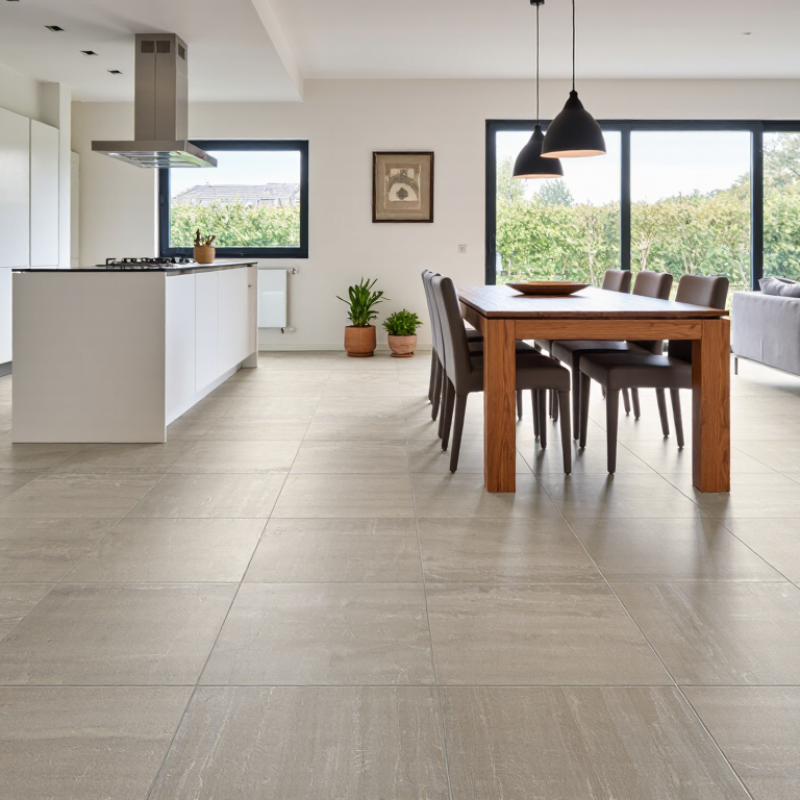
Stone composite flooring combines mineral powder with a polymer binder to create a dense, stable core. The stone content usually comes from limestone or similar minerals. It is not a slab of natural stone. That distinction matters when comparing weight, warmth, and installation methods.
A typical plank has several working layers. The wear layer resists scratches and surface stains. A printed film creates the wood, stone, or concrete appearance. The rigid core limits movement under changing temperatures. A backing layer may reduce impact noise and improve contact with the subfloor. Together, these layers create a floating floor that often connects through a click-lock edge system.
In practical use, the rigid core feels firm beneath a chair or rolling cart. It also handles ordinary moisture better than many wood-based products, provided water cannot reach the edges or subfloor. I would still inspect bathrooms and kitchens carefully. “Water-resistant” does not mean waterproof in every installation detail. Uneven concrete can cause hollow sounds, separated joints, or stress across the locking profile. A straightedge test and moisture check are worthwhile before laying planks. In 2026, choose a product with clear technical data, verified emissions information, realistic wear ratings, and compatible underlayment guidance. Some floors look convincing in a showroom but feel cold and loud at home. That weakness is easy to overlook.
| Dimension | Typical Data or Specification | How It Works | 2026 Selection Guidance |
|---|---|---|---|
| Basic Definition | Stone composite flooring is commonly an SPC floor made from a mineral filler, usually limestone or calcium carbonate, combined with PVC resin and stabilizers. | The mineral-filled core provides rigidity, while the polymer binder holds the particles together and helps resist moisture. | Confirm the exact core composition because “stone composite” is a marketing term and may describe different formulations. |
| Typical Layer Structure | Wear layer, printed decorative film, rigid stone-composite core, and balancing or backing layer. Some products include attached acoustic underlayment. | Each layer performs a separate function: protection, appearance, structural stability, and sound or comfort improvement. | Choose a product with clearly listed layer thicknesses and construction details rather than relying only on appearance. |
| Core Thickness | Common total plank or tile thickness is approximately 4–8 mm, including the core, surface layers, and any attached pad. | A thicker construction can improve perceived solidity and may better tolerate minor installation imperfections, but it does not replace proper subfloor preparation. | Use thicker boards for busy areas or renovation projects where transitions and subfloor conditions require additional build-up. |
| Wear Layer | Residential wear layers commonly range from about 0.20–0.30 mm, while heavy residential and light commercial products may use approximately 0.50–0.70 mm. | The transparent top layer protects the printed design from abrasion, scuffing, and everyday traffic. | Prioritize a thicker wear layer for pets, children, entrance areas, kitchens, and commercial applications. |
| Water Resistance | The rigid core itself has very low water absorption, but the finished floor still depends on sealed joints, edge detailing, and correct installation. | The mineral-polymer core does not swell like untreated wood-based flooring when exposed to ordinary surface moisture. | Suitable for kitchens, bathrooms, and utility areas when the installation instructions permit it; do not assume every product is approved for flood-prone rooms. |
| Dimensional Stability | SPC generally expands and contracts less than many wood-based floating floors, but it still responds to temperature and direct solar heat. | The rigid mineral content limits movement, while the polymer component provides controlled flexibility. | Check the product’s stated temperature range, expansion-joint requirements, and rules for large windows or conservatories. |
| Installation Method | Most products use a floating click-lock system; glue-down and loose-lay constructions are also available. | Interlocking edges connect adjacent boards without fastening each plank to the subfloor, allowing relatively fast installation. | Select click-lock for speed, glue-down for demanding commercial layouts, or loose-lay only when the manufacturer specifically supports that method. |
| Subfloor Flatness | A common installation tolerance is no more than approximately 3/16 inch, or 4.8 mm, variation over 10 feet, or 3.05 meters; requirements vary by product. | Because the core is rigid, bumps and hollows can create movement, joint stress, or a hollow sound underfoot. | Measure and level the subfloor before installation. Do not use the flooring to compensate for major unevenness. |
| Impact and Scratch Performance | The rigid core resists denting better than many softer flexible vinyl floors, while scratch resistance depends mainly on the wear layer and finish. | Mineral content increases stiffness, but sharp grit, dragging furniture, and heavy point loads can still damage the surface. | Use protective pads, entrance mats, and furniture glides; choose a commercial-grade surface finish for higher traffic. |
| Thermal Comfort | Stone composite flooring conducts heat more readily than carpet and is generally compatible with many water-based underfloor heating systems when approved by the manufacturer. | The rigid mineral core transfers heat efficiently but can feel less warm underfoot when the heating system is off. | Verify the maximum permitted floor-surface temperature and heating-system compatibility before installation. |
| Acoustic Performance | Rigid-core floors can sound more reflective than carpet or wood-based flooring. Attached pads and separate underlayments may improve impact-sound performance. | The dense core transmits footfall energy unless a suitable acoustic layer absorbs part of the impact. | For apartments or upper floors, compare tested impact-sound ratings and follow building acoustic requirements. |
| Cleaning and Maintenance | Routine care normally includes sweeping or vacuuming with a suitable hard-floor setting and damp mopping with a neutral cleaner. | The sealed surface does not require waxing or regular refinishing, and dirt remains mainly on the surface. | Avoid abrasive powders, steam cleaning unless approved, solvent-based products, and standing water. |
| Slip Resistance | Slip performance varies by texture, coating, and test method. A flooring product should provide a published slip-resistance result appropriate to its intended use. | Embossed surfaces and matte finishes can increase traction compared with very smooth, glossy surfaces, especially when clean and dry. | For wet areas, request documented wet-slip performance instead of judging safety from the pattern alone. |
| Indoor Air Quality | PVC-based flooring can contain additives, and emissions depend on the formulation, manufacturing process, and adhesives used. | Low-emission products reduce the release of volatile organic compounds into indoor air after installation. | Request an independent low-emission test report and review the product’s material and chemical disclosures. |
| Fire Performance | Fire classification depends on the complete floor assembly, including backing, adhesive, underlayment, and installation method. | The core formulation affects flame spread and smoke development, but a product cannot be assigned a universal fire rating without a specified test result. | Ask for test documentation that matches the local building code and intended application. |
| Best-Fit Applications | Common applications include living rooms, bedrooms, hallways, kitchens, bathrooms where approved, retail areas, offices, and other moderate-traffic interiors. | Moisture resistance, low maintenance, and click installation make the flooring practical for many renovation and new-build projects. | Match the wear layer, slip rating, acoustic data, and warranty conditions to the actual room and traffic level. |
| Main Limitations | It can feel hard underfoot, transmit impact noise, show surface scratches, and become damaged by excessive heat, severe subfloor movement, or improper installation. | The same rigid structure that improves stability also reduces flexibility and makes subfloor preparation important. | Avoid selecting solely by price or appearance; compare technical documents, installation requirements, and long-term maintenance needs. |
| Overall 2026 Buying Checklist | Review core construction, total thickness, wear-layer thickness, slip data, acoustic testing, emissions documentation, fire classification, installation method, and warranty conditions. | A balanced evaluation shows how the floor will perform in real conditions rather than relying on a single headline specification. | Choose the product with the best documented performance for your room, climate, traffic, moisture exposure, and subfloor—not necessarily the thickest or least expensive option. |
Note: Performance ranges are typical industry values and may vary by construction, test method, installation system, and local building requirements. Always follow the current technical datasheet and installation instructions for the selected product.
"*" indicates required fields