City Power Garden Light Trends in China's Top Cities?
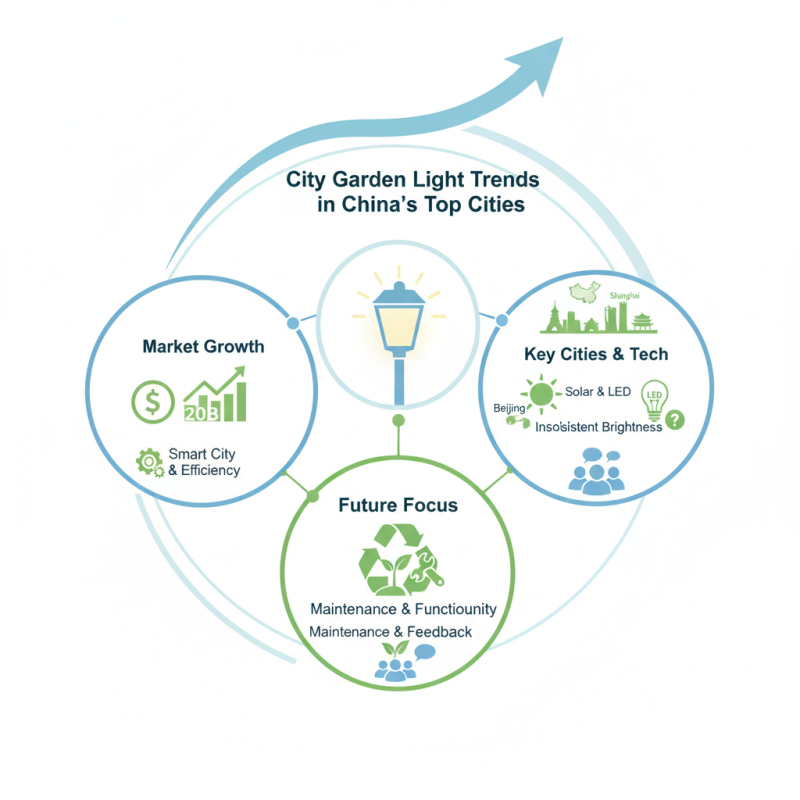
The trend of City Power Garden Light solutions is rising in China's urban landscape. Recent reports indicate that the outdoor lighting market, particularly in major cities, is expected to reach USD 20 billion by 2025, driven by smart city initiatives and energy efficiency. These garden lights not only enhance aesthetics but also improve safety in public spaces.
Cities like Beijing and Shanghai are embracing innovative designs and technologies. The integration of solar power and LED technology is notable. However, some installations have faced criticism due to inconsistent brightness levels. It raises concerns about quality control and the long-term viability of these solutions.
Moreover, consumer preferences are shifting towards sustainable options. City planners often overlook the maintenance aspect of these designs. As cities invest heavily, the question remains: are they prioritizing aesthetics over functionality? More research and feedback from residents could lead to better outcomes. The evolution of City Power Garden Light isn't just a trend; it’s a reflection of urban development priorities.
Emerging Trends in City Power Garden Lighting Across Major Chinese Cities
In recent years, urban environments in China have seen significant changes in garden lighting. These trends are heavily focused on sustainability and aesthetics. Cities are now experimenting with solar-powered lights that not only save energy but also reduce carbon footprints. This shift towards eco-friendly options reflects a growing awareness of environmental issues among city planners and designers.
Smart technology is also gaining traction in garden lighting. Sensors that adjust brightness according to natural light are becoming more common. This technology adds convenience but raises questions on user control and maintenance. Keeping these systems functional can be challenging, especially in environments subject to pollution and wear.
Public spaces are now designed for more than just aesthetics. There’s an increasing focus on inclusivity and accessibility in lighting design. However, some areas still struggle with poor visibility, leaving gaps in safety. Local governments must address these issues to ensure that lighting serves all members of the community effectively. Balancing innovation and practicality is key to developing successful urban lighting solutions.
City Power Garden Light Trends in China's Top Cities
Innovative Technologies Shaping Urban Garden Lighting Solutions
As urban life evolves, so do the lighting solutions for garden spaces in major Chinese cities. Innovative technologies are transforming outdoor lighting, creating vibrant environments for both residents and visitors. Solar-powered lights, for example, harness natural energy, providing sustainable illumination. These lights can be installed in parks and community gardens, reducing electricity costs while promoting eco-friendliness.
Smart lighting systems are also making waves. They adapt to surrounding conditions, adjusting brightness based on time and activity levels. This means less light pollution at night, which can benefit the local ecosystem. However, challenges remain. Many municipalities struggle with integration and maintenance. Implementing smart technology requires upfront investment, which can be difficult to justify.
Furthermore, there is a need for user-friendly designs. Not all residents find the latest gadgets intuitive. Clear instructions and community workshops could help. Urban gardens should cater to diverse populations while ensuring safety. By marrying technology with community needs, cities can create more inviting spaces. It’s important to reflect on what works and what doesn’t in this continuous evolution.
Environmental Sustainability in Urban Garden Lighting Design
Urban garden lighting in China's top cities reflects a growing emphasis on environmental sustainability. Many municipalities are now prioritizing energy-efficient solutions. According to a 2022 report by the China Urban Development Research Institute, over 70% of urban areas are shifting towards LED lighting. This change reduces energy consumption by approximately 50%, contributing to lower carbon footprints.
Designing with nature in mind is essential. Urban gardeners are exploring solar-powered lights. These fixtures not only utilize renewable energy but also enhance biodiversity. Lighting designs incorporate materials that blend with natural environments. Such choices promote a harmonious relationship between architecture and nature.
Tips: When selecting garden lights, consider energy sources that align with sustainability goals. Use timers to reduce power waste. Regular maintenance ensures longevity and consistent performance. Reflect on the balance between artificial lighting and natural darkness; too much light can disrupt local wildlife. Adopting these practices can lead to a brighter, greener urban future.
City Power Garden Light Trends in China's Top Cities
| City | Lighting Type | Power Source | Energy Efficiency Rating | Green Certification |
| Beijing | LED Garden Lights | Solar | A+ | Yes |
| Shanghai | Smart Lighting | Electric | A | Yes |
| Guangzhou | Solar LED Lights | Solar | A+ | Yes |
| Shenzhen | Solar Path Lights | Solar | A++ | Yes |
| Chengdu | Eco-Friendly Lights | Hybrid | A | Yes |
Impact of Garden Lighting on City Aesthetics and Nightlife Experiences
Garden lighting plays a crucial role in shaping city aesthetics and enhancing nightlife experiences. In major Chinese cities, well-planned garden lighting transforms ordinary spaces into vibrant social hubs. A report by the China Urban Lighting Association shows that cities with optimized garden lighting see a 30% increase in nighttime foot traffic. This boost benefits local businesses and improves community interactions.
However, the design of garden lighting must be approached thoughtfully. Not every city has achieved a perfect balance. In some areas, excessive brightness or poorly placed fixtures create an uninviting atmosphere. A study by the Institute of Lighting Design indicates that poorly designed lighting can lead to feelings of discomfort among pedestrians. Achieving the right balance of light is vital for cultivating an inviting environment.
Moreover, the impact of garden lighting extends beyond aesthetics. According to an urban studies report, well-lit public spaces contribute to safer neighborhoods. People tend to avoid dimly lit areas due to safety concerns. Yet, planners sometimes overlook the subtleties of light. For instance, over-lighting can wash out the natural beauty of gardens. It is essential to blend artificial lights with existing flora for a harmonious effect.
Future Directions and Challenges for Garden Lighting in Urban China
In urban China, garden lighting is evolving, yet challenges persist. Many cities are embracing innovative designs that blend aesthetics with functionality. For instance, soft luminance in parks creates inviting atmospheres for evening strolls. However, not all designs consider energy efficiency or sustainability.
The integration of smart lighting systems offers exciting possibilities. These systems can adjust brightness based on foot traffic. Yet, this technology isn’t universally accessible. Some cities struggle with infrastructure and budget constraints. There’s also a need for community feedback in design processes, which is often overlooked.
Urban heat and light pollution remain significant issues as well. Cities must find a balance between vibrant gardens and their ecological impact. Moreover, the maintenance of garden lights can be inconsistent. Regular upkeep is often neglected, leading to darkened pathways. As future trends emerge, these reflections are crucial for sustainable urban development.
