How to Choose the Best Ceramic Mixer Machine for Your Needs?
When selecting a ceramic mixer machine, many factors come into play. A well-chosen mixer can significantly enhance your production efficiency. However, the abundance of options might overwhelm you. You might wonder which features matter most for your unique needs.
Consider the capacity of the Ceramic Mixer Machine. Larger mixers can handle bigger batches but may occupy more space. Assess the materials your projects require. Some mixers are better suited for specific clays or glazes. Pay attention to the machine's technology as well. Sometimes, complex features complicate basic tasks. In striving for perfection, we may overlook simple yet effective solutions.
User reviews can shed light on real-world performance. It's crucial to balance price with performance. A high price doesn’t always guarantee quality. Moreover, reflect on your long-term goals. What works today may not fit tomorrow's needs. Choosing the right mixer is a journey. Take your time and evaluate your choices carefully.
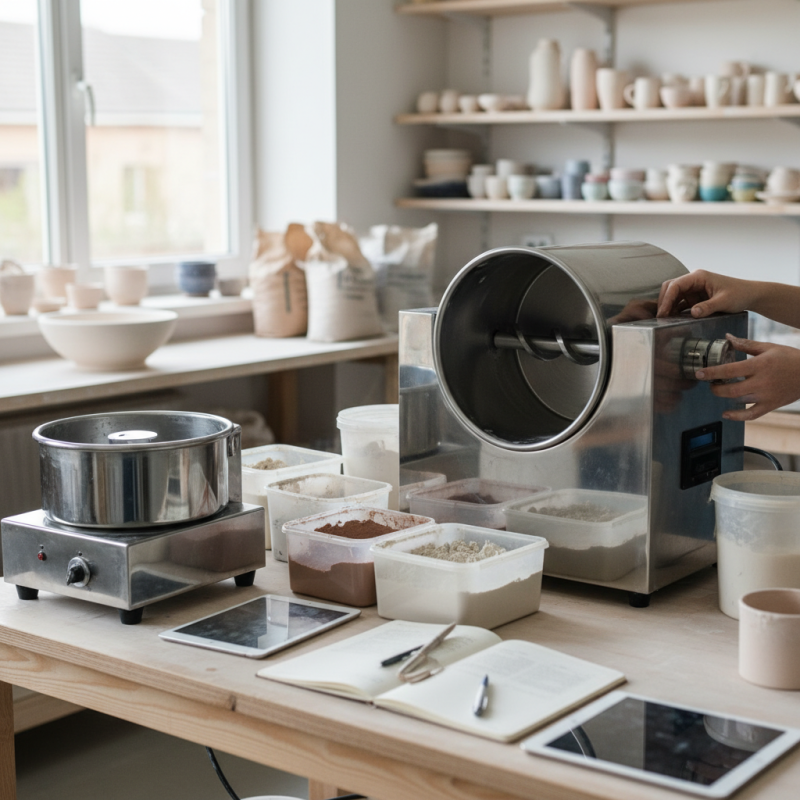
Understanding Your Mixing Requirements and Applications
When selecting a ceramic mixer machine, understanding your mixing requirements is crucial. Consider the type of materials you will be mixing. Are they heavy or lightweight? For heavy materials, a sturdy machine is essential. A lightweight option may suffice for delicate substances, but ensure it has the necessary power.
Think about the volume you'll need to mix. Smaller batches may need minimal capacity, while larger projects demand a machine with higher output. It’s essential to assess your workspace as well. A compact design works well in limited spaces, while a more extensive setup might be needed for bigger tasks.
**Tip:** Research your mixing applications. Are you preparing clay for pottery or mixing cement for construction? Each project may require distinct features.
Another consideration is the speed and consistency of mixing. Some applications may require slow mixing to incorporate air, while others may need high-speed options for uniformity. Don't forget about maintenance. Machines that are easier to clean save time and effort.
**Tip:** Always check user feedback. It can reveal hidden strengths and weaknesses. Ensure that your chosen machine aligns with your specific needs for the best experience.
How to Choose the Best Ceramic Mixer Machine for Your Needs?
| Mixing Requirement | Recommended Mixer Type | Application | Batch Size (Liters) | Power Requirement (HP) |
| Liquid Mixing | Planetary Mixer | Ceramic Slurry Production | 50 | 5 |
| Dry Powder Mixing | Vortex Mixer | Ceramic Body Preparation | 100 | 7.5 |
| Homogeneous Mixing | Continuous Mixer | Tile and Sanitaryware Production | 200 | 10 |
| High Viscosity Mixing | High-Shear Mixer | Ceramic Glaze Preparation | 75 | 15 |
| Granule and Powder Mixing | Tumble Mixer | Ceramic Raw Material Mixing | 120 | 3 |
Key Features to Consider in Ceramic Mixer Machines
When choosing a ceramic mixer machine, key features are critical. Mixing capacity is one vital aspect. According to industry reports, a machine with a capacity of 50 liters can serve small to medium-sized businesses. However, larger operations may require mixers that handle up to 500 liters per batch. This range highlights the need to align the machine's capacity with production demands.
The mixing power is another essential feature. A robust motor ensures consistent results, minimizing inconsistencies in mixes. Professional studies reveal that mixers with over 3 HP can significantly reduce mix time by 30%. Moreover, the addition of variable speed settings broadens the utility of the mixer. It allows for adjustments based on materials used, enhancing versatility and efficiency.
Another consideration is ease of cleaning and maintenance. Machines with a design that facilitates easy disassembly can save significant time. Yet, some machines may present challenges in accessing key components. Regular maintenance is crucial; reports suggest that neglect can lead to a 25% decrease in operational efficiency over time. Reviewing these aspects will guide you in selecting the right ceramic mixer machine.
Comparing Different Types of Ceramic Mixer Machines
When selecting a ceramic mixer machine, it is vital to understand the variations available. There are vertical and horizontal mixers. Vertical mixers are compact and generally occupy less space. They are ideal for small production runs or limited workshop areas. However, they might struggle with larger batches.
Horizontal mixers, on the other hand, offer a more extensive mixing capacity. Their design allows for better material distribution. They are suited for larger-scale operations. Yet, they can be cumbersome in tight spaces. The choice depends on your production volume and workshop size.
Another factor is mixing speed. Some machines operate quickly, while others take their time. Faster doesn’t always mean better results. Slower machines can sometimes ensure a more uniform mix. It’s worth noting that finding the right balance may require some trial and error. Think about your specific needs and workflow.
Assessing Capacity and Performance for Your Needs
When assessing the right ceramic mixer machine, capacity is crucial. The ideal capacity varies depending on your projects. For small crafts, a mixer with a capacity of 5-10 liters is often sufficient. However, larger projects may require machines that handle 20-30 liters or more. According to industry reports, the optimal capacity also depends on the mixing intensity needed for different types of clay.
Performance is another key consideration. Look for mixers that provide uniform blending without lumps. A study by the Ceramic Industry Association highlighted that a consistent mixing performance enhances product quality. Features such as variable speed control and adjustable mixing time can often make a significant difference.
Tip: Don’t overlook the importance of ease of use. A complex machine can hinder your workflow. Choose a model that allows for straightforward operation and maintenance. Moreover, consider the mixer’s energy efficiency. A machine that conserves energy can lead to cost savings in the long run. In the end, balance between capacity and performance is vital for achieving optimal results.
Performance Comparison of Ceramic Mixer Machines
Budget Considerations and Cost-Effectiveness in Selection
When selecting a ceramic mixer machine, budget considerations are crucial. The initial cost is often not the only expense to factor in. Operational costs, maintenance, and longevity will significantly affect your investment. Industry reports indicate that the total cost of ownership can be two to three times higher than the purchase price. It's vital to look beyond the sticker price.
Cost-effectiveness doesn't always mean choosing the cheapest option. High-quality machines may have a higher upfront cost but can reduce long-term expenditures. For example, a durable mixer may last 10 years, while a cheaper model might only last three. Annual operating costs for energy and maintenance can add up quickly. A well-researched investment could mean lower costs over time.
Think about the specific needs of your ceramic projects. Will you be mixing large batches or small ones? Are you focusing on high-quality production? If so, selecting a mixer that fits your exact needs makes financial sense. A machine that can accommodate both types of workloads may seem pricier, yet it offers versatility that saves money in the long run. Ultimately, understanding how to align your budget with quality and functionality is key.
