"*" indicates required fields
Choosing a Water Oxygen Meter for global sourcing is not a simple price comparison. The right instrument must perform reliably in rivers, aquaculture tanks, wastewater channels, laboratories, or storage facilities. Each environment creates different demands.
Dr. Robert G. Wetzel, a respected freshwater scientist, stated, “Dissolved oxygen is one of the most important variables in aquatic ecosystems.” That principle still guides purchasing decisions. A meter should provide stable readings, fast response, and dependable calibration under changing temperatures. It should also support the measurement range required by the application.
Buyers need to examine sensor technology carefully. Optical sensors often reduce maintenance and avoid frequent membrane replacement. Electrochemical probes may offer strong field performance when maintained correctly. Neither option is perfect. That matters.
A practical evaluation should include accuracy, repeatability, temperature compensation, battery life, waterproof protection, data storage, and software compatibility. Certification and factory calibration records can improve confidence, but they do not replace real-world testing. A supplier may present impressive specifications. Field results can tell a different story.
Global sourcing adds further risks. Replacement probes, calibration solutions, technical support, and delivery times should be verified before purchase. A low initial price may become expensive when consumables are unavailable. Language, training, and regional service coverage also deserve attention.
This guide explains how to compare a Water Oxygen Meter by application, sensor design, measurement performance, ownership cost, and supplier reliability. It also questions common buying assumptions, because the “best” instrument is rarely the most expensive or the most advertised.
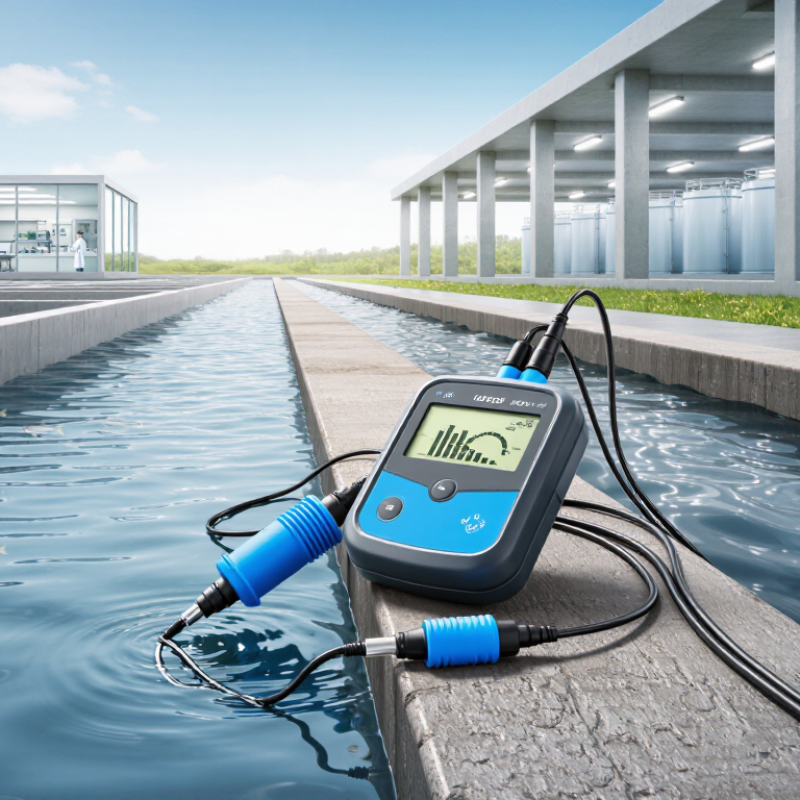
When sourcing a water oxygen meter, define the measurement need before comparing specifications. Identify the water first: drinking water, wastewater, aquaculture tanks, rivers, or process lines. Each setting demands a different range, probe design, and cleaning routine. A tank operator may need stable readings near 5–8 mg/L. A field technician may need GPS records and rapid response.
Know the risk level.
The U.S. Environmental Protection Agency commonly references 5 mg/L as a useful dissolved oxygen benchmark for aquatic life, although local criteria vary. NOAA describes water below 2 mg/L as hypoxic, where many organisms struggle to survive. These figures show why a narrow-range meter can create serious blind spots. Ask whether the instrument measures dissolved oxygen in mg/L, percentage saturation, or both. Temperature, salinity, and pressure compensation also matter. Without them, a reading may look precise but remain misleading.
The USGS National Field Manual emphasizes careful calibration, sample handling, and sensor maintenance during field measurements. Therefore, specify calibration frequency, stabilization time, replaceable parts, and data logging needs. Consider a cold river with a wet glove, or a warm tank with foam on the surface. Real work is rarely clean. A specification sheet can still be wrong for the operator. Require documented accuracy across the intended range, not only an attractive headline figure.
Choosing a water oxygen meter starts with the sensor, not the price. Polarographic sensors suit routine field testing, but they need warm-up time and membrane maintenance. Galvanic sensors start faster, although their membranes and electrolyte still require care. Optical luminescent sensors consume almost no oxygen and usually need less servicing. They can still suffer from biofouling and coating damage. That matters.
Accuracy must match the water and the decision. ISO 5814:2012 recognizes electrochemical and optical methods for dissolved oxygen measurement. The US EPA Method 360.1 also requires attention to temperature and calibration conditions. A meter claiming ±0.1 mg/L may be useful in controlled water, yet misleading in warm, saline, or turbulent sites. I would question any specification tested only in clean laboratory water. Field error often comes from bubbles, dirty membranes, or poor temperature compensation.
Measuring range deserves equal attention. USGS Techniques and Methods 9–A6.2 indicates that freshwater holds about 9.1 mg/L dissolved oxygen at 20°C and standard pressure. Therefore, a 0–20 mg/L range covers many freshwater applications, but not every process. Aquaculture, wastewater, high-altitude sampling, and pressurized systems may require percentage saturation, salinity correction, or wider pressure limits. Compare stated accuracy across the full range, not only at one calibration point. Check response time, operating temperature, probe cable length, and replacement-part availability before global sourcing. A cheaper meter can become expensive when calibration solutions and membranes are difficult to import.
A reliable water oxygen meter starts with water conditions, not a product brochure. Measure the expected temperature, salinity, depth, and oxygen range at your site. Clear lake water differs greatly from aerated tanks or dark wastewater. Choose a sensor that matches those conditions. Optical sensors usually need less frequent servicing, while electrochemical probes may require membrane and electrolyte replacement. Do not ignore response time, waterproofing, or readability in bright outdoor conditions.
Ask how calibration is performed and documented. Air-saturation calibration is common, but altitude, temperature, and salinity can affect accuracy. Zero calibration may also be necessary for very low-oxygen testing. At high elevations, factory defaults may not be enough. Calibration records should include the date, reference method, operator, and measured result. One small mistake matters.
Maintenance requirements can decide the real cost. Check whether the supplier provides membranes, electrolyte, sensor caps, cleaning tools, and clear storage instructions. Inspect the probe after muddy or oily sampling, then rinse it with clean water. Plan regular calibration intervals based on use, not only the manual. Confirm battery availability and local technical support before placing a large order. Some specifications look impressive, yet spare parts may be difficult to obtain. That is worth questioning. A slightly slower meter with dependable maintenance support may perform better over years.
How to Choose a Water Oxygen Meter for Global Sourcing?
A practical water oxygen meter should match the sampling site, not only the product brochure. Portable models are valuable for aquaculture ponds, rivers, and treatment facilities. Check total weight, probe cable length, battery life, waterproof rating, and calibration stability. A meter with a clear display matters when sunlight reflects across moving water. The US EPA National Aquatic Resource Surveys include dissolved oxygen among important field measurements, showing its value in routine water assessment. ASTM D888 also recognizes membrane and optical methods for dissolved oxygen testing.
Data features can improve purchasing decisions. Look for automatic temperature compensation, salinity correction, calibration records, and downloadable results. USB, Bluetooth, or cloud transfer may reduce manual errors during international inspections. However, advanced connectivity is not always useful. Remote sites may have weak signals. I once valued wireless syncing too highly and ignored the charger design. That mistake could delay sampling.
Tips: Ask suppliers for calibration certificates, detection range, response time, and repeatability data. Test the meter with cold water, gloved hands, and a wet probe. Confirm whether replacement caps, membranes, batteries, and solution are globally available. The World Resources Institute reports that agriculture uses about 70% of global freshwater withdrawals, increasing the need for practical field monitoring. A compact meter with simple maintenance may outperform a more advanced model that operators rarely use.
Choosing a water oxygen meter for global sourcing requires more than comparing probe prices. Check the supplier’s testing records, calibration process, and replacement-part availability. ISO/IEC 17025 traceability is valuable when measurements support audits or environmental decisions. For instrument performance, ask whether the design follows methods such as ISO 5814 or ASTM D888.
Tips: Request three months of sample data, not only a brochure. Compare total cost, including calibration kits, membranes, batteries, shipping, duties, training, and service delays. Confirm CE or other regional conformity documents where required. ISO 9001 certification shows management controls, but it does not prove measurement accuracy. Ask for uncertainty data and a signed calibration certificate. WHO and UNICEF’s 2023 JMP report found that 2.2 billion people lacked safely managed drinking water in 2022. The need is substantial, but “global support” can still mean slow email replies. Test the support channel before ordering.
"*" indicates required fields