"*" indicates required fields
Choosing a Heavy wall seamless pipe SCH80 factory requires more than comparing prices or browsing polished product pages. SCH80 describes a wall thickness series, not a complete performance guarantee. The correct selection depends on outside diameter, material grade, design pressure, temperature, fluid characteristics, and applicable standards. A reliable factory should explain these factors clearly and provide evidence for each claim.
Look for proven production experience with seamless pipe manufacturing, heat treatment, sizing, and dimensional control. Ask whether the factory can supply material test certificates, heat numbers, chemical analysis, tensile results, hardness data, and hydrostatic test records. For critical projects, request non-destructive testing details, including ultrasonic or eddy-current inspection methods. Factory audits can reveal practical conditions: clean storage areas, calibrated gauges, traceable bundles, and operators who understand wall-thickness tolerances.
Do not select a supplier only because its quotation is attractive. Low pricing may reflect different grades, incomplete inspection, or unclear delivery responsibilities. A dependable Heavy wall seamless pipe SCH80 factory should confirm standards such as ASTM, ASME, API, or project-specific requirements before production begins. It should also discuss bevel protection, rust prevention, marking, packaging, and transport damage control.
A certificate alone is not enough.
Even experienced buyers can miss small details. For example, a pipe may meet nominal SCH80 dimensions but fail a project’s corrosion allowance or impact-test requirement. Request drawings, inspection plans, sample reports, and reference projects. Then compare technical evidence, communication quality, and after-sales responsibility. The best choice is not always the largest factory. It is the manufacturer that can consistently prove what it makes, how it tests, and where each pipe was produced.
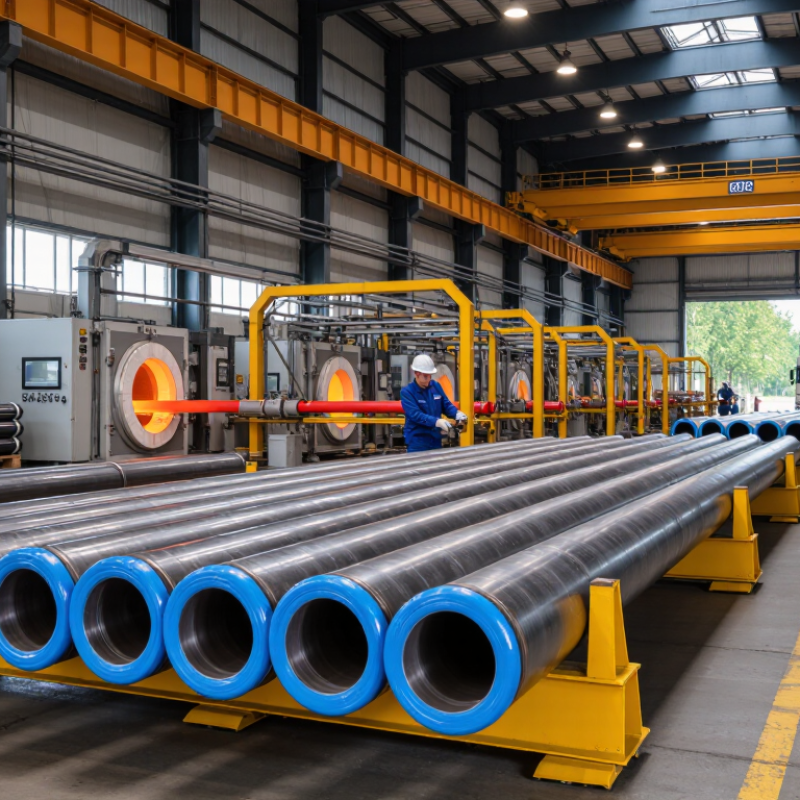
Heavy wall seamless pipe has a thick steel section without a longitudinal weld. “Heavy wall” is not one universal measurement. It usually describes a high wall-to-diameter ratio, selected for pressure, corrosion allowance, or mechanical loading. In practical factory audits, I check the pipe’s outside diameter, wall thickness, ovality, straightness, and surface condition. A polished surface can still hide poor internal quality.
SCH80 is a standardized wall-thickness designation, not a complete pressure rating. ASME B36.10M lists NPS 2 SCH80 at 0.218 inches, or 5.54 millimeters, while NPS 6 SCH80 measures 0.432 inches, or 10.97 millimeters. The size changes the thickness. ASTM A106 commonly covers carbon seamless pipe for high-temperature service, but material grade and heat treatment still require verification. Mill test certificates should show chemistry, tensile strength, yield strength, elongation, heat number, and hydrostatic test results. The World Steel Association reported about 1.89 billion tonnes of crude steel production in 2023. That huge volume makes traceability more important, not less. I have seen good-looking pipes fail simple dimensional checks.
Tips:
Ask the factory for calibrated inspection records, not only photographs. Confirm whether “heavy wall” is a project definition or a schedule reference. Check thickness at several points, especially pipe ends. SCH80 alone cannot replace an engineering pressure calculation. Sometimes, I would reject a cheaper pipe.
How to Choose a Heavy Wall Seamless Pipe SCH80 Factory?
Start with the material. Carbon steel suits many high-temperature water, steam, and process lines. Stainless steel performs better against corrosion, chlorides, and selected chemicals. Alloy steel may handle higher temperatures and demanding pressure cycles. Request the exact material grade, heat treatment condition, and chemical composition. A certificate should show heat number, tensile results, yield strength, and elongation.
Size selection requires more than choosing SCH80. Confirm nominal pipe size, outside diameter, wall thickness, and calculated inside diameter. Schedule 80 thickness changes with pipe size. It is not automatically the best pressure option. Ask an engineer to verify design pressure, temperature, corrosion allowance, flow rate, and connection type. A 6-inch pipe with a 0.280-inch wall may behave differently from smaller piping. Check both ends carefully.
The factory should work to relevant standards, such as ASME B36.10M for carbon and alloy steel dimensions. Stainless products may require ASME B36.19M dimensions. Material standards can include ASTM A106, ASTM A312, or API 5L, depending on the application. Require hydrostatic testing, ultrasonic or eddy-current inspection, dimensional checks, and clear traceability. Inspect the mill test report against the markings on each bundle. I have seen paperwork look complete while marking details remained unclear. That deserves a pause. Also review production capacity, heat-treatment records, surface condition, packaging, and independent inspection access before placing an order.
A reliable factory should show how billets become seamless pipe, not only display finished samples. In piercing, elongation, heat treatment, and sizing, each stage affects wall thickness and ovality. Ask for furnace temperature records, rolling-speed controls, and calibration procedures. A clean production floor helps, but documented process discipline matters more.
For SCH80 pipe, review dimensional inspection against ASME B36.10M and the material requirements stated in the purchase specification. Wall thickness should be checked with calibrated ultrasonic equipment, especially near pipe ends. Hydrostatic testing, chemical analysis, tensile testing, and hardness checks should be traceable to each heat number.
According to the ISO Survey 2022, more than 1.2 million ISO 9001 certificates were reported worldwide, yet certification alone does not prove stable pipe quality. Request recent audit findings and corrective-action records.
The World Steel Association reported approximately 1.9 billion tonnes of crude steel production in 2023. Such scale makes raw-material traceability essential. A capable factory should connect billet certificates, heat-treatment charts, inspection results, and final markings. Ask to witness sampling.
Small details reveal habits. Some suppliers provide attractive reports but cannot explain test frequency or reject handling. That weakness deserves attention. I would also compare independent inspection results with factory data, because even experienced teams can miss recurring measurement bias.
A reliable heavy wall seamless pipe SCH80 factory should make its quality records easy to check. Request certificates that identify the applicable material grade and manufacturing standard, then compare them with your purchase specification. Check the certificate number, issue date, heat number, and stated chemical and mechanical results. Details matter. A neat document is not enough if its numbers cannot be linked to the pipes you receive.
Ask how each production batch is tested. Depending on the specification and order, checks may include dimensional inspection, hydrostatic testing, ultrasonic examination, and mechanical testing. Ask for the procedure, acceptance criteria, and records—not just a list of test names. Confirm that pipe dimensions, wall thickness, and tolerances are measured with calibrated tools. A factory visit can help: look for identifiable gauges, organized inspection records, and staff who can explain a failed result. Do not assume every test applies to every order.
Traceability should continue from raw material to shipment. Heat numbers should remain visible on pipe markings and match the inspection documents and packing list. If pipes are cut or bundled, ask how identification is preserved. Keep asking. In practice, paperwork can be delayed or markings can become hard to read; that is a weakness worth discussing before production. Clear answers, consistent records, and a practical correction process provide stronger evidence than broad quality claims.
| Evaluation Area | What to Verify | Evidence to Request | Practical Verification Method | Decision Check |
|---|---|---|---|---|
| Product specification | Confirm the pipe specification and grade match the service requirements. ASTM A106/A106M covers seamless carbon steel pipe for high-temperature service; other applications may require a different specification. | Quotation, purchase order, and inspection documents stating the applicable specification, grade, size, schedule, and edition where required. | Compare every document against the project specification and purchase order. Do not treat “SCH80” alone as a complete material specification. | Pass only when specification, grade, dimensions, and service requirements are consistent. |
| Dimensions and schedule | Check nominal pipe size, outside diameter, wall thickness, length, and tolerances against the specified dimensional standard. ASME B36.10M covers dimensions for welded and seamless wrought steel pipe. | Dimensional inspection report and the drawing or purchase-order requirements. | Measure samples with calibrated instruments. Reference examples for SCH80: NPS 2 has a nominal wall of 0.218 in (5.54 mm); NPS 4, 0.337 in (8.56 mm); NPS 6, 0.432 in (10.97 mm). Verify against the applicable standard edition and order. | Pass when measured dimensions meet the ordered standard and applicable tolerances; schedule is not a substitute for checking actual wall thickness. |
| Quality-system certification | If a quality-system certificate is required, check its validity, scope, covered site, and issuing certification body. ISO 9001 certification concerns a quality management system, not automatic approval of each pipe or grade. | Current certificate and, where available, confirmation through the certification body or an accreditation-body directory. | Match the legal entity, manufacturing location, certificate scope, and expiry date to the facility and product being quoted. | Pass when the certificate is current and its scope genuinely covers the relevant operation; do not use it as a replacement for product inspection records. |
| Material test certificate | Confirm that the certificate reports the ordered specification and grade, heat identification, chemical analysis, mechanical test results, and required inspection results. | Material test certificate, such as an EN 10204 type 3.1 inspection certificate when specified by the order, plus supporting test records as applicable. | Check that certificate values satisfy the governing product specification and that the heat number matches the pipe marking and shipping records. | Pass only when records are complete, internally consistent, and traceable to the supplied pipes. |
| Testing capability | Verify that required chemical, tensile, dimensional, and other tests are performed using suitable equipment and documented procedures. The required tests depend on the product specification and purchase order. | Test procedures, sample reports, equipment calibration records, and laboratory accreditation details when applicable. | For external testing, check whether the laboratory’s ISO/IEC 17025 accreditation scope covers the relevant test method. Confirm that reported results identify the sample and heat. | Pass when the methods, equipment status, sample identification, and results meet the ordered requirements. |
| Hydrostatic or nondestructive examination | Confirm the applicable product specification’s pressure-test or permitted nondestructive electric-test requirements, and whether any additional examination is required by the order. | Test records identifying the pipe or lot, method, test parameters, equipment, and result. | Review records against the applicable specification and order. Do not assume one test method or acceptance limit applies to every grade, size, or edition. | Pass when the documented method and result meet the governing requirements and are linked to the supplied product. |
| Heat and product traceability | Ensure each pipe, bundle, or permitted identification unit can be linked to its heat number and inspection documentation throughout handling and shipment. | Marking examples, traceability procedure, packing list, certificate, and records of any marking transfer or repacking. | Select a marked pipe or bundle and follow its identifier through the certificate and packing list. Check that identifiers remain legible after handling. | Pass when the physical marking and documents provide an unbroken, verifiable link to the relevant heat and test records. |
| Inspection and nonconformance control | Check how the supplier records defects, segregates nonconforming material, handles corrective action, and manages customer or third-party inspection. | Inspection and test plan, sample nonconformance record with sensitive details removed, corrective-action process, and inspection access arrangements. | Review a sample record and confirm that disposition, reinspection, and release are documented and authorized. | Pass when nonconforming material is controlled and release evidence is available before shipment. |
| Final supplier decision | Assess compliance across documents, dimensions, testing, traceability, and the buyer’s project-specific requirements—not price or a certificate alone. | Completed supplier evaluation, approved inspection plan, and agreed document package for each shipment. | Resolve missing or conflicting records before placing the order or authorizing shipment. Define witness or hold points in writing when required. | Approve only when all mandatory requirements are evidenced and traceable to the exact product being purchased. |
Note: Applicable editions, acceptance criteria, inspection frequency, and test requirements must be confirmed in the governing product specification, purchase order, and project requirements.
Choosing a heavy wall seamless pipe SCH80 factory requires more than checking its quoted tonnage. Ask what sizes, wall thicknesses, grades, and monthly volumes the plant can produce consistently. A capable factory should explain how it controls billet heating, piercing, rolling, and dimensional checks. Request recent inspection records for ovality, wall thickness, and surface condition. Details matter. A pipe that looks sound outside may still have uneven wall thickness.
Customization can include cut lengths, end preparation, bevels, marking, and protective packaging. Confirm which options are performed in-house and which depend on subcontractors. For a project with unusual dimensions, request a sample inspection plan before placing a large order. Pricing should separate material cost, processing, testing, packing, and freight. Compare like with like. The lowest offer may exclude important checks or assume a less demanding tolerance. I would also ask how price changes if raw material costs shift; that point is easy to overlook.
Delivery terms need the same scrutiny as production capacity. Ask for a realistic schedule covering raw material sourcing, manufacturing, inspection, and dispatch. Confirm how delays are reported and what documents accompany each shipment, such as material certificates and dimensional reports. Clarify whether delivery dates refer to factory release or arrival at your site. A neat spreadsheet helps, but it cannot replace direct answers from the production team. One small uncertainty can still disrupt a site schedule.
"*" indicates required fields