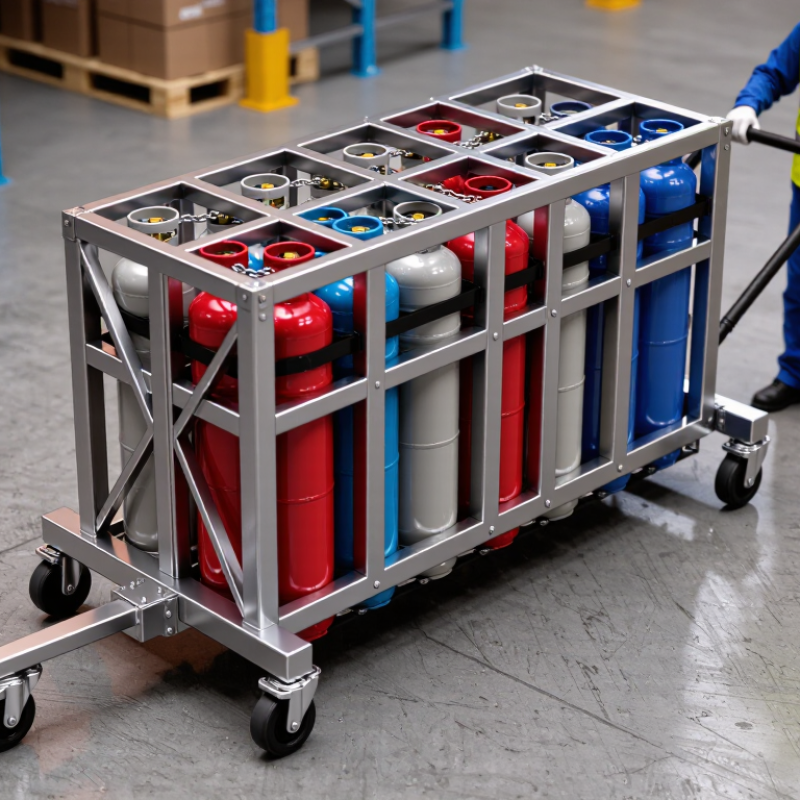
| Cylinder Compatibility | Select a frame designed for the cylinder type, diameter, height, valve arrangement, and filled mass. Do not combine cylinders that cannot be securely restrained in the same frame. | Compare the frame specification with the cylinder identification plate and current cylinder dimensions. | Before purchase and whenever the cylinder type changes. | Every cylinder is fully supported, fits without excessive clearance, and can be removed without forcing or striking adjacent cylinders. | Stop use until a compatible frame or approved insert is provided. | Critical |
| Rated Capacity | The combined cylinder mass, valve protection, regulators, hoses, and accessories must remain below the frame's marked working load and any vehicle or lifting limit. | Calculate the total filled mass and compare it with the manufacturer's rated capacity and the transport equipment rating. | Before each new load configuration. | Total load does not exceed the lowest applicable rated capacity; the rating is legible and traceable to technical documentation. | Reduce the load or use a higher-capacity frame. Never rely on an estimated empty-cylinder mass. | Critical |
| Frame Stability | Choose a low-center-of-gravity design with a base wide enough to remain stable during normal movement, turning, braking, and loading. | Place the empty frame on a level surface and check for rocking, uneven feet, distortion, or a visibly unstable load position. | Before every use and after impact. | No rocking, tipping tendency, bent base members, or unstable wheel arrangement. | Quarantine the frame and repair or replace damaged structural parts. | Critical |
| Cylinder Restraint | Provide positive restraint using chains, straps, bars, or purpose-built retainers. Cylinders should remain upright unless the cylinder and transport procedure specifically allow another orientation. | Check restraint position, tension, attachment points, and contact with the cylinder body. | Before movement and at each planned stop during extended transport. | Cylinders cannot slide, roll, rotate, or fall from the frame; restraints do not press on valves or damage cylinder surfaces. | Re-secure the cylinders before moving. Replace worn, stretched, cut, or corroded restraints. | Critical |
| Valve Protection | Protective caps or guards must be installed whenever the cylinder is not connected for use, unless the cylinder design provides equivalent permanent protection. | Visually inspect caps, guards, threads, retaining devices, and clearance from the frame. | Before loading, unloading, and storage. | Valve protection is fitted, undamaged, secure, and not obstructed by the frame or restraints. | Do not transport an unprotected cylinder unless an approved equivalent protection system is in place. | Critical |
| Frame Material | Use materials suitable for the operating environment, cylinder contents, moisture exposure, and expected mechanical loads. Avoid incompatible materials that may promote corrosion or contamination. | Inspect welds, tubes, plates, fasteners, hooks, and contact surfaces for corrosion, cracks, deformation, or chemical attack. | Monthly and after exposure to chemicals, salt, impact, or abnormal loading. | No cracks, separated welds, sharp edges, significant section loss, or loose structural fasteners. | Remove from service when structural integrity is uncertain; repair only through a competent process. | Critical |
| Wheels and Casters | Wheels or casters should be rated for the complete loaded frame and suited to the floor surface. At least one effective parking or locking device is needed when the frame is stationary. | Check wheel condition, bearings, swivel action, fasteners, brakes, and contact with the floor. | Before each use; lubricate or service according to the equipment schedule. | Wheels rotate freely, remain attached, do not have damaged treads, and locking devices hold the loaded frame. | Do not push the frame until defective wheels or brakes are replaced. | Critical |
| Lifting Points | If the frame is designed for crane or forklift handling, use only marked lifting points and the stated lifting method. Do not lift from restraints, valve guards, or unapproved members. | Inspect lifting lugs, pockets, shackles, welds, labels, and the balance of the loaded frame. | Before every lift and after any shock load. | Lifting points are clearly identified, undamaged, compatible with the lifting accessories, and within the rated lifting capacity. | Tag out the frame if markings are missing or any lifting point is bent, cracked, or excessively worn. | Critical |
| Forklift Interface | Fork pockets, when provided, must accept the intended fork size and prevent the frame from sliding off during handling. | Confirm fork spacing, pocket condition, load center, and forklift capacity before lifting. | Before every forklift operation. | Forks are fully inserted, load is balanced, and the forklift capacity exceeds the actual load at the applicable load center. | Use a suitable handling attachment or forklift; never improvise with straps around valves or cylinder necks. | Critical |
| Vehicle Restraint | Secure the loaded frame to the vehicle using rated anchor points and suitable tie-downs. The frame must not depend only on its wheel brakes. | Check tie-down routing, tension, anchor points, contact protection, and clearance from valves and hoses. | Before departure and after significant route disturbance or loading changes. | The frame cannot slide, tip, or shift under expected vehicle movement; tie-downs remain tight and undamaged. | Stop the vehicle in a safe location and re-secure the load before continuing. | Critical |
| Cylinder Identification | Labels, hazard markings, service identification, and cylinder test or inspection markings must remain visible and legible. | Check cylinder labels and markings before loading and verify that the frame does not conceal required information. | Before every shipment or transfer. | Contents and hazards can be identified without removing the cylinders from the frame. | Do not ship unidentified or illegibly marked cylinders; contact the responsible gas-safety authority or supplier. | Critical |
| Leak Check | Inspect valves, connections, regulators, and hoses for leakage using an approved leak-detection method. Never use a flame to locate a leak. | Perform a visual check and use a compatible leak-detection solution or approved instrument where appropriate. | Before transport, after connection, and whenever a leak is suspected. | No audible leak, frost formation, pressure loss attributable to leakage, or positive leak-test indication. | Move people away, isolate the area, and follow the applicable emergency procedure. Do not transport a leaking cylinder. | Critical |
| Gas Separation | Segregate incompatible gases according to the applicable dangerous-goods rules and site procedures. Oxidizing gases should be kept away from combustible materials, oil, and grease. | Review the gas list, frame compartments, labels, and loading arrangement. | Before each mixed-gas load. | Incompatible gases are separated or transported under an approved arrangement; no oil or grease contaminates oxygen-service components. | Unload and rearrange the shipment according to the approved segregation plan. | Critical |
| Ventilation | Transport and storage areas should prevent gas accumulation. Enclosed vehicles or rooms require ventilation appropriate to the gas hazard and local regulations. | Check ventilation openings, vehicle requirements, gas detection where required, and signs of gas accumulation. | Before use and during periodic workplace inspections. | Ventilation is unobstructed and the transport method complies with the applicable gas and dangerous-goods requirements. | Do not use an unsuitable enclosed area; consult the site safety procedure before transport. | Critical |
| Temperature and Sun Exposure | Keep cylinders away from excessive heat, flames, hot surfaces, and direct prolonged sunlight. Do not exceed the cylinder service temperature specified by its approval. | Inspect the route and parking location for heat sources, hot surfaces, and direct sun exposure. | Before loading and during planned stops. | Cylinders remain within the permitted temperature range and are not exposed to uncontrolled heat. | Move the frame to a suitable shaded, ventilated, and approved location. | Critical |
| Manual Handling | Push the frame from a designated handle at a controlled walking speed. Do not drag, drop, roll, or use cylinder valves as handles. | Observe the route, floor condition, operator position, and handling technique. | Every movement. | Operator maintains control, route is clear, and no person is positioned in a crush zone or downhill path. | Stop movement and correct the route, staffing, or handling equipment before proceeding. | Routine |
| Parking and Storage | Park the frame on a level, stable surface with wheels locked where applicable. Keep it away from emergency exits, ignition sources, vehicle traffic, and unauthorized access. | Inspect the parking location, clearance, wheel locks, signage, and access control. | At every parking location. | Frame is stable, secured, protected from impact, and does not obstruct escape routes or safety equipment. | Relocate the frame or improve the controls before leaving it unattended. | Critical |
| Hose and Regulator Protection | Remove or protect regulators and hoses during transport. Prevent bending, crushing, contamination, and contact with sharp frame edges. | Check hose routing, caps, connectors, protective covers, and storage clips. | Before every movement and after connection changes. | Hoses and regulators are secured, protected, and free from cuts, kinks, damaged threads, or contamination. | Replace damaged components and keep them isolated until inspected by a competent person. | Critical |
| Cleaning | Keep the frame free from oil, grease, metal chips, chemicals, and debris that could damage cylinders, contaminate fittings, or interfere with restraints. | Visually inspect the base, contact points, restraints, and handling surfaces. | Weekly in routine service and immediately after contamination. | Surfaces are clean, dry where appropriate, and free from residues that could create a safety or compatibility hazard. | Clean using a method compatible with the cylinder service and coating; investigate the source of contamination. | Routine |
| Fasteners and Restraint Hardware | Bolts, pins, hooks, shackles, buckles, and retaining bars must be correctly fitted and suitable for the intended load. | Check for missing parts, loose nuts, damaged threads, distortion, corrosion, and unauthorized modifications. | Monthly and before heavy-duty use. | All hardware is present, secure, undamaged, and matches the approved design. | Replace with correctly rated parts; do not substitute ordinary wire, rope, or unapproved hardware. | Critical |
| Inspection Records | Maintain a frame identification number, inspection date, findings, corrective actions, person conducting the inspection, and next due date. | Review the inspection log and compare it with the frame in service. | After every formal inspection, repair, incident, or modification. | Records are complete, current, legible, and retained according to the site document-control procedure. | Update missing records and remove untraceable equipment from service until its condition is verified. | Routine |
| Damage and Incident Control | Any frame involved in a collision, drop, overturn, overload, fire, or suspected chemical exposure requires a competent inspection before reuse. | Quarantine the frame and inspect the structure, restraint system, lifting points, wheels, and labels. | Immediately after an incident. | Competent personnel confirm that the frame remains fit for service and document the decision. | Tag out, repair, test, or scrap the frame according to the approved engineering procedure. | Critical |
| Training and Authorization | Only trained and authorized personnel should load, move, secure, connect, or unload gas cylinders and transportation frames. | Verify training records, practical competency, and authorization for the gas type and handling equipment. | Before assignment and at the retraining interval defined by the employer or regulation. | Personnel understand cylinder hazards, frame limits, emergency actions, manual handling, and vehicle restraint requirements. | Restrict the task to authorized personnel and provide documented refresher training. | Critical |
| Standards and Local Rules | Apply the current national, regional, workplace, and dangerous-goods requirements in addition to the frame manufacturer's instructions. Requirements may differ by gas, quantity, route, and transport mode. | Confirm the compliance review, transport documents, placards, emergency information, and applicable cylinder approvals. | At least annually and whenever regulations, gases, vehicles, or routes change. | The selected frame and operating procedure meet all applicable requirements for the intended service. | Pause procurement or transport until the compliance review is completed. | Critical |