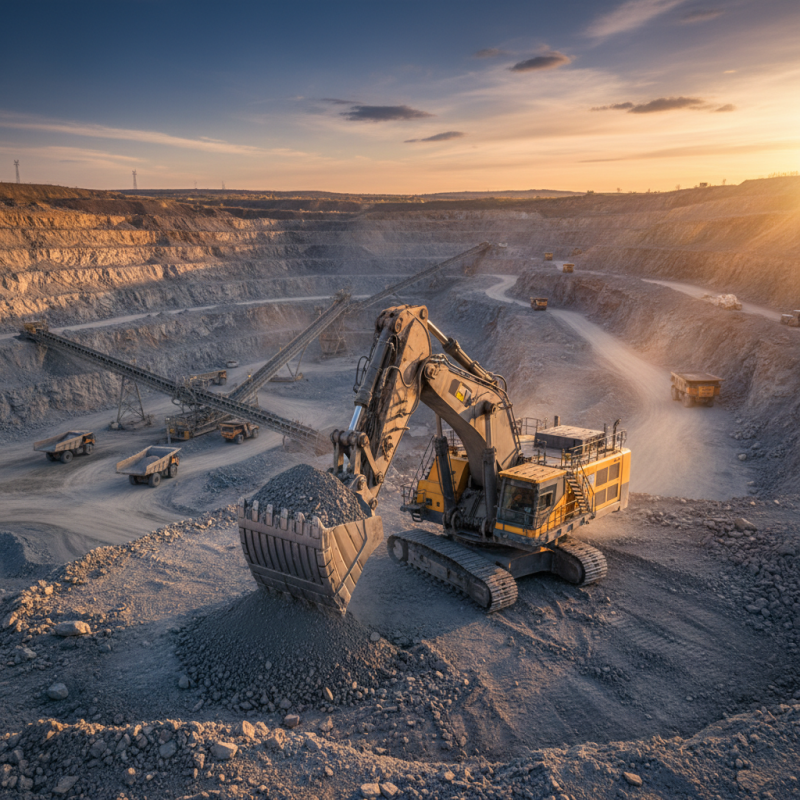
Why Choose the Right Mining Excavator for Your Operations?
Choosing the right Mining excavator can significantly impact operational efficiency. These machines are vital for various tasks, such as digging and transporting materials. A well-suited mining excavator enhances productivity and lowers costs.
Mining excavators come in different sizes and configurations. Selecting the correct model depends on specific project needs. Consider factors like terrain, load capacity, and fuel efficiency. An excavator that is too small may underperform. On the other hand, an oversized excavator can lead to unnecessary expenses.
The right choice requires careful analysis. Research can uncover valuable insights. Seek advice from industry experts to guide your decision. The stakes are high, and the wrong investment can lead to inefficiencies. Quality equipment enhances reliability and operational safety.
Understanding the Role of Excavators in Mining Operations
Excavators play a crucial role in mining operations. They are essential for digging, transporting, and managing materials. According to a recent industry report, efficient excavation can improve productivity by up to 25%. This increase significantly impacts operational costs, making excavators a focal point in mining strategies.
The right excavator can enhance safety and efficiency. For instance, larger excavators can move more material per hour. However, they require more maintenance and fuel. Conversely, smaller models may reduce operational costs but limit productivity. The average lifespan of an excavator is around 10,000 hours, making investment decisions critical for longevity and performance.
Understanding the operational needs is vital. Many companies are reevaluating their equipment choices based on terrain and material type. Factors such as ground conditions and load capacity are often overlooked. Such oversights can lead to inefficiencies and increased downtime. Investing in the right excavator is not merely about the initial cost; it's about ongoing performance and adaptability to future needs.
Key Factors to Consider When Selecting a Mining Excavator
When selecting a mining excavator, several key factors must be considered. The type of material being excavated greatly influences the choice. For example, harder materials require more powerful equipment. Matching the excavator to the job site can improve efficiency and reduce wear and tear.
Tips: Analyze your specific site requirements and material types. This step can save time and costs.
Another critical factor is the excavator's capacity. A suitable capacity ensures that the machine can handle expected workloads. A larger excavator may seem advantageous but could lead to difficulties in maneuverability. Proper sizing is crucial for maximizing productivity.
Tips: Evaluate your daily operation's volume and decide based on realistic estimates.
Maintenance and support systems also play a vital role. Access to parts and service can impact downtime. An excavator with better support structures helps maintain efficient operations. Regular maintenance is essential for longevity and performance.
Tips: Choose models with strong service networks in your region. Look into service agreements to ensure reliable support.
Key Factors to Consider When Selecting a Mining Excavator
Types of Excavators and Their Applications in Mining
When selecting an excavator for mining, understanding the different types available is crucial. Generally, excavators can be categorized into hydraulic, dragline, and backhoe models. Hydraulic excavators are the most common. They are versatile and suitable for various tasks, from digging to material handling. Their power and efficiency make them ideal for large-scale operations. However, they may require frequent maintenance, which can affect uptime.
Dragline excavators are massive machines used primarily for coal extraction and overburden removal. Their long reach allows them to operate in deep mining pits. Still, operators must be highly skilled to control these behemoths effectively. Safety training is essential, as operating them carries significant risks. Backhoe excavators, on the other hand, are compact and used for smaller, more precise jobs. They may not be as powerful but are essential for tasks requiring agility.
When evaluating which excavator to use, consider factors like terrain and material type. Each machine has unique advantages and limitations. Misjudging these can lead to operational inefficiencies. Operators must reflect on their field experiences and be willing to adapt. Continuous learning in selecting equipment ensures smoother operations and higher productivity over time.
Why Choose the Right Mining Excavator for Your Operations? - Types of Excavators and Their Applications in Mining
| Excavator Type | Key Features | Common Applications | Operational Efficiency |
| Crawler Excavators | High stability, better traction | Terraced digging, earthmoving | High, suitable for heavy materials |
| Wheeled Excavators | Flexible mobility, faster travel speed | Urban mining, road construction | Medium, effective for smaller sites |
| Long Reach Excavators | Extended arm for deep digging | Deep trench digging, river dredging | High, ideal for hard-to-reach areas |
| Mini Excavators | Compact, easy to transport | Landscaping, small-scale projects | High for small footings, low impact |
| Mining Excavators | Heavy-duty, designed for harsh conditions | Open pit and underground mining | Very high, suited for massive workloads |
Assessing the Cost-effectiveness of Mining Excavators
Choosing the right mining excavator involves assessing cost-effectiveness. Efficient equipment can significantly impact project viability. According to a report by Market Research Future, the global mining excavator market is expected to grow at a CAGR of 4.5% from 2021 to 2027. Cost about $120 per operating hour, these machines should maximize productivity while minimizing downtime.
Operational costs encompass fuel consumption, maintenance, and operator wages. A study from the International Council on Mining and Metals highlights that optimizing these factors can reduce costs by 15% or more. Investing in technologically advanced excavators could lead to longer service life and durability, ultimately paying off in the long run.
Tips: Always analyze your project demands. Not all sites require the same capacity or features. Understand the specific terrain and material types. Evaluate financing options carefully. The initial purchase price may not reflect long-term expenses. Proper training of operators is crucial. A well-trained operator can increase productivity by 30% through efficient machine use.
The Impact of Excavator Efficiency on Mining Productivity
Choosing the right mining excavator directly influences operational efficiency. According to a report by the International Council on Mining and Metals, excavator efficiency can impact productivity by up to 15%. This figure highlights the critical role machinery plays in mineral extraction and transportation. A more efficient excavator can reduce fuel consumption, leading to lower operational costs.
When selecting excavators, operators should consider several factors, including digging reach and breakout force. A mismatch can lead to slower cycle times. A study by the Mining Industry Association showed that improper equipment could lead to a 10% decrease in overall productivity.
Moreover, organizations must also assess how maintenance affects performance. Delayed upkeep can result in equipment failure. For example, a single breakdown can halt production for hours, leading to significant losses. In complex operations, the efficiency of excavators can make or break a project’s success. Understanding these variables is essential for sustained productivity in mining.