"*" indicates required fields

Choosing a reliable China generator factory is not a matter of comparing prices alone. Buyers need evidence that a supplier can build, test, and support the generator set they specify. Reliable factories leave evidence. Look for clear production records, consistent component details, and load-test reports that identify the unit tested. Ask to see the engine and alternator specifications, control-panel configuration, and inspection process—not just polished product photos. Quality-management expert W. Edwards Deming is widely associated with the principle, “Quality comes not from inspection, but from improvement of the production process.” It is a useful reminder: a final test matters, but repeatable controls on the factory floor matter too.
This guide explains how to assess a factory’s production capability, technical documentation, communication, and after-sales support. It also covers practical checks, such as confirming that the quoted model matches the nameplate and that spare parts are available for the intended operating conditions. A video tour can help, but it cannot replace independent verification or a clearly documented inspection. Be cautious when answers remain vague. A low quotation may omit commissioning, packaging details, or warranty limits. And even strong paperwork has limits; it cannot guarantee trouble-free operation at every site. The aim is not to find a perfect supplier. It is to make a better-informed choice, reduce avoidable surprises, and know what still needs checking before placing an order.
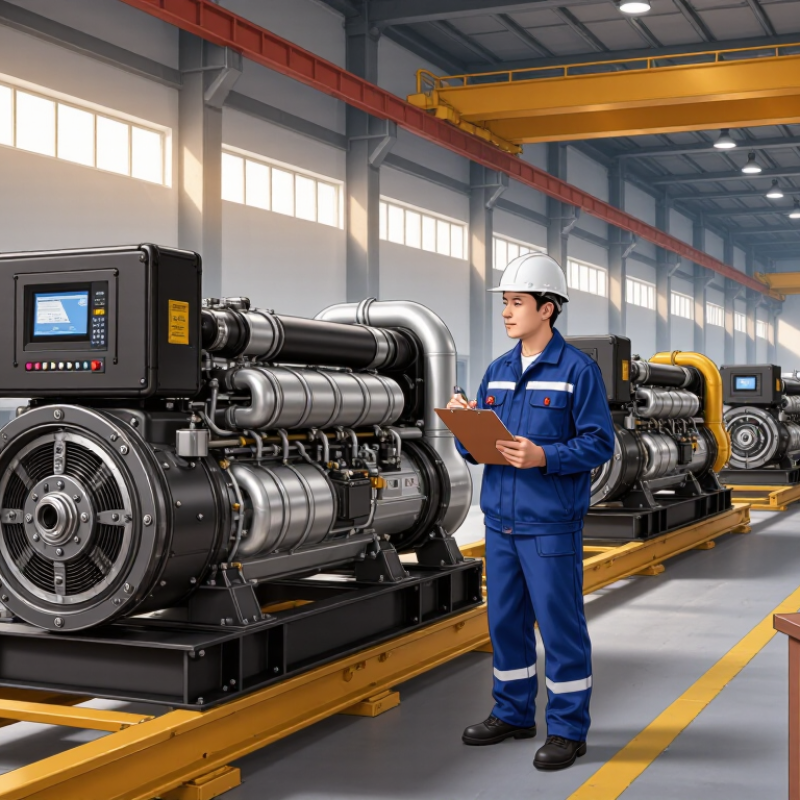
Before contacting a China generator factory, define the job the generator must perform. List the required output, voltage, frequency, phase, and whether it will provide prime or standby power. Estimate starting loads, not only running watts; pumps and compressors can demand a sharp surge. Note site altitude, ambient temperature, dust, humidity, and expected operating hours. A 100 kW label alone says little. Keep these figures in a written specification, and revisit them if your equipment list changes.
Set clear factory criteria before comparing quotations. Ask whether the factory can explain its engine and alternator selection against your load profile, rather than offering a standard package. Request a test procedure and results for the proposed unit, including output checks under load. Confirm that the factory can identify key components and provide operating manuals, spare-parts details, and warranty terms in writing. A polished brochure is not proof of production capability. A video call or site visit can help you see the assembly and testing process.
Check how the team handles technical questions. Are answers specific, consistent, and supported by drawings or test records? Ask who will handle commissioning questions and how replacement parts are identified. These details are easy to overlook. An early load estimate can still be wrong, so leave room to refine the specification before production. The best comparison is not just price; it is how clearly each factory can meet your documented requirements.
| Evaluation area | Requirement or benchmark | What to confirm with the factory | Evidence to request |
|---|---|---|---|
| Power requirement | Calculate expected running load and starting demand, including motors, pumps, compressors, and other equipment with high starting current. Allow for planned load growth without selecting capacity by guesswork. | Ask for the proposed generator rating and the load assumptions used. Confirm that the unit can handle the largest motor start and the expected load steps. | Load schedule, sizing calculation, and technical proposal showing the rated output and operating assumptions. |
| Rated output | Compare prime and standby ratings separately. Under ISO 8528 terminology, standby power is intended for emergency use, while prime power is for variable-load operation with specified operating limits. | Confirm which rating applies to the intended duty, how many operating hours are expected, and whether the quoted kW and kVA values refer to the same rating category. | Rating plate details, datasheet, and written explanation of the applicable power rating and limitations. |
| Electrical configuration | Specify the required voltage, frequency (commonly 50 Hz or 60 Hz depending on the market), phase, connection, and acceptable voltage and frequency regulation. | Check that the alternator, controller, circuit breaker, and wiring configuration match the site supply and connected equipment. | Electrical schematic, alternator datasheet, controller settings, and a documented output test. |
| Operating environment | State the site altitude, ambient temperature range, humidity, installation location, and ventilation conditions. Generator output can be affected by environmental conditions. | Ask whether derating is required for the stated site conditions and confirm enclosure, cooling, and ventilation suitability for indoor or outdoor installation. | Derating information, cooling and ventilation requirements, enclosure specification, and installation guidance. |
| Fuel use and runtime | Assess fuel consumption at the loads you expect to run and calculate required runtime from usable tank capacity. Consumption varies with engine, load, and operating conditions. | Request consumption figures at stated load points and clarify whether the tank capacity is gross or usable. Confirm any required external tank or fuel-system provisions. | Fuel-consumption data with load conditions, tank dimensions or capacity, and fuel-system documentation. |
| Emissions and noise | Identify the emissions rules and noise limits that apply at the installation location; requirements depend on jurisdiction, application, and equipment configuration. | Verify that the offered engine configuration and sound-attenuated enclosure, if required, meet the project’s local requirements. | Applicable emissions documentation, noise test conditions and results, and enclosure specification. |
| Factory capability | Look for a manufacturer able to demonstrate relevant production, assembly, inspection, and testing processes for the proposed generator type and output range. | Ask to review the production and quality-control process, in-house test facilities, traceability practices, and how nonconforming parts are handled. | Factory audit records, process documentation, equipment list, and sample inspection or test records. |
| Quality management | A quality-management certificate such as ISO 9001 can indicate a documented management system, but it does not by itself prove that a particular generator meets its specification. | Check the certificate’s scope, issuing body, validity, and whether the manufacturing site and relevant activities are covered. Independently verify product performance. | Current certificate details and product-specific inspection and test documentation. |
| Performance testing | Agree on factory acceptance checks before production or shipment. Tests should reflect the order specification and may include output, controls, alarms, and protection checks. | Confirm test procedure, acceptance limits, witness or third-party inspection options, and how test failures are corrected and retested. | Signed factory test report identifying the tested unit, test conditions, measured results, and acceptance criteria. |
| Parts and support | Plan for maintenance items, technical support, and replacement parts over the intended service period. Availability and response times depend on the supplier’s support arrangements. | Request a parts list, recommended maintenance schedule, warranty terms, support contacts, and written details of how service requests are handled. | Warranty document, maintenance schedule, spare-parts list, and service-support procedure. |
| Commercial and delivery terms | Compare the complete scope, not just the generator price. Clarify included accessories, packaging, inspection, documentation, delivery terms, and payment milestones. | Ensure the quotation, approved drawings, purchase order, and inspection plan describe the same configuration and responsibilities. | Itemized quotation, confirmed technical specification, delivery schedule, and agreed inspection and acceptance terms. |
Practical tip: Define the site load and operating conditions first, then compare factories against the same written specification. Confirm all ratings, test results, compliance documents, and warranty terms for the exact configuration being purchased.
"*" indicates required fields