"*" indicates required fields
Choosing a reliable Sediment Filter manufacturer requires more than comparing product photos or listed prices. In 2026, buyers must examine filtration performance, material quality, production capacity, and after-sales support. This guide introduces ten notable manufacturers in China that serve residential, commercial, industrial, and water-treatment markets.
The selection considers practical indicators, including factory experience, product certifications, testing procedures, export records, and customization capabilities. Important details may include polypropylene melt-blown layers, pleated filter media, stainless-steel housings, micron ratings, and connection sizes. A dependable supplier should explain how its filters perform in muddy water, construction dust, rust particles, or well-water applications. Factory visits, sample testing, and production audits can reveal more than a polished website.
Evidence matters.
However, manufacturer rankings are never completely permanent. Capacity, certifications, ownership, and service quality can change during the year. Some companies publish limited technical data, making direct comparisons difficult. Buyers should verify current certificates, test reports, production locations, and warranty terms before placing an order. A low price may hide inconsistent media density or weak packaging. A higher price does not automatically guarantee better filtration. This article therefore offers a practical starting point, not an unquestionable verdict. It aims to help distributors, engineers, and procurement teams compare China’s leading Sediment Filter manufacturers with greater confidence and clearer expectations.
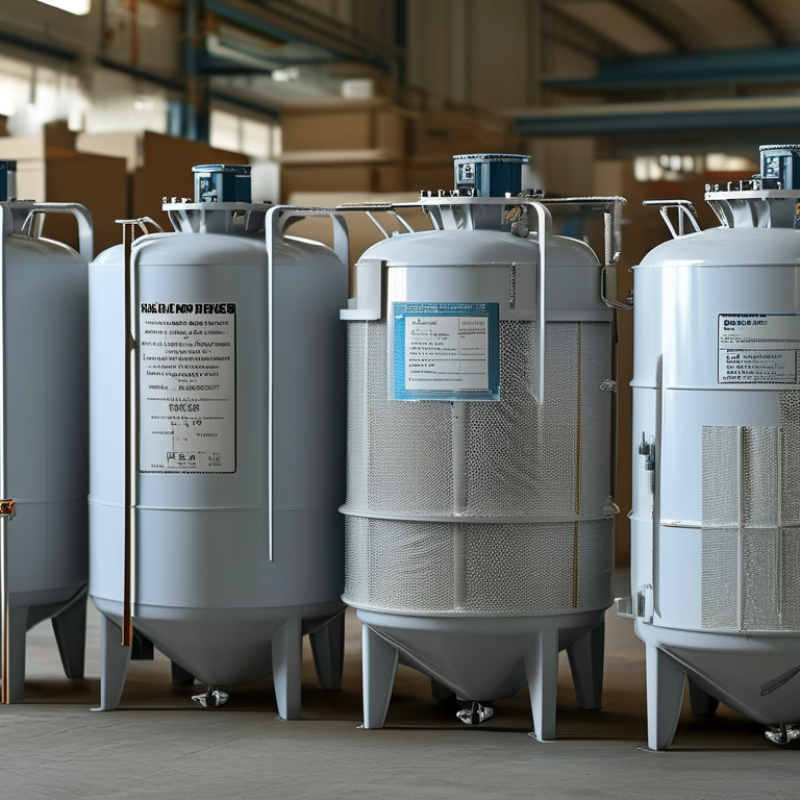
Sediment filters are physical barriers that remove sand, rust, silt, and pipe debris from water. They usually use spun polypropylene, pleated media, or another porous material. Their pore size, measured in microns, affects both protection and flow. Smaller pores capture finer particles, but they may clog faster. Clean water matters.
These filters protect faucets, water heaters, pumps, and later treatment stages. Without them, cloudy water can scratch valves or reduce membrane life. In real installations, particle levels often change after construction, heavy rain, or pipe repairs. A filter that worked last month may need earlier replacement today. That detail is easy to overlook.
Tips: Check the source water before choosing a cartridge. Compare micron ratings, flow rate, pressure limits, and housing size. Watch the pressure gauge. A sudden pressure drop usually signals clogging. Keep records of replacement dates. It sounds simple, but many users forget. When reviewing China’s top sediment filter manufacturers for 2026, buyers should examine material certificates, batch testing, production consistency, and after-sales guidance. Factory photos are not enough. Independent water testing is better. I would also question claims of “permanent” cartridges, because every filter has a practical service limit. Reliable selection requires field evidence, not attractive wording.
Sediment filters are mechanical filters that reduce suspended particles such as sand, silt, rust, and dirt from water. The nominal micron rating indicates the approximate particle size the filter is designed to capture; a lower rating generally provides finer filtration but may increase pressure loss and require more frequent replacement.
Evaluation now goes beyond factory size and catalog variety. Buyers examine removal accuracy, pressure loss, service life, and batch consistency. The WHO/UNICEF Joint Monitoring Programme reported that 2.2 billion people lacked safely managed drinking water in 2022. This gap increases demand for dependable pretreatment equipment.
Qualified manufacturers should provide independent test reports and clear testing methods. Relevant checks include particulate reduction, flow-rate stability, material safety, and housing durability. Compliance with GB 5749-2022, ISO quality systems, and applicable NSF/ANSI requirements can strengthen credibility. Auditors also review raw-material records, mold maintenance, worker training, and complaint handling. A polished sample proves little. Repeated production data matters more. In practice, some suppliers still present laboratory results without showing real operating conditions. That weakness deserves attention.
Tips: Request three recent batch reports, not one certificate. Compare pressure-drop curves at the same flow rate. Ask for media specifications, replacement intervals, and traceability codes. Inspect seals and threaded connections physically. Also check whether testing used clean water or muddy water. The difference can be significant. Market reports often highlight growth, but they rarely reveal factory discipline. A practical audit remains essential, even when the paperwork looks complete.
China’s Top 10 Sediment Filter Manufacturers in 2026
In 2026, China’s leading sediment filter manufacturers compete on filtration accuracy, service life, and production consistency. This review focuses on ten established manufacturers, not simply the largest exporters. I compare melt-blown, pleated, string-wound, and polypropylene cartridge lines. Factory audits, published test data, material traceability, and customer support shape the assessment.
A reliable manufacturer should state micron ratings under defined test conditions. “Five micron” means little without flow rate, pressure, and test dust details. Inspectors should check cartridge weight, core strength, sealing surfaces, and batch records. On a production floor, small details matter. Clean assembly rooms, calibrated gauges, and sealed packaging reduce avoidable failures. I also examine whether suppliers can maintain dimensions across repeat orders. Samples often look excellent. Bulk shipments can reveal uneven density or loose end caps.
The strongest candidates provide application guidance for municipal water, food processing, irrigation, and light industrial systems. They explain pressure-drop behavior instead of promising unlimited service life. Export experience helps, but it does not replace technical evidence. Some manufacturers still publish incomplete test reports, and that weakness deserves attention. Buyers should request current certificates, independent performance data, and a clear replacement schedule before ranking a supplier. Prices matter, yet a cheaper cartridge may create more downtime through faster clogging. Is that saving real? Usually not.
| Rank | Anonymous Profile | Primary Manufacturing Focus | Common Filter Media | Typical Micron Range | Common Cartridge Formats | Typical Housing Compatibility | Application Coverage | Quality and Compliance References |
|---|---|---|---|---|---|---|---|---|
| 1 | Manufacturer Profile A | High-volume residential sediment cartridges | Polypropylene melt-blown | 1–100 μm nominal | 10 in and 20 in; slimline and extended-length formats | Standard 2.5 in diameter housings; selected 4.5 in housings | Point-of-entry and point-of-use water filtration | Material traceability; testing may reference NSF/ANSI 42 requirements |
| 2 | Manufacturer Profile B | Pleated filters for higher dirt-holding capacity | Polyester or polypropylene pleated media | 1–50 μm nominal | 10 in and 20 in; core and end-cap variations | Standard and Big Blue-style housings | Municipal water, well water and light commercial systems | Batch inspection of dimensions, pressure drop and filtration rating |
| 3 | Manufacturer Profile C | Industrial string-wound sediment cartridges | Polypropylene, cotton or blended yarn | 1–100 μm nominal | 10 in, 20 in, 30 in and 40 in | Industrial multi-cartridge vessels and standard housings | Process water, irrigation and pretreatment applications | Pressure, dimensional and media-integrity checks |
| 4 | Manufacturer Profile D | Reusable and washable sediment filtration | Stainless-steel mesh or durable synthetic mesh | 20–200 μm nominal | 10 in and 20 in reusable cartridges | Transparent, stainless-steel and commercial filter housings | Coarse sediment removal, irrigation and prefiltration | Mesh aperture verification; corrosion-resistance testing where applicable |
| 5 | Manufacturer Profile E | Large-diameter cartridges for high-flow systems | Polypropylene melt-blown or pleated media | 1–100 μm nominal | 10 in and 20 in Big Blue-style formats | 4.5 in diameter housings and high-flow vessels | Commercial buildings, farms and light industrial systems | Flow-rate, pressure-drop and end-cap sealing tests |
| 6 | Manufacturer Profile F | Compact filters for under-sink and appliance systems | Polypropylene nonwoven media | 5–50 μm nominal | Inline and short-format cartridges | Compact housings and appliance-specific assemblies | Under-sink filtration, food-service equipment and appliances | Food-contact suitability may be evaluated under applicable regulations |
| 7 | Manufacturer Profile G | High-purity pretreatment cartridges | Low-shedding polypropylene membrane or depth media | 0.5–20 μm nominal | 10 in, 20 in, 30 in and 40 in | Standard housings and stainless-steel process vessels | Reverse-osmosis pretreatment and laboratory water systems | Controlled manufacturing environment; integrity and extractables testing may apply |
| 8 | Manufacturer Profile H | Private-label and customized cartridge production | Polypropylene, polyester and mixed-media constructions | 1–100 μm nominal | Custom lengths, end caps, cores and adapters | Residential, commercial and industrial housings | OEM supply, distributor programs and system integrators | Custom drawings, incoming-material inspection and lot coding |
| 9 | Manufacturer Profile I | Heavy-duty filters for well and surface water | Deep-gradient polypropylene or pleated synthetic media | 5–100 μm nominal | 20 in and 40 in; large-diameter options | Big Blue-style and multi-cartridge housings | Well-water treatment, surface-water prefiltration and irrigation | High-dirt-loading evaluation, pressure testing and connection checks |
| 10 | Manufacturer Profile J | Specialty cartridges for commercial replacement markets | pleated polypropylene, spun polypropylene or mesh | 1–75 μm nominal | Standard 10 in and 20 in replacement sizes | Common domestic and commercial housings | Replacement filtration, food-service water and general utility water | Dimensional interchangeability, leakage and pressure-drop testing |
Note: Company names and brand information are intentionally omitted. The ranking is an anonymized industry comparison rather than an audited market-share ranking. Micron ratings, dimensions, certifications and application suitability vary by model and should be verified against current technical documentation before procurement.
China’s leading sediment filter manufacturers are expanding beyond basic polypropylene cartridges. Their product ranges commonly include melt-blown PP filters, pleated membranes, string-wound cartridges, stainless-steel elements, and automatic backwashing units. These designs target particles from roughly 1 to 100 microns. Product selection should match turbidity, flow rate, temperature, and cleaning frequency. A filter that performs well in a factory may fail in a small well system.
Technology is becoming more measurable. Multi-layer depth filtration improves dirt-holding capacity, while pleated media offers larger surface area in compact housings. Some suppliers now combine differential-pressure sensors, modular housings, and washable screens.
The WHO and UNICEF Joint Monitoring Programme reported that 2.2 billion people lacked safely managed drinking water in 2022. This gap supports demand for reliable pretreatment, but filtration alone cannot remove every contaminant. That distinction is often overlooked.
The top-ten evaluation should examine testing records, media consistency, pressure-drop curves, and after-sales support. Municipal water plants need high-flow automatic systems. Food and beverage facilities require hygienic materials and stable batch performance. Electronics manufacturing demands low-particle water, while aquaculture operations prioritize continuous flow and easy maintenance.
UN-Water reported that agriculture represented about 72% of global freshwater withdrawals in 2022, increasing interest in reusable process water. Claims still need verification. Some catalog data look impressive, yet field performance can vary sharply with local water quality.
Choosing a reliable Chinese sediment filter manufacturer requires more than comparing catalog prices. The WHO and UNICEF Joint Monitoring Programme reported that 2.2 billion people lacked safely managed drinking water in 2022. This highlights why consistent filtration performance matters. Request test records for micron rating, flow rate, pressure drop, and turbidity reduction. A serious supplier should explain these figures clearly, not hide behind vague claims.
Check the factory’s quality system, production traceability, and incoming-material controls. ISO 9001 certification is useful, but it does not replace product testing. Ask for reports from accredited laboratories and confirm whether testing follows relevant standards, such as NSF/ANSI 42 for particulate reduction. Review samples from several production batches. One excellent sample proves little. In my experience, factories that record lot numbers and inspect melt-blown density usually provide better control. Still, no checklist is flawless.
Tips: Ask for a video audit or independent factory inspection. Confirm the actual manufacturing address, equipment capacity, and lead time. Request a written specification covering media material, dimensions, temperature limits, packaging, and replacement intervals. Compare pressure-drop data at the same flow rate. Also check how the manufacturer handles complaints and failed batches. The 2024 ISO Survey recorded millions of ISO 9001 certificates worldwide, so certification alone cannot prove reliability. A cautious buyer should combine documents, physical samples, audit evidence, and small pilot orders before signing a large contract.
"*" indicates required fields