What is Carbon Steel Lost Wax Casting and Its Benefits?
Carbon Steel Lost Wax Cast is an innovative method in the metalworking industry. It combines the versatility of carbon steel with the precision of lost wax casting. According to expert John Adams, a recognized leader in casting technologies, “Carbon Steel Lost Wax Cast offers a unique balance of strength and detail.” This process allows for intricate designs that traditional casting methods may struggle to achieve.
The benefits of Carbon Steel Lost Wax Cast are numerous. This technique produces components with exceptional surface finishes. It can capture fine details, making it ideal for complex designs. Furthermore, carbon steel's resilience adds durability to the final product. Despite its advantages, the process requires a great deal of expertise. Missteps during casting can lead to flaws. Proper training and skill are essential to maximize the benefits.
In the competitive world of manufacturing, leveraging Carbon Steel Lost Wax Cast can lead to significant advantages. Quality and precision are critical. Businesses must be cautious and learn from past experiences. Each casting offers a lesson in improvement. Acknowledging these challenges only helps refine the process and achieve better outcomes.
Understanding Carbon Steel Lost Wax Casting Process
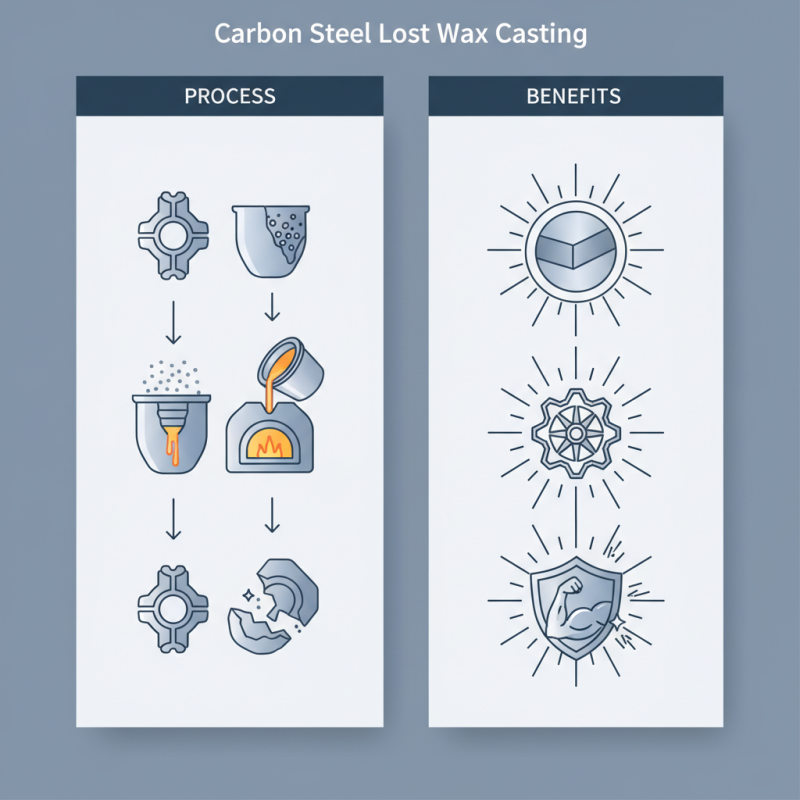
Carbon steel lost wax casting is a meticulous process widely adopted in various industries. It begins with creating a wax model of the desired part, which is coated in a ceramic shell. Once the shell hardens, the wax is melted away. This leaves behind a cavity that can be filled with molten carbon steel. The intricate details are preserved in the final cast, achieving high precision and complex geometries. According to industry reports, this method can minimize material waste and enhance production efficiency by over 30%.
The benefits of carbon steel lost wax casting are evident in its application across automotive and aerospace sectors. Not only does it allow for lighter components, but it also ensures superior strength and durability. Industry analyses show that the tolerances achievable through this casting method can be as tight as 0.01 inches. However, it requires skilled personnel and high initial setup costs. Many companies find themselves grappling with these challenges. The process invites questions about balancing expenses with production needs, particularly for startups. Such considerations highlight the ongoing need for innovation in casting techniques, proving this method is at once efficient and demanding.
Carbon Steel Lost Wax Casting Benefits
Key Characteristics of Carbon Steel in Casting Applications
Carbon steel is increasingly recognized for its versatility and strength in lost wax casting applications. This method allows intricate designs with smooth surfaces. According to a report from the American Foundry Society, carbon steel accounts for about 70% of the total casting production in North America. Cast parts exhibit excellent mechanical properties, making carbon steel suitable for a range of industries.
The key characteristics of carbon steel in casting applications include its malleability and durability. Its composition typically includes varying amounts of carbon and iron, which influence hardness and tensile strength. A recent study indicated that carbon steel parts can have tensile strengths of up to 580 MPa, making them ideal for structural components. One limitation is that higher carbon content can lead to brittleness, which necessitates careful balancing in design.
Moreover, the lost wax casting process ensures high precision but can be more costly compared to other methods. Despite this disadvantage, it remains popular due to the lower finishing requirements and the ability to create complex shapes. Balancing cost with quality in carbon steel casting is an ongoing challenge in the industry. The precise control of the casting environment is crucial to achieving the desired properties and minimizing defects.
What is Carbon Steel Lost Wax Casting and Its Benefits? - Key Characteristics of Carbon Steel in Casting Applications
| Characteristic | Description | Benefit |
| High Strength | Carbon steel exhibits superior strength due to higher carbon content. | Increased ability to withstand high loads and resist deformation. |
| Versatility | Can be used for a wide range of applications including automotive and manufacturing. | Adaptable to various industries, reducing the need for multiple materials. |
| Cost-Effectiveness | Lower material costs compared to alloy steels. | Reduced production costs while maintaining quality. |
| Machinability | Easily machined to precise dimensions after casting. | Enables quick production of complex shapes with tight tolerances. |
| Heat Treatment | Can be heat treated to enhance strength and hardness. | Improves performance in demanding applications. |
Advantages of Using Lost Wax Casting for Carbon Steel Products
Lost wax casting offers distinct advantages for carbon steel products. This ancient process provides high precision in metal casting, capturing intricate designs and details. The mold is created using a wax model, which melts away during casting. This allows for customization and complex shapes that other methods may struggle with. Such precision is vital in industries requiring exact specifications.
Using lost wax casting for carbon steel also improves surface finishes. The casting process often results in fewer imperfections. This leads to less post-processing work, saving time and costs. The ability to achieve thinner walls is another benefit, allowing for lighter yet strong components. However, the technique can be labor-intensive. It requires skilled craftsmen to manage the nuances of temperature and material.
The resilience of carbon steel is another reason companies favor this method. It is strong, durable, and resistant to wear. Combining this with lost wax casting creates components that withstand demanding conditions. On the flip side, the initial setup can be pricier compared to other methods. Companies must weigh immediate costs against long-term benefits.
Applications of Carbon Steel Lost Wax Castings in Various Industries
Carbon steel lost wax casting is increasingly used across various industries due to its unique benefits. This method offers high precision and excellent surface finish. It allows for intricate designs that are difficult to achieve through other manufacturing processes. In aerospace, it enables the creation of lightweight components that withstand extreme conditions. In the automotive sector, it provides durable parts that meet safety standards and performance demands.
Medical devices also benefit from this casting technique. Surgical instruments and implants made through lost wax casting ensure fine detail and strength. The process allows for customization based on specific patient needs. However, cost might be a concern, especially for small-scale production. Balancing quality and budget can be challenging in this field.
Further, the energy sector uses carbon steel castings in valve components and turbine parts. These components require both resilience and efficiency. The casting process can improve material properties, which is vital for performance. Yet, environmental considerations come into play. The industry must continually seek sustainable practices without compromising the quality of castings.
Comparative Analysis of Lost Wax Casting vs. Other Casting Methods
Lost wax casting, also known as investment casting, is a technique often compared with sand casting and die casting. Each method has its own merits and drawbacks. Sand casting is economical for large parts but lacks the precision of lost wax casting. It creates rough finishes and may require extensive machining.
Die casting, on the other hand, excels in producing high volumes of intricate designs swiftly, yet it is limited by metal choices and thickness.
Carbon steel lost wax casting stands out due to its ability to create complex shapes with excellent surface finishes. This method offers superior detail and dimensional accuracy. While lost wax casting can be more time-consuming and costly, the benefits often justify the investment. Components made with this technique are often lighter and stronger than those produced with other methods. However, the setup for lost wax casting requires expertise, and not all foundries have the necessary capabilities.
Each casting method has its challenges. Sand casting can lead to defects like sand inclusion, while die casting may produce internal voids. Selecting the right method depends on project requirements. Engineers must weigh costs against desired precision. The industry often benefits from a combined approach, using various methods for different parts within the same project. Understanding these nuances helps in making informed decisions.
