"*" indicates required fields
An AWWA C504 Butterfly Valve is used in waterworks systems where reliable flow control and shutoff are essential. Selecting a Chinese manufacturer involves more than comparing prices or browsing polished product photos. Buyers should review pressure ratings, valve dimensions, body and disc materials, seat designs, coatings, and operating torque. Ask for current test reports, inspection records, drawings, and references for comparable projects. Small details matter. A coating specification, for example, can affect long-term performance in a particular water environment.
This guide introduces leading AWWA C504 Butterfly Valve manufacturers in China and the factors that can help buyers assess them. It considers product range, manufacturing capabilities, quality-control practices, customization, and communication. A supplier’s claims deserve verification; a catalog alone cannot establish how a valve performs in service. Confirm which edition of the standard applies, and check that the proposed valve meets the project’s own specifications. Request clear documentation before placing an order, especially for large or specialized installations. No checklist is perfect, and a promising factory visit may not reveal every production issue. That is worth remembering. Careful comparison, direct questions, and independent review can make a shortlist more useful—and help avoid decisions based on marketing language alone.
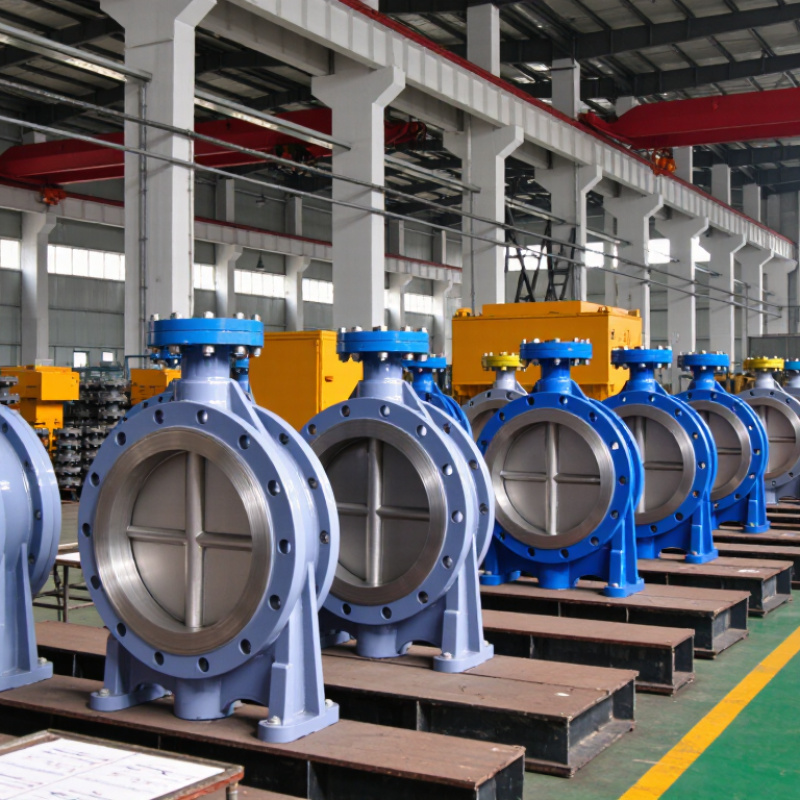
An AWWA C504 butterfly valve is a quarter-turn valve designed for waterworks service and manufactured to the requirements of AWWA C504. A circular disc sits inside the pipe and rotates on a shaft. When the disc turns parallel to the flow, water passes around it. Turned across the passage, it presses against a resilient seat to shut off flow. The body, disc, shaft, seat, and operating gear all affect sealing and service life. The valve can isolate flow or regulate it, but extended throttling may increase wear or vibration.
Its compact shape can make installation practical where space is limited. Suitability still depends on the pipeline’s size, pressure, water conditions, and operating frequency. Check the valve’s pressure class, end connections, actuator, and required installation orientation against the project specifications. AWWA C504 compliance is useful, but it does not by itself confirm that a valve fits every application. Field conditions can be less tidy than drawings suggest.
Tips: Before installation, inspect the seat and disc for damage. Confirm the disc clears the pipe and nearby fittings through its full rotation. Even a small alignment issue can affect operation.
AWWA C504 butterfly valves are designed for waterworks service, where reliable shutoff and manageable operating torque matter. Engineers select valve size and pressure class using flow demand, system pressure, and expected pressure surges. The body must fit the pipeline, while the disc and shaft must withstand hydraulic forces without obstructing flow more than necessary. A resilient seat provides the sealing surface. Material selection also considers corrosion exposure and water quality. Details matter.
Testing checks whether the finished valve performs as specified, not merely whether it opens and closes. Manufacturers verify dimensions, inspect materials and coatings, and conduct pressure and seat-leakage tests under the applicable edition of AWWA C504. Operating checks can reveal excessive torque, uneven disc movement, or a seat that fails to seal consistently. Test records should identify the valve configuration and measured results; buyers should confirm the standard edition and acceptance criteria before ordering. No factory test can fully reproduce an aging pipeline or poor installation. That limitation deserves attention. The American Society of Civil Engineers’ 2021 Report Card for America’s Infrastructure estimates that about 6 billion gallons of treated water are lost daily through leaky pipes, underscoring why dependable valve performance and maintenance matter.
Chinese manufacturers offering AWWA C504 butterfly valves are typically waterworks valve factories, industrial valve makers with municipal product lines, and export-oriented producers that build to project specifications. Look for a factory whose current catalog explicitly identifies AWWA C504, rather than one that merely describes a valve as “AWWA type.” That distinction matters. A catalog line is not proof of compliance.
Ask for the applicable size range, pressure class, body and disc materials, seat construction, and test documentation. Request a drawing showing face-to-face dimensions and connection details; these can affect installation in an existing pipeline. For a large-diameter valve, ask how the manufacturer checks seat sealing and operates the valve under specified conditions. A sample inspection report helps. So does a clear answer about traceability from material records to the finished unit.
Some Chinese factories manufacture valves directly, while trading companies may coordinate production through partner plants. Confirm who controls design changes, testing, and final inspection. One gap can be hard to spot: a quotation may mention C504 while leaving the exact edition or testing scope unclear. Ask the supplier to state these details in writing, then compare them with the project specification before ordering.
Comparing leading AWWA C504 butterfly valve manufacturers in China requires more than checking a catalog. A useful assessment examines design documentation, material traceability, machining control, and test records. Ask whether the supplier can provide drawings, inspection plans, and pressure-test reports for the specific valve size and configuration. Clear, consistent records make technical claims easier to verify.
Quality also depends on details that may be easy to overlook. Check the disc and body materials, shaft sealing arrangement, coating process, and stated operating conditions. For example, coating thickness and surface preparation can affect performance in water service. Request evidence of dimensional inspection and testing, not just a general statement of compliance. That matters.
Manufacturing capability is another point of comparison. Review the supplier’s size range, production capacity, lead-time assumptions, and ability to handle nonstandard requirements. A factory tour or live video review can reveal how parts are stored and whether inspection equipment is actually used. Still, a polished facility does not prove every batch is consistent. Ask how nonconforming parts are recorded and corrected. No single checklist is perfect; buyers should compare the evidence against their project’s pressure, installation, and maintenance needs.
| Comparison Dimension | Relevant Requirement or Reference | Evidence to Request from Each Manufacturer | How to Compare Suppliers |
|---|---|---|---|
| Product-standard conformity | AWWA C504 covers rubber-seated butterfly valves for waterworks service. | Current product datasheets, applicable standard edition, size and pressure-class coverage, and a clause-by-clause compliance statement. | Compare the documented product range and confirm that the offered valve configuration—not just the product family—meets the specified standard. |
| Design and pressure rating | Valve selection depends on the specified size, pressure class, operating conditions, and installation arrangement. | Rated-pressure documentation, design drawings, material specifications, and written confirmation of suitability for the project’s operating conditions. | Check that the proposed rating and configuration match the project specification; do not infer capability from maximum size alone. |
| Factory testing | Testing and acceptance should be evaluated against the applicable AWWA C504 requirements and purchase specification. | Sample test reports, test procedures, inspection records, instrument calibration records, and traceability to valve serial or production lot. | Prefer reports that identify the tested unit, acceptance criteria, test date, and responsible inspector. Confirm any project-specific tests separately. |
| Materials and traceability | Material suitability must be assessed against the valve specification, service conditions, and applicable standard requirements. | Bill of materials, material certificates, supplier records, heat or batch identification, and a documented method for maintaining traceability. | Compare the completeness of material records and verify that certificates can be linked to the delivered valve. |
| Drinking-water contact suitability | NSF/ANSI/CAN 61 addresses health effects of drinking-water system components in contact with drinking water. | Current, scope-matched certification or evaluation records for applicable wetted materials and coatings, where required by the project or jurisdiction. | Check the exact product, material, facility, and certification scope; a general company statement is not a substitute for applicable evidence. |
| Protective coatings | AWWA C550 is a reference for protective interior coatings for valves and hydrants. | Coating system specification, surface-preparation procedure, application and curing records, thickness inspection results, and repair procedures. | Compare the documented coating system and inspection controls with the project requirements and intended water service. |
| Quality management | ISO 9001 certification can indicate a quality-management system; it does not by itself certify a valve’s compliance with AWWA C504. | Current certificate, issuing body, covered manufacturing site, certification scope, and relevant production quality procedures. | Verify the certificate independently and distinguish management-system certification from product-standard conformity. |
| Actuation and operating capability | Actuator selection depends on valve size, operating torque, differential pressure, control method, and installation requirements. | Torque calculations, actuator sizing documents, interface details, operating limits, and testing records for the supplied assembly. | Compare the engineering basis for the complete valve-and-actuator assembly, rather than comparing actuator availability alone. |
| Manufacturing capacity and delivery | Capacity and lead time are supplier-specific and should be confirmed for the actual order scope. | Production schedule, current workload statement, capacity plan, critical-component sourcing plan, and a written delivery commitment. | Use order-specific evidence. Published capacity figures or general lead-time claims should not be treated as guaranteed delivery dates. |
| Inspection, documentation, and after-sales support | Inspection and handover requirements are normally defined by the purchase specification and project quality plan. | Inspection and test plan, document index, nonconformance process, warranty terms, spare-parts list, and service-response arrangements. | Compare document completeness, clarity of responsibilities, and the supplier’s ability to support commissioning and future maintenance. |
| Supplier-specific comparison status | Manufacturer performance data cannot be verified without identified suppliers and current, product-specific evidence. | Request the same evidence package from every shortlisted manufacturer and verify certificates, reports, and references independently. | No company names, brands, rankings, or unverified manufacturer-specific performance claims are included in this table. |
Choosing an AWWA C504 butterfly valve manufacturer takes more than comparing prices. Ask which edition and pressure class the offer follows, and confirm the valve size, end connections, and installation dimensions. Request technical drawings before ordering. A bolt-circle mismatch can delay a project, even when the valve itself meets the stated specification.
Check how the manufacturer verifies materials, assembly, and pressure testing. Ask for material traceability, inspection records, and test reports linked to the quoted product. Confirm the proposed seat, disc, shaft, and coating suit the water and operating conditions. If the valve will serve potable water, verify applicable material requirements for that use. A polished catalog is not proof. Ask for evidence.
Also review production capacity, delivery estimates, spare-parts availability, and technical support after installation. A clear response to a detailed question can reveal more than a broad quality claim. Request a list of any deviations from your specification, including changes to materials or testing. Then compare offers on equal terms.
One detail is easy to miss: who handles troubleshooting when the valve is already in the line? I would ask that before purchase, even if the answer feels obvious.
"*" indicates required fields