7 Best Tennis Stringing Machines to Buy in 2026
Tennis is growing, and reliable racquet service matters more when courts stay busy. The USTA’s 2024 tennis participation reporting counted about 23.8 million U.S. players in 2023, while the Sports & Fitness Industry Association’s 2024 Topline Participation Report also tracked tennis among major sports. These figures describe participation, not stringing-machine sales. Still, they help explain why club shops, coaches, and home stringers may want dependable equipment.
A Tennis Stringing Machine can shape workflow, consistency, and the feel of a finished racquet. For this 2026 guide, the useful questions are practical: How quickly can you mount a frame? Are the tension system and clamps easy to adjust? Does the machine suit occasional restringing or a busy pro shop? A crooked clamp or awkward turntable can matter during a long day. Small details count.
We compare seven options across manual, drop-weight, and electronic designs, with attention to setup, portability, tension control, and likely user needs. No single model is right for everyone. Budget, experience, and stringing volume change the answer. Published participation reports cannot prove which machine will last longest, so product specifications and hands-on testing deserve careful review. That distinction is easy to miss. Our picks are a starting point, not a substitute for checking current features, warranty terms, and parts availability before buying.
How Tennis Stringing Machines Work
A tennis stringing machine applies a chosen pulling force while holding the frame steady. The racquet sits on mounting supports, and clamps secure each finished string. The operator threads the main strings through the frame, then weaves the cross strings over and under them. Small details matter. A loose clamp or poorly seated support can affect consistency. The ITF’s 2024 Global Tennis Report estimates that 106 million people play tennis worldwide, highlighting the scale of racquet servicing. That figure describes participation, not demand for custom stringing.
Most machines use either a constant-pull or lockout tension system. Constant-pull systems keep drawing string until the selected force is reached, while lockout systems stop pulling at that point. Neither removes the need for sound technique. The string’s material, thickness, pattern, and friction all influence the finished bed. A digital display can look precise, yet calibration still needs checking with a tension meter.
Worth remembering. In practice, I would also inspect the frame supports and clamps before starting; I sometimes overlook how much setup affects the result. Operators should follow the racquet maker’s recommended limits and record settings, so later adjustments are based on evidence rather than memory.
Main Types of Tennis Stringing Machines
Tennis stringing machines generally fall into three main types: drop-weight, crank, and electronic constant-pull. Each applies tension differently, so the right fit depends on workload, budget, and the consistency you need. A drop-weight machine uses gravity: lower the weighted arm until it sits level. It is mechanically simple and can be accurate when calibrated, but stringing takes patience. A crowded workbench or uneven floor can make setup awkward.
A crank machine pulls string to a set tension, then locks in place. It is quicker than most drop-weight models, though tension can ease as the string stretches after lockout. Electronic constant-pull machines keep pulling to maintain the selected tension during that stretch. They suit frequent stringing, but cost more and need careful calibration. A screen reading is not proof of accuracy. Check clamps, mounting supports, and calibration too. Small details matter. Poorly secured clamps can slip, while uneven frame support may put stress on the racquet. I would weigh speed against repairability; the fanciest controls are not always the most useful.
Key Features to Compare Before Buying
Compare the tensioning system before judging a machine by its feature list. A drop-weight model is simple and usually portable, but each pull needs careful leveling. Crank machines work faster; check whether the lockout mechanism holds tension consistently. Electronic models can reduce repetitive effort, though calibration still matters. Convenience is not accuracy.
Look closely at the mounting system. Six-point supports can hold a frame securely, while poorly adjusted supports may add pressure in the wrong places. Fixed clamps are often quicker to position than floating clamps, but test for slippage and smooth movement. A clamp that marks a string or needs constant tightening becomes frustrating during a full restring. Check the turntable, too: it should rotate without wobbling and leave enough room for your hands. Small details matter.
Consider the workspace. A heavy stand is stable, but awkward to move through a narrow room. A tabletop machine saves floor space, though the bench must not flex under pressure. Ask how the machine is calibrated and whether replacement parts and service guidance are available. I would not assume a higher price guarantees easier stringing. Try several pulls, if possible, and notice whether the controls feel clear when your hands are busy. That test can change your mind.
Seven Leading Tennis Stringing Machines to Consider in 2026
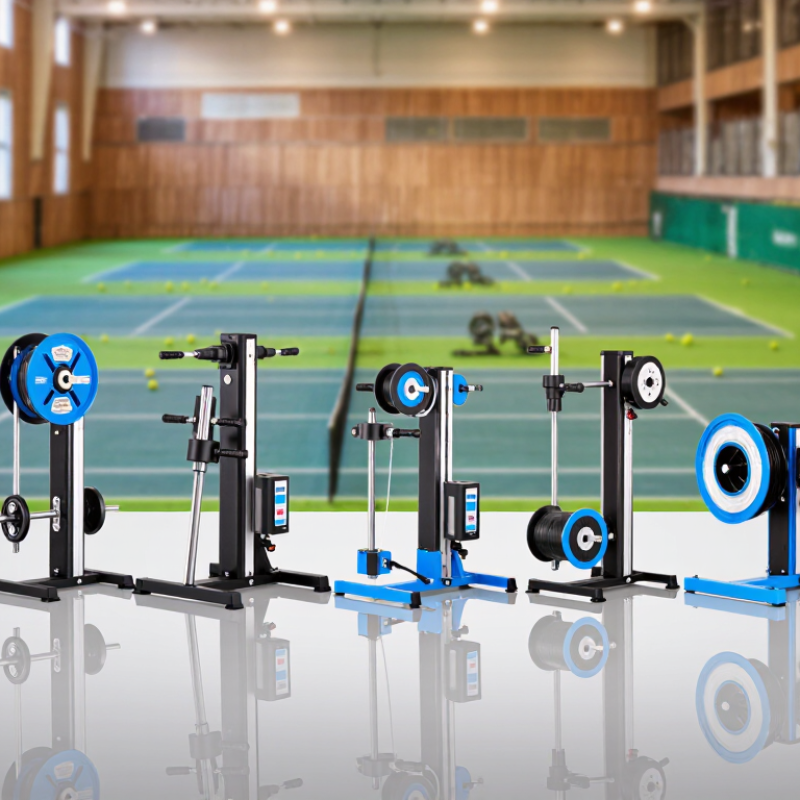
Seven leading tennis stringing machines in 2026 should suit different players, budgets, and workloads. A tabletop drop-weight model offers simple tension control for occasional home restringing. A floor-standing drop-weight version adds stability and a more comfortable working height. Crank lockout machines are quicker, though tension can vary as the string stretches. Entry-level electronic machines pull more consistently with less manual effort. Advanced electronic units add programmable settings and faster workflows. Portable manual machines prioritize compact storage. High-volume electronic machines are built for frequent restringing.
Look beyond the tension range. Check whether the mounting system holds the frame securely, and whether the clamps release cleanly without marking strings. During a test, watch for slipping on a smooth synthetic string and awkward access near the throat. A quiet motor is pleasant; dependable calibration matters more. I would not choose by screen size alone. It is easy to overlook the cost of replacement clamps or calibration checks.
Tips: Match the machine to your weekly restringing load. Ask whether a service technician can verify tension accuracy. If possible, string one frame before buying; a small ergonomic flaw becomes obvious after several hours.
How to Choose the Right Machine for Your Needs
Choose a stringing machine around your workload, workspace, and tolerance for hands-on adjustments. A home player stringing a few racquets monthly may value simple setup over speed. That matters. The ITF’s Global Tennis Report 2024 estimates that 106 million people played tennis across 199 countries in 2023. This shows the sport’s broad reach, not demand for stringing machines; the report does not compare machine performance.
Drop-weight machines offer straightforward tensioning, but require patience and careful leveling. Crank models can speed up occasional jobs, though their lockout mechanism behaves differently from constant-pull tension heads. Electronic constant-pull machines suit frequent stringing and busy clubs, but cost more and need proper calibration. More features, more upkeep.
Check the mounting system, clamp stability, available replacement parts, and whether the tension head can be calibrated. Ask to string a racquet before buying, if possible. Watch for clamps slipping as you pull tension. A consistent setup matters more than a long feature list. One caveat: even a good machine cannot fix rushed technique, and I would not treat a display reading as proof of accuracy without checking calibration.
