"*" indicates required fields

Choosing among the 7 Best CVBS Camera Modules for Global Buyers requires more than comparing resolution. A reliable module must deliver stable video through long cables, changing temperatures, and imperfect power supplies. The small connector matters. So does the image after sunset.
Fortune Business Insights reported that the global CCTV camera market reached approximately USD 21 billion in 2023, with continued expansion expected through 2032. Its analysis also shows that installed surveillance systems still support different camera technologies, especially where replacement costs remain sensitive. Meanwhile, MarketsandMarkets identifies automotive camera systems as a multibillion-dollar market, reflecting ongoing demand for compact, dependable imaging hardware. These reports do not measure every Cvbs Camera Module directly. That gap deserves attention.
Charles Poynton, a recognized digital-video engineer and author of Digital Video and HDTV, has repeatedly emphasized that video quality depends on the complete signal chain, not the sensor alone. In practical terms, buyers should examine the lens, image processor, cable output, connector quality, and PAL or NTSC compatibility together. A sharp specification sheet can hide weak night performance. It happens.
This guide compares seven modules for international sourcing, prototype development, vehicle monitoring, and legacy equipment upgrades. The evaluation considers image stability, low-light detail, operating temperature, mounting flexibility, documentation, and supplier consistency. No module wins every application. That is the uncomfortable part. A low-cost unit may perform well indoors but fail beside a hot engine bay or a noisy power line. Careful selection remains more valuable than impressive wording.
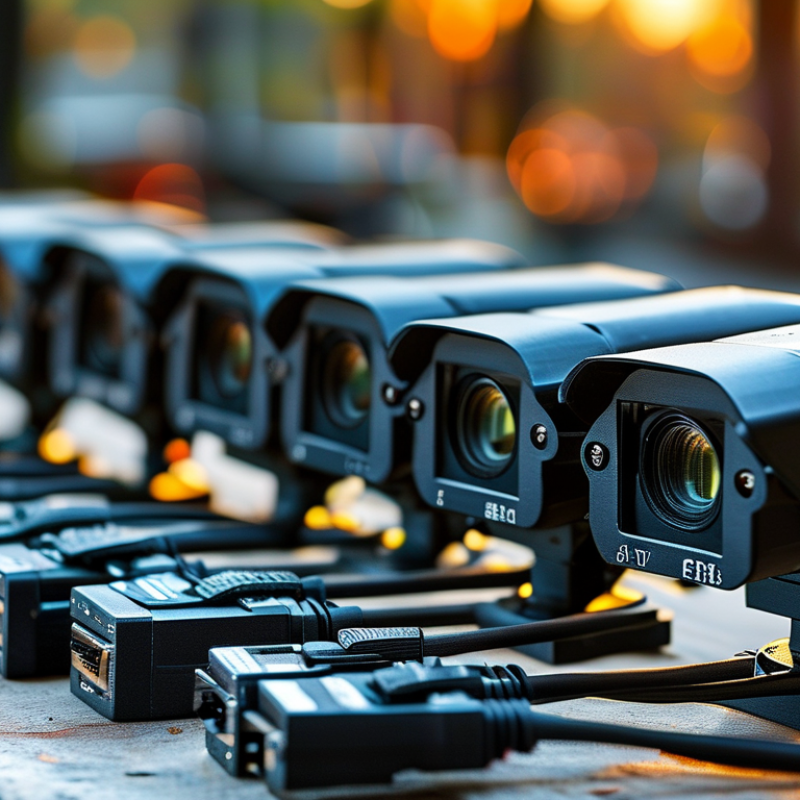
A CVBS camera module converts a scene into an analog composite video signal. CVBS means Composite Video Blanking and Sync. The module usually contains an image sensor, lens, signal processor, and analog video encoder. Light reaches the sensor, where each pixel becomes an electrical value. The processor adjusts exposure, color, and noise. The encoder then combines video, synchronization, and blanking information into one output signal.
Most modules deliver NTSC at 720 × 480 pixels or PAL at 720 × 576 pixels. A coaxial cable carries this signal to a monitor, DVR, or converter. Power normally travels through separate wires. In practical bench testing, poor grounding often creates rolling lines or visible noise. Cable length matters too, even when the camera appears functional at short distances.
According to MarketsandMarkets’ 2024 video surveillance assessment, the wider surveillance market was valued near USD 53.7 billion in 2024 and may reach about USD 83.3 billion by 2029. That growth does not make CVBS the newest option. It shows why compatible, low-cost modules remain useful in replacement projects. Their analog output can simplify integration with older recorders and vehicle displays. However, image detail is limited, and digital systems usually perform better in demanding scenes. Calling CVBS obsolete is too simple. Its practical value depends on the existing system, cable condition, and required image resolution.
A CVBS camera module is an analog video imaging unit that converts optical images into a composite video signal for transmission to compatible monitors, DVRs, vehicle displays, or video processors.
| Module Type | Typical Application | Video Standard | Image Resolution | Lens and Field of View | Low-Light Performance | Typical Input Voltage | Key Strength |
|---|---|---|---|---|---|---|---|
| Compact Board Camera | Indoor monitoring, access-control equipment, and embedded devices | PAL or NTSC CVBS | 720 × 576 pixels PAL or 720 × 480 pixels NTSC; approximately 600–700 TVL | Fixed 2.8–3.6 mm lens; approximately 75°–95° diagonal view | Basic color operation at approximately 0.1–0.5 lux, depending on sensor and lens | 5 V DC or 12 V DC | Small PCB format and straightforward integration |
| Wide-Angle Mini Camera | Retail spaces, room overview, kiosks, and compact security systems | PAL or NTSC CVBS | 720 × 576 pixels PAL or 720 × 480 pixels NTSC; approximately 700 TVL | 2.1–2.8 mm lens; approximately 100°–130° diagonal view | Approximately 0.05–0.2 lux in color mode; infrared support may be available | 5 V DC or 12 V DC | Covers a broad area where installation space is limited |
| Infrared Night-Vision Module | Indoor and outdoor surveillance in darkness or poorly lit areas | PAL or NTSC CVBS | 720 × 576 pixels PAL or 720 × 480 pixels NTSC; approximately 600–700 TVL | 3.6–6 mm lens; approximately 55°–90° diagonal view | Near-zero lux with 850 nm or 940 nm infrared illumination; monochrome at night | 12 V DC, with separate or integrated IR LED power requirements | Day/night switching and infrared sensitivity for dark scenes |
| Starlight Low-Light Module | Outdoor monitoring, parking areas, entrances, and dim industrial locations | PAL or NTSC CVBS | 720 × 576 pixels PAL or 720 × 480 pixels NTSC; approximately 700–800 TVL | 2.8–3.6 mm lens; approximately 75°–100° diagonal view | Approximately 0.001–0.01 lux in monochrome or enhanced low-light mode | 12 V DC | Improved image visibility without relying entirely on infrared LEDs |
| Automotive Rear-View Module | Reversing cameras, vehicle displays, mobile equipment, and fleet systems | CVBS; PAL or NTSC according to display compatibility | 720 × 576 pixels PAL or 720 × 480 pixels NTSC; approximately 600–700 TVL | 2.1–2.8 mm wide-angle lens; approximately 120°–170° diagonal view | Approximately 0.1–0.5 lux; some versions include infrared assistance | 9–16 V DC, suitable for nominal 12 V vehicle systems | Wide coverage, compact housing, and compatibility with vehicle video inputs |
| Water-Resistant Outdoor Module | Outdoor security, agricultural equipment, gates, and industrial installations | PAL or NTSC CVBS | 720 × 576 pixels PAL or 720 × 480 pixels NTSC; approximately 600–700 TVL | 3.6–8 mm lens; approximately 35°–90° diagonal view | Approximately 0.05–0.5 lux; infrared options are commonly available | 12 V DC | Sealed construction, often rated IP65 or higher when fully assembled |
| High-Dynamic-Range Module | Vehicle entrances, loading bays, bright windows, and scenes with strong backlighting | PAL or NTSC CVBS | 720 × 576 pixels PAL or 720 × 480 pixels NTSC; approximately 700–800 TVL | 2.8–6 mm lens; approximately 55°–110° diagonal view | Approximately 0.01–0.1 lux, with digital or sensor-based wide-dynamic-range processing | 12 V DC | Maintains more usable detail in both bright and dark areas of the image |
Specifications are typical industry ranges for generic CVBS modules. Actual performance may vary according to the sensor, lens, signal-processing circuit, housing, illumination, and regional video standard.
"*" indicates required fields