2026 Best Pick Place Machine for Global Buyers?

Choosing the right Pick Place Machine in 2026 requires more than comparing speed figures. Global buyers must examine placement accuracy, feeder stability, software compatibility, energy use, and local service support. A machine running at 60,000 components per hour may appear attractive. However, unstable feeders can create costly stoppages beside the production line.

Michael Ford, a recognized electronics manufacturing technology specialist, has said, “The best machine is the one that supports the entire process, not just placement speed.” This practical view matters for factories producing automotive boards, medical electronics, consumer devices, and industrial controls. A reliable Pick Place Machine should handle small 0201 components, fine-pitch packages, mixed board sizes, and frequent product changes without excessive adjustment.

Real evaluations should include sample boards, feeder changeover tests, nozzle availability, and software demonstrations. Buyers should also ask about operator training, spare parts, calibration, warranty response, and regional technical teams. Total ownership cost often matters more than the initial quotation.

A perfect machine does not exist.

Some manufacturers may overstate capacity under ideal conditions. Dust, humidity, board warpage, and inconsistent component packaging can change results quickly. That is why factory trials remain essential, even when brochures look convincing. This guide compares leading 2026 options through measurable performance, practical usability, supplier credibility, and long-term value. The final choice should fit the buyer’s real production floor, not an impressive demonstration alone.
2026 Best Pick Place Machine for Global Buyers?

What Is a Pick-and-Place Machine?

2026 Best Pick and Place Machine for Global Buyers?

What Is a Pick-and-Place Machine?

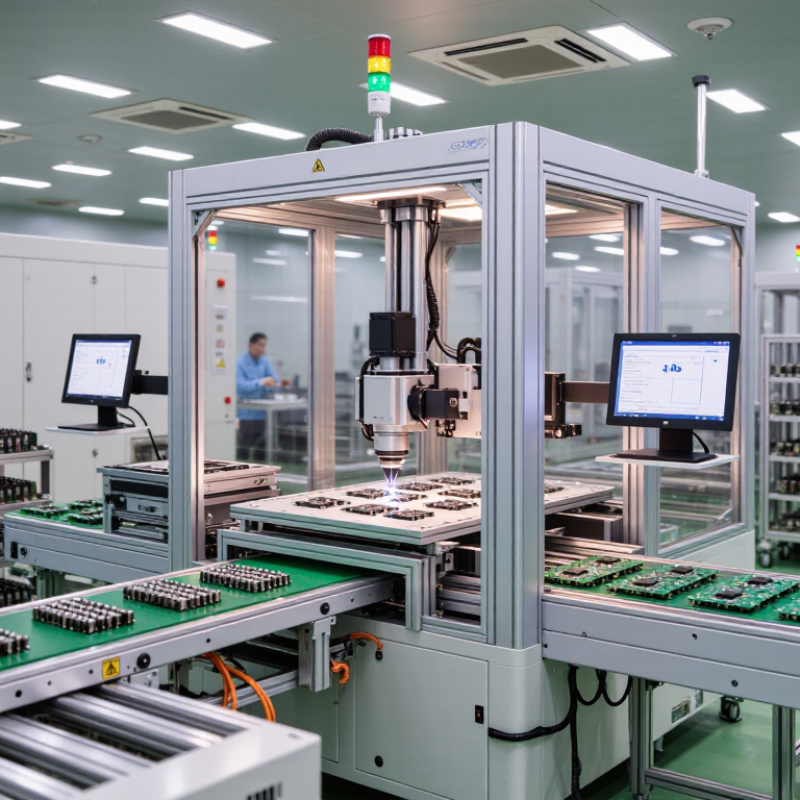
A pick-and-place machine is an automated system that positions electronic components onto a printed circuit board. It uses feeders, moving heads, nozzles, and vision cameras. The feeder supplies each component. The nozzle lifts it carefully. A camera checks its position and orientation. The machine then places it onto solder paste with controlled accuracy.

It is not magic. Placement quality depends on calibration, feeder stability, software, and operator training. In practical production, even a small nozzle blockage can create missing parts or poor alignment. A reliable machine should support the component sizes, board dimensions, placement speed, and package types used in your factory. Buyers should also check service access, spare parts, safety functions, and electrical compatibility. A neat specification sheet can still mislead. Real trial data matters more.

Tips: Request a sample placement test using your actual boards and components. Measure placement accuracy, changeover time, rejected parts, and daily output. Ask how maintenance is documented and how operators learn the system. Start with realistic production needs, not the highest advertised speed. Small errors matter. A machine that runs steadily may outperform a faster model with frequent adjustments.

How Pick-and-Place Machines Work

How Pick-and-Place Machines Work

A pick-and-place machine receives a programmed board layout from PCB assembly software. Feeders present components in precise positions. Nozzles lift each part, while servo-driven gantries move it toward the circuit board. A vision system checks component shape, polarity, and alignment before placement. Small mistakes matter.

Modern systems may place thousands of components per hour, but speed alone does not define the best machine. The International Federation of Robotics reported 541,302 industrial robot installations worldwide in 2023, showing the scale of factory automation. For global buyers, feeder capacity, nozzle compatibility, placement accuracy, and local technical support deserve equal attention. A fast machine with poor changeover control can lose valuable production time.

During operation, the machine reads fiducial marks and corrects board position. It then places resistors, capacitors, connectors, and integrated circuits onto solder paste. Reflow soldering follows. IPC process guidance emphasizes inspection, traceability, and controlled placement conditions, especially for fine-pitch components. Buyers should request measured accuracy data, not only promotional cycle rates. A realistic factory test should use the buyer’s actual boards and components. That assumption can fail. Dust, warped boards, unstable feeders, or weak software integration may reduce output sharply. The best selection is therefore evidence-based, serviceable, and matched to the production mix.

Main Machine Types and Suitable Applications

2026 Best Pick Place Machine for Global Buyers?
Main Machine Types and Suitable Applications

Choosing a pick and place machine starts with the production task, not the advertised speed. Desktop machines suit prototypes, laboratories, and small electronic batches. They require less floor space and usually offer simpler feeder changes. Semi-automatic machines fit growing workshops with varied products. They balance investment, operator control, and moderate output. High-speed modular machines serve large consumer electronics lines. Their strength is fast placement across many feeders. Inline systems work well with automated printing, inspection, and reflow equipment.

Flexible machines are useful when boards contain connectors, large capacitors, LEDs, or unusual components. They often handle mixed component sizes better than dedicated high-speed platforms. Automotive and industrial control assemblies may need stable accuracy, traceability, and long operating cycles. Medical electronics require careful process validation and documented quality controls. Small-pitch parts, such as 0201 components and fine-pitch QFNs, need precise vision calibration. Clean feeders matter too.

A practical buyer should compare real output, not only headline placement rates. Ask for test runs using the actual board, feeders, and component mix. Changeover time can decide profitability. A fast machine may lose its advantage after frequent product switches. Software learning also deserves attention. Inexperienced operators can create avoidable setup errors. Service response, spare parts access, training, and electrical compliance should be checked in the destination country. Some evaluations overlook dust, vibration, and feeder maintenance. That is a mistake. No machine is perfect for every factory. Human judgment still matters.

2026 Best Pick and Place Machine for Global Buyers? — Main Machine Types and Suitable Applications
Machine Type Typical Placement Rate Typical Placement Accuracy Common Component Range Typical PCB Size Capability Best-Suited Applications Main Advantages Key Buying Considerations
High-Speed Chip Shooter Approximately 20,000–60,000 components per hour under optimized production conditions Approximately ±35–60 μm, depending on component type and process conditions 0201–3216 metric Small chip components Small SOIC and SOT packages Commonly about 50 × 50 mm to 460 × 460 mm; exact limits vary by configuration High-volume consumer electronics, power supplies, communication modules, automotive electronics with stable product designs Very high throughput for repetitive placement of small components; efficient for large production batches Check feeder capacity, component-changeover time, solder-paste quality, line balancing, and real production output rather than headline speed
Modular High-Speed Mounter Approximately 8,000–35,000 components per hour, depending on the number of placement modules Approximately ±25–50 μm 01005–50 × 50 mm packages QFP BGA Connectors Often up to approximately 460 × 460 mm; extended board support may require special options Medium- to high-volume industrial controls, networking equipment, automotive modules, and mixed SMT assemblies Balances speed, flexibility, and placement capability; suitable for multiple component families on one line Evaluate module configuration, nozzle range, feeder compatibility, vision system capability, and changeover workflow
Flexible Precision Mounter Approximately 3,000–15,000 components per hour Approximately ±20–40 μm for suitable components and properly controlled processes 01005–larger IC packages Fine-pitch QFP BGA Odd-shaped components Commonly about 50 × 50 mm to 510 × 460 mm, depending on the machine design Prototype production, new product introduction, medical electronics, aerospace electronics, industrial control, and mixed-volume manufacturing Strong component flexibility, fine-pitch capability, and good suitability for frequent product changes Prioritize placement accuracy, vision calibration, nozzle coverage, software programming, and support for difficult components
LED Placement Machine Approximately 5,000–30,000 components per hour, depending on LED size, orientation, and board design Approximately ±50–100 μm for many standard LED applications Standard LED packages High-power LEDs Chip LEDs Long components Often supports long boards up to approximately 1,200–1,500 mm when configured for LED production LED lighting, signage, display modules, automotive lighting, street lamps, and linear lighting products Designed for long PCBs, repeated LED placement, and stable orientation control Confirm maximum PCB length, LED polarity recognition, thermal management, conveyor design, and support for heavy or large boards
Fine-Pitch and Advanced Package Mounter Approximately 3,000–18,000 components per hour, depending on package mix and inspection requirements Approximately ±15–30 μm for compatible fine-pitch applications Fine-pitch QFP BGA CSP QFN Micro-components Typically about 50 × 50 mm to 460 × 460 mm High-density computing boards, telecommunications equipment, medical devices, advanced automotive electronics, and compact consumer products High accuracy and strong vision performance for dense layouts and advanced packages Check optical resolution, warpage compensation, board support, package verification, and compatibility with post-placement inspection
Large-Component and Odd-Form Mounter Approximately 1,000–10,000 components per hour, depending on component size and handling method Approximately ±50–100 μm for many large-component applications Large connectors Relays Transformers Electrolytic capacitors Shielding parts Often about 50 × 50 mm to 460 × 460 mm; heavy-board support should be verified Industrial power supplies, electric vehicle electronics, motor drives, energy-storage systems, and control cabinets Handles components that are difficult for high-speed chip machines; improves automation of mixed-size assemblies Verify maximum component weight, height clearance, feeder or tray options, clamping method, and board-support strength
Hybrid SMT and Through-Hole Placement System Approximately 1,000–12,000 placements per hour, depending on the SMT and insertion mix Approximately ±50–150 μm, depending on the process and component category SMT components Through-hole parts Radial components Axial components Connectors Commonly about 50 × 50 mm to 500 × 460 mm; board thickness and component-side clearance are important Power electronics, industrial equipment, appliances, automotive control units, and assemblies combining SMT and through-hole parts Reduces manual insertion and can consolidate several production steps in mixed-technology assembly Assess insertion force, lead-forming requirements, component orientation, rework access, and compatibility with selective soldering
Prototype and NPI Pick and Place Machine Approximately 1,000–8,000 components per hour Approximately ±30–80 μm, depending on the machine and component mix 0201–large components IC packages Connectors Small-batch components Commonly about 50 × 50 mm to 460 × 460 mm; some systems support irregular or panelized boards Research laboratories, engineering centers, contract manufacturers, universities, prototypes, and frequent small-batch production Lower setup burden, compact footprint, easier programming, and better economics for high-mix low-volume production Consider offline programming, feeder rental or exchange options, CAD-data import, setup time, and operator usability
High-Mix Low-Volume Flexible Line Approximately 2,000–15,000 components per hour for mixed product schedules Approximately ±25–60 μm 01005–large components Mixed package types Odd-shaped parts Tray-fed components Commonly about 50 × 50 mm to 510 × 460 mm, with options for special board formats Contract electronics manufacturing, industrial automation, medical instruments, defense-related electronics, and customized products Supports frequent product changes and broad component variety while reducing manual placement work Focus on quick changeover, intelligent feeder management, barcode traceability, software integration, and service support
Selection note: Placement speed and accuracy are typical industry ranges, not guaranteed production results. Actual performance depends on component mix, feeder type, nozzle configuration, PCB design, board support, inspection requirements, operator skill, and line balancing.

Key Criteria for Choosing the Best Machine in 2026

In 2026, global buyers should judge a pick-and-place machine by production stability, not headline speed. The WSTS Spring 2024 Forecast valued global semiconductor sales at 611 billion US dollars in 2024. It also projected 12.5% growth for 2025. This demand can pressure factories to increase output quickly. Yet speed is not everything. Feeder changes, placement accuracy, software control, and service access often decide real productivity.

A practical evaluation should begin with actual board samples. Test small components, fine-pitch packages, heavy parts, and mixed production runs. Measure first-pass yield, changeover time, and stoppages across several shifts. International Federation of Robotics data recorded 541,302 industrial robot installations worldwide in 2023. That figure shows rising automation adoption, but it does not guarantee return on investment. A machine with lower theoretical speed may perform better with fewer errors and simpler maintenance. I would also check local training, spare-part availability, data security, and compatibility with inspection systems. One overlooked issue can delay a whole line.

Tips: Request a witnessed trial using your own boards. Compare usable placements per hour, not brochure ratings. Ask for three-year service costs. Review calibration records and software update policies. If the supplier avoids failure-rate data, pause. That silence matters. Also, leave capacity for future products; selecting only for today’s board may become an expensive mistake.

Global Purchasing, Compliance, and After-Sales Support

2026 Best Pick Place Machine for Global Buyers?

Global purchasing begins with more than machine speed and placement accuracy. A reliable supplier should provide clear quotations, component lists, packing details, and delivery terms. Ask for destination-specific electrical specifications before signing. Voltage mismatches can delay installation for weeks.

Compliance must be documented, not promised casually. Request safety files, test reports, manuals, and certificates required in the destination market. Confirm electromagnetic compatibility, machine safety, labeling, and customs classification with qualified local advisors. Rules change. Recheck them before shipment. Factory acceptance testing should use your actual board samples, feeder types, and production recipes. Photos alone are not enough. A live video test reveals software settings, alarms, and operator access levels.

After-sales support often determines the real purchase value. Require remote troubleshooting, response times, training hours, and spare-parts availability in writing. Useful details include a startup checklist, maintenance schedule, wiring diagrams, and bilingual operating instructions. Some suppliers offer fast promises but slow technical replies. Test communication before payment by sending practical questions. Keep critical spare feeders, nozzles, filters, and sensors available locally when possible. I have seen small missing parts stop an otherwise complete line. That risk is easy to underestimate. A fair evaluation should include total ownership cost, technician travel, software updates, and expected downtime, not only the initial machine price.

2026 Best Pick-and-Place Machine for Global Buyers

Reference evaluation weights for global purchasing, compliance, and after-sales support

This reference model allocates 100% of the purchasing decision across production performance, ownership cost, international compliance, and long-term service capability. Buyers can adjust the weights according to product mix, factory capacity, destination-market requirements, and local support availability.

"*" indicates required fields