"*" indicates required fields
Choosing the 2026 best Epoxy Grout requires more than comparing product prices or online ratings. Global buyers face different climates, installation standards, project sizes, and shipping conditions. A grout that performs well in a dry hotel bathroom may struggle in a humid commercial kitchen. The real decision depends on chemical resistance, water absorption, workability, curing time, color stability, and long-term maintenance.
This guide examines Epoxy Grout through practical purchasing and installation concerns. It considers feedback from contractors, distributor specifications, technical data sheets, and common jobsite conditions. Details matter. A smooth mixing ratio can reduce waste. A longer working time can help installers manage large floors. Easy cleaning is valuable when residue begins hardening around textured tiles. Packaging also deserves attention, especially for international shipments exposed to heat, cold, or extended storage.
There is no universal “best” product.
That would be misleading.
Some premium formulas offer excellent chemical resistance but require faster application and better training. More affordable options may provide reliable performance, yet their color range or packaging can be limited. Product claims should be checked against independent test data and local project requirements. Buyers should also confirm technical support, batch consistency, warranty terms, and delivery reliability before placing large orders. This review aims to make those comparisons clearer, while recognizing an important limitation: laboratory results cannot fully predict every installation. Skilled preparation still matters. Surface moisture, joint width, mixing accuracy, and cleaning technique can change the final result considerably.
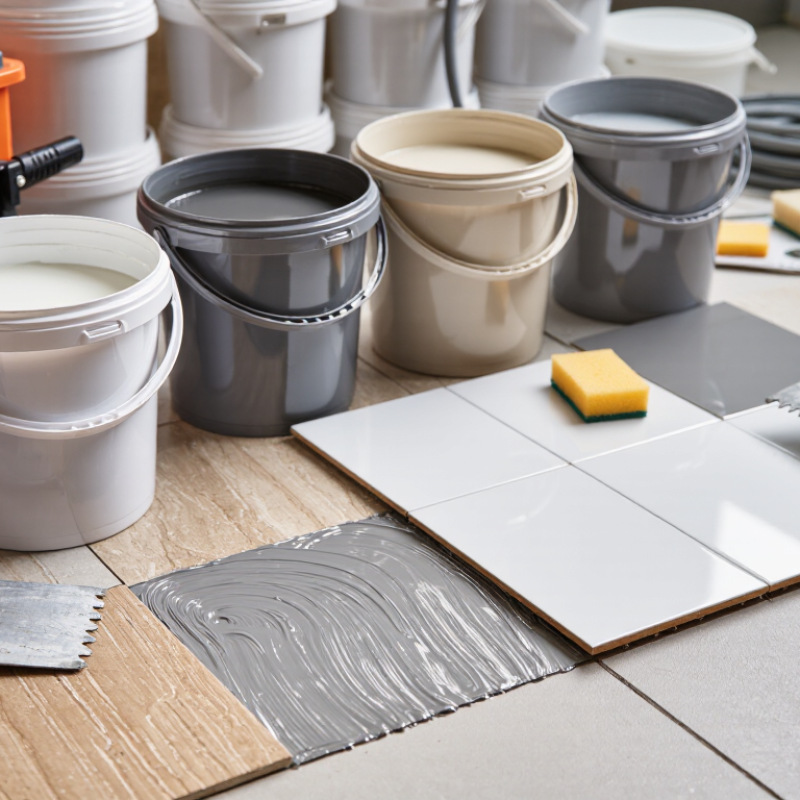
Epoxy grout is a two-component joint filler made from resin and hardener. Unlike cement grout, it cures into a dense, low-absorption surface. ANSI A118.3 classifies epoxy systems for demanding tile installations, including chemical-resistant applications. That standard matters in 2026, as buyers increasingly compare service life instead of purchase price alone.
The Global Construction Chemicals Market report by Grand View Research valued this wider market at more than 60 billion U.S. dollars in 2023. Its projected growth reflects stronger demand for durable renovation materials. The figure does not measure epoxy grout alone. That limitation deserves attention. Still, it shows why performance materials remain commercially important. In kitchens, showers, hospitals, and food-service areas, epoxy grout can resist stains, moisture, and repeated cleaning better than many cement-based options.
It is not maintenance-free.
Experienced installers know the real risk: poor mixing, rushed placement, or inadequate surface preparation. A pale joint can become uneven within minutes under warm conditions. ANSI compliance also cannot correct careless workmanship. The Tile Council of North America’s installation guidance repeatedly emphasizes substrate movement, joint design, and curing conditions. Global buyers should request technical data sheets, chemical-resistance results, working-time information, and independent test evidence. A lower-cost product may look attractive on a spreadsheet, yet removal and reinstallation can cost far more. In my view, epoxy grout matters because it connects material science with daily cleaning reality, although no specification replaces a skilled installer.
The best epoxy grout for global buyers in 2026 depends on application, not advertising. Compare two-component and three-component systems carefully. Two-component grout combines resin and hardener, while three-component products may add graded aggregate separately. A 100% solids formula usually offers low shrinkage and strong chemical resistance. Water-washable versions can simplify cleaning, but they may sacrifice working time or surface hardness. Check the technical data sheet, safety data sheet, and local import requirements before purchasing.
Study the ingredients closely. Epoxy resin provides adhesion, while the hardener controls curing speed and final strength. Quartz or silica aggregate affects texture, joint filling, and abrasion resistance. Pigments influence color stability, but dark shades can reveal installation marks. Additives may improve sag resistance, flexibility, or cleanability. Do not judge quality by resin content alone. The balance matters.
Performance testing should match the project. For commercial kitchens, review stain resistance, slip behavior, and exposure to acids or oils. For showers, examine water absorption and mold-management claims. For factories, request abrasion, compressive, and bond-strength results. Also compare pot life, cure time, temperature range, and packaging accuracy. A grout that performs well in a laboratory may fail on a dusty joint or during rushed cleaning. I have seen this overlooked. A small trial panel, using local tile and real cleaning chemicals, often reveals more than a polished brochure. Expect some compromise. No formula excels at everything.
How to Compare Epoxy Grout Types, Ingredients, and Performance
The chart uses a comparative 0–100 performance index based on commonly reported technical characteristics of grout categories. Epoxy grout typically combines resin, hardener, mineral fillers, and pigments, providing strong stain resistance, low water absorption, and high chemical durability. Polymer-modified cement grout is easier to install and generally more economical, while standard cement grout offers the lowest overall resistance to moisture, staining, and chemicals.
Different global projects need different epoxy grout features. A hotel lobby may require strong stain resistance, consistent color, and easy cleaning. A commercial kitchen needs low water absorption and resistance to oils, acids, and frequent washing. For swimming pools, chemical stability and strong adhesion matter more than a perfectly glossy appearance.
On-site experience shows that climate also changes grout selection. In humid coastal regions, low porosity helps reduce moisture-related problems. In cold areas, flexible performance can support joints exposed to repeated temperature changes. Large warehouses may need heavy-load resistance, while homes often benefit from longer working time and easier application. Check the technical data carefully. Marketing language alone is not enough.
Tips: Match the grout with tile type, joint width, chemical exposure, and cleaning method. Test a small area first. A glossy finish may look impressive, yet it can reveal uneven joints. I have seen installers choose high chemical resistance for a residential wall where simple stain resistance was enough. That choice increased cost without improving performance. Also confirm local installation standards, curing conditions, and safety requirements before ordering. Surface preparation remains critical, even with premium epoxy materials.
For global buyers, epoxy grout evaluation starts with evidence, not attractive color cards. Grand View Research valued the global construction chemicals market at about USD 82 billion in 2023. Its forecast also indicates continued growth through 2030. This expansion increases supplier choices, but not necessarily supplier quality. Request ISO 9001 records, recent batch test results, and a declaration of conformity. For tile applications, check EN 13888 RG or ANSI A118.3 compliance. Confirm testing laboratory details and report dates.
Ask for a cured sample, not only a brochure. Apply it to the actual tile, joint width, and cleaning method. Record working time at 23°C, washability, color consistency, and hardness after seven days. I have found that small packaging details matter. A missing batch number can delay a site claim. It can also weaken traceability. Some suppliers provide certificates, yet their documents cover resin components only. That gap deserves written clarification.
Cost comparisons should include resin, hardener, packaging, inland transport, insurance, duties, and waste. Drewry’s World Container Index has repeatedly shown sharp freight fluctuations, so a low factory price may become expensive after shipping. Ask for two quotations: FOB and delivered-to-port. Check minimum order quantity, shelf life, production capacity, and backup warehouses. The International Organization for Standardization links quality systems with controlled production, but certification alone cannot prove installation performance. I may still choose a slightly higher quote when records, samples, and delivery commitments are stronger. Availability is part of quality.
For global buyers, epoxy grout performance begins before the grout reaches the joint. Installation conditions often matter more than the product label. The substrate must be sound, dry, and free from dust, oil, and curing residue. Uneven joints can create thin spots and visible color changes. Installers should follow the exact resin and hardener ratio. Partial mixes are risky. Small mistakes grow. Low-speed mixing helps reduce trapped air. The mixture should be applied within its working time, especially in warm climates. Cooler conditions extend curing, while excessive humidity may affect surface appearance. Always test a small area first.
Cleaning after installation also affects long-term results. Do not flood the surface before full curing. Early washing can weaken the finish or leave a dull film. Routine care should use clean water and a mild, pH-neutral cleaner. Strong acids, harsh solvents, and abrasive pads may damage the surface or surrounding tiles. In busy kitchens, bathrooms, and commercial spaces, remove spills quickly. Fine sand and grit can still scratch polished tile edges. I once saw a carefully installed floor lose its appearance because dirty mop water was reused repeatedly. That failure was not caused by the grout alone. It reflected poor maintenance planning. Periodic checks should examine cracks, loose tile edges, and discolored joints before minor defects spread.
Practical comparison of epoxy-grout requirements, typical performance ranges, and long-term selection factors for international projects.
| Evaluation Dimension | Typical Data or Requirement | Effect on Long-Term Results | Recommended Installation or Maintenance Practice | Priority |
|---|---|---|---|---|
| Chemical Resistance | High-quality epoxy grout generally provides strong resistance to water, oils, food residues, many cleaning chemicals, and dilute acids. Resistance varies by formulation and exposure concentration. | Important in commercial kitchens, laboratories, hospitals, food-processing areas, swimming pools, and industrial rooms. Incorrect chemical compatibility can cause softening, discoloration, or surface attack. | Review the technical data sheet and chemical-resistance chart before purchase. Test compatibility when exposure is concentrated, hot, or continuous. | Very High |
| Joint Width and Depth | Many epoxy grouts are designed for joints approximately 1.5–12 mm wide, but the approved range depends on the product and tile system. | Using grout outside its specified range may lead to incomplete filling, shrinkage, difficult tooling, or uneven curing. | Confirm the permitted joint width, minimum depth, and tile-edge geometry. Remove debris and fill the joint consistently to the required depth. | Very High |
| Working Time | Typical workable time is about 30–60 minutes at approximately 20–23°C. Higher temperatures usually shorten working time; lower temperatures extend it. | Insufficient working time can produce visible joints, difficult cleaning, lap marks, and wasted material, especially on large floors or in warm climates. | Mix only manageable batches, organize tools in advance, and keep materials within the manufacturer’s recommended temperature range. | Very High |
| Curing Time | Light foot traffic commonly becomes possible after approximately 12–24 hours, while full chemical or heavy-duty performance may require about 3–7 days. | Premature washing, loading, or chemical exposure can damage the surface before the resin has fully cured. | Restrict traffic and moisture according to the technical data sheet. Allow longer curing in cool, humid, or poorly ventilated conditions. | Very High |
| Temperature During Installation | A common application range is approximately 10–30°C, although the exact range differs by formulation. Substrate and air temperature both matter. | Cold conditions increase viscosity and slow curing. Excessive heat accelerates curing and may make washing and finishing more difficult. | Condition the materials before use and avoid direct sunlight, frozen substrates, condensation, and rapidly changing temperatures. | Very High |
| Mixing Accuracy | Two-component epoxy grout requires the resin and hardener to be mixed in the specified ratio. Partial-batch measuring can be unreliable unless expressly permitted. | Incorrect ratios or incomplete mixing can cause soft spots, tackiness, color variation, reduced strength, or incomplete curing. | Use the complete premeasured unit whenever possible. Scrape the container sides and bottom, and mix until the color and consistency are uniform. | Very High |
| Tile and Surface Compatibility | Epoxy grout is generally suitable for ceramic, porcelain, glass, and many stone tile systems, but porous, textured, unglazed, or moisture-sensitive surfaces require extra care. | Residue can bond permanently to porous or textured surfaces and may cause staining or a difficult-to-remove haze. | Perform a small-area test. Use the recommended protective treatment where permitted, and remove residue before the grout begins to cure. | Very High |
| Cleaning During Installation | Initial washing and final washing are normally required while the grout remains workable. Clean water, suitable pads, and manufacturer-approved cleaners are commonly used. | Late cleaning may leave epoxy haze; overly aggressive scrubbing may damage delicate tile surfaces or alter joint texture. | Work in small sections, change rinse water frequently, avoid flooding the joints, and complete final polishing within the specified time window. | Very High |
| Water and Moisture Exposure | Once fully cured, epoxy grout has low water absorption compared with many cement-based grouts, but it is not a substitute for a waterproofing membrane. | Good moisture resistance helps reduce staining and biological growth, while absent or defective waterproofing can still cause substrate damage. | Install the complete wet-area system correctly, including substrate preparation, movement joints, drainage, and waterproofing details. | Very High |
| Movement and Expansion Joints | Epoxy grout is rigid relative to elastic sealants and should not be used as a replacement for movement joints at changes of plane, perimeters, or structural breaks. | Ignoring movement requirements can cause cracking, debonding, or stress transfer to tiles and surrounding assemblies. | Use a compatible flexible sealant at designed movement joints and follow local tile-installation standards for joint placement. | Very High |
| Slip and Surface Texture | Slip resistance depends mainly on the tile surface, joint profile, contamination, and cleaning condition; grout alone does not determine floor slip performance. | Residue, grease, or an unsuitable polished surface can increase slip risk even when the grout itself performs well. | Evaluate the complete floor system under expected wet and contaminated conditions. Maintain drainage and remove oily residues promptly. | High |
| Color Stability | Epoxy grout generally offers consistent color, but pigments may be affected by ultraviolet exposure, strong chemicals, heat, or installation residue. | Color variation is more visible in large-format installations and may result from uneven mixing, inconsistent washing, or different curing conditions. | Use the same batch where possible, maintain consistent installation conditions, and avoid unapproved solvents or abrasive cleaning methods. | High |
| Routine Maintenance | Regular cleaning with pH-neutral or manufacturer-approved detergents is generally sufficient. Harsh acids, strong solvents, and abrasive tools may damage surfaces. | Appropriate maintenance preserves appearance and limits buildup. Incorrect chemicals can discolor grout, attack adjacent materials, or create a slippery film. | Remove spills promptly, use soft or non-abrasive tools, rinse detergent residues, and follow a documented cleaning schedule for high-traffic areas. | Very High |
| Repairability | Localized epoxy-grout repairs are possible, but color matching and bonding to fully cured material can be more difficult than with cement-based grout. | Repairs may remain visible if the original batch, color, texture, or curing conditions cannot be matched. | Keep installation records and spare material when feasible. Remove unsound grout mechanically and prepare the joint before repair. | Medium |
| Global Procurement and Compliance | Important documents include technical data sheets, safety data sheets, batch information, shelf life, storage conditions, transport classification, and applicable test standards. | Documentation supports customs clearance, worker safety, project approval, quality control, and consistent installation across different countries. | Check regional regulations, language requirements, climate during shipment, storage temperature, and delivery lead time before placing an order. | Very High |
"*" indicates required fields